National Wine and Cheese Day: Four Great Pairings to Get You Started

Disclosure Statement: This post contains affiliate links. When you click on an affiliate link and make a purchase, I receive a commission at no additional cost to you. All opinions are my own.

Greetings, readers! Whew, it’s been a minute, hasn’t it? I survived my first spring as a sports mom… hence the unintentional crickets for several months. But I’m missing our wine chats. Now that it’s summer and I’m enjoying life at a slower pace for a while (please God, no tragedies or health issues this summer), I can refocus and get back on here. Because grape gossip is irresistible! 🙂

Today is National Wine and Cheese Day! Special salutations to my fellow enophiles and turophiles (cheeseheads)! It is our day to celebrate two of nature’s most magnificent contributions to the human diet, and to stand in awe of their joint power and beauty. Coincidentally, an especially Happy Birthday to my dear sister today! xoxo

I like to have fun with the many wine holidays out there. There’s even an International Xinomavro Day, if you can believe it (it’s a Greek red wine). Calendar holidays give me some structure to follow when creating blog posts and picking what to post on when. So when I looked at my list of blog drafts and saw National Wine and Cheese Day approaching, I knew this would be a good time to share with you several tried-and-true wine and cheese pairings (and, mainly, to get my butt in gear and do a post already).

Several years back, during the pandemic, our lives depended not only on our ability to stay safe but on the need to keep ourselves entertained during intense boredom and isolation. I did my best to keep things lighthearted (see my post on blind tasting). 🙂 When ordering takeout from restaurants lost its luster (ah, memories of soggy and saggy fries and lettuce in cardboard), I decided to try something festive, fun, and different.

I love sitting outside on our deck on a beautiful day, taking in the sky and the trees. So I decided the only thing that could possibly improve on an already idyllic situation would be to have an evening of culinary matchmaking, in which I set several cheeses up on first dates with several bottles of wine. It’s one of the easiest dinners in the universe and one of my kids’ favorite ways to eat dinner (minus the wine, of course — see also crackers, fruit, charcuterie). 🙂

So here is the wine and cheese menu I put together.

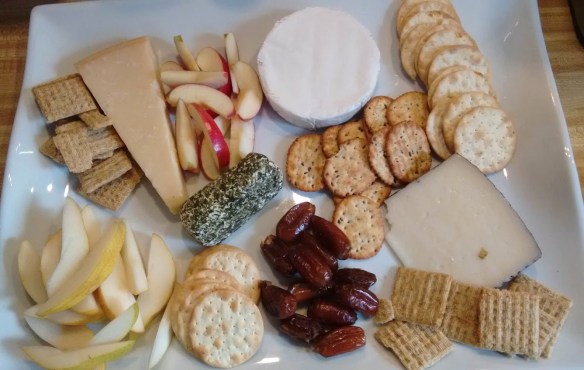
Cheese Board

The stars of the show. On the left are Parmigiano and Herbed Goat Cheese. On the right are Brie and Manchego. No autographs, please.

Wine and cheese are both ancient fermented foods that through fungal finessing and microbial magic become so much more than merely grape juice and curdled milk. When they join forces, it’s a gustatory revelation of sheer delight.

But with so darn many wines and cheeses, how to pick what to go with what? I did some research, compiled some promising looking suggestions, and based on what I found put together this particular wine and cheese menu. I can vouch wholeheartedly that these wines and cheeses make for lovely pairings! And don’t sweat the brands too much – just buy what you can find in that wine or cheese category!

1) Prosecco and Parmigiano-Reggiano
La Marca Proseccoicon
This was one of my favorite pairings on the whole menu. Salty, nutty, umami Parm and sweet, fruity, fizzy Prosecco need to make much more regular appearances at my house! I hadn’t really cut into a wedge of Parm and eaten it – I’d only ever grated it onto food, mainly pasta and soup dishes. The full-on texture of the Parm was something I’d never really experienced before. The crunchy nugget “crystals” in the cheese actually form when the cheese ages: the proteins break down and the individual amino acid tyrosine becomes concentrated and forms crystals. When matched with Prosecco’s bubbles, it’s molto delizioso!

2) Rosé and Goat Cheese
Acidic rosé wine both complements the tang of and contrasts with the fatty creaminess of goat cheese. It puts you in a very, je ne sais quoi, French state of mind. The light berry, stone fruit, and mild vegetal flavors of rosé with the goat cheese are reminiscent of a summery salad. I used Dark Horse Rosé which is surprisingly good for under $10/bottle, as all Dark Horse wines are priced in that arena. And the herby goat cheese I used was very tasty with the wine. Très délicieux!

3) Pinot Noir and Brie
La Crema Monterey Pinot Noiricon
Speaking of a French state of mind, it truly does not get more French than Pinot Noir and Brie. For this pairing, I did use a California Pinot Noir but it still went very well with the Brie. It could be because I’m more familiar with Pinot Noir than other wines, but I think Pinot Noir makes for an especially interesting wine to pair with cheese, because there are so many very different styles and types of Pinot out there and you can play on the specific flavors in your specific wine with the cheese (for example, you can emphasize an Oregon Pinot Noir’s mushroom/truffle notes by pairing it with pecorino tartufo cheese). This is a classic pairing that takes a lighter, more acidic and aromatic red wine and puts it with a rich, creamy, singularly flavored cheese. It is scrumptious.

4) Rioja and Manchego
This was my other favorite pairing of the night! Oh. Yum. Leathery cherry and spiced Rioja (Tempranillo) went perfectly with Manchego, a Spanish sheep’s milk cheese. ¡Muy delicioso!

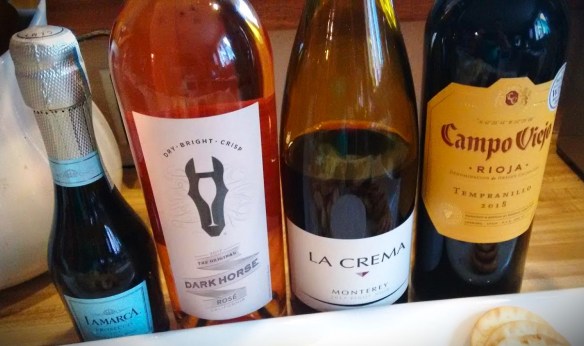
Wine and Cheese Pairing Party

Take a bow: Prosecco, Rose, Pinot Noir, Rioja.

So there you have it. It sounds more like International Wine and Cheese Day, with the Italian, Spanish, and French contributions.

At this point in my life, I’ve put together at least one other wine and cheese pairing feast at home. The menu above, however, was delicious and doable, and is ideal for celebrating your first National Wine and Cheese Day. The featured wines and cheeses, I feel, are pretty widely available and interchangeable (you don’t have to worry too much about getting a certain brand, etc.), so my advice would be to start with the above menu and then go from there.

I don’t want to promise I’ll post on other wine and cheese pairings soon, because you know my track record of posting regularly can be very intermittent, but I think that wine & cheese is a topic all of us on here can appreciate, so I do plan to do more in the future.

How about you? Do you have any must-try wine and cheese pairings we should know about? Please share and comment below!

Gourmet Essentials for Wine Lovers, Elevate your summer pairings with these products.

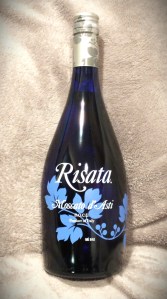
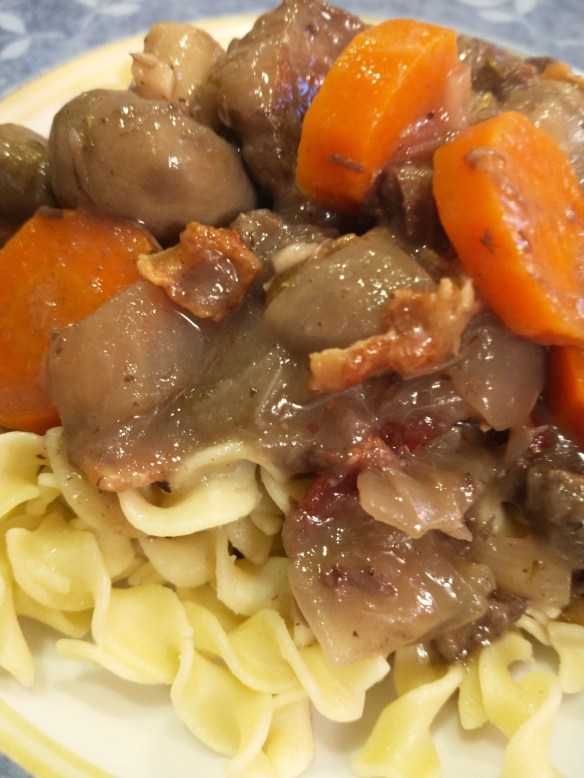
On a Lighter Note: A White Chocolate and Wine Pairing for Valentine’s Day

Happy Valentine’s Day, readers! I hope you’ve got some indulgent treats awaiting you today, perhaps a special bottle of wine or your favorite dessert? If not, I have a pairing I hope you will really like.

Valentine’s Day typically calls to mind images of dark chocolates nestled romantically together in a box and sleek, alluring bottles of red wine. But since I’ve already covered what to pair with milk chocolate, dark chocolate, and what to pair with sparkling wine, I wanted to explore uncharted territory: I became curious about what to pair with white chocolate. I’m sure there are some people out there who prefer white over milk and dark chocolate. Sure, white chocolate isn’t *true* chocolate because it lacks cocoa solids and only contains cocoa butter, but that doesn’t mean it isn’t a delicious treat. To me, there is a time and an occasion for every type of chocolate! 🙂

But is there a wine for every type of chocolate, especially white?

White chocolate is very rich, sweet, and creamy, and calls for something that can handle its weight and richness.

Last year, for fun, I paired some white chocolate with Pinot Noir and then with Sauvignon Blanc. In both instances the pairings were flops and tasted less than desirable. Of course there may be certain versions of those wines out there that randomly would work well with white chocolate, but if I don’t like something when I try it, I am certainly not going to recommend it to you. Bad wine and food pairings can be truly awful!

But there has to be something, right?

I am probably not the first one to invent this pairing, so I won’t take credit for it; in fact, I most likely encountered it while reading about wine (what else is there to read about?). It occurred to me that pairing white chocolate with orange Muscat, a white wine that can be made in a sweet dessert style, would create that amazing flavor combination of orange and vanilla, like an orange creamsicle. Anyone remember the Dixie® cups with the swirl of orange sherbet and vanilla ice cream? The ones that came with the little flat wooden spoons?

I love that flavor combination, so I sent my husband to pick up a bottle of orange Muscat and some white chocolate bars so we could conduct some scientific research (that is what I call drinking wine and pairing it with food in my house. Best science class you’ll ever have.). 😉

Here is what our research yielded:

Quady Electra Moscato 2022

Quady Electra MoscatoWhite Chocolate

  • ABV 4.5% (super low!)
  • $11.49/bottle (whoa, also super low, very helpful right now)
  • Pale gold color
  • Light bodied, nice refreshing acidity, sweet
  • Aromas/Flavors: “millions of peaches, peaches for me” | honey, grape, Muscat aromas
  • Serve chilled
  • Admittedly, this is quite sweet wine, and rather simple, but it works beautifully with the white chocolate.
  • It really is reminiscent of tangy orange sherbet and smooth, creamy vanilla ice cream.
  • Pairing it with white chocolate was delightful and seamless.
  • But word to the wise – only use plain white chocolate! We tried a hazelnut white chocolate bar with this wine and it was gross. Try the brands Private Selection or Lindt, for example.

I like this pairing because it’s a little different, a little more unique than chocolate truffles and red wine (or heaven forbid, sparkling wine – great to drink just separately from chocolate).

It’s rich yet light, sweet, floral, creamy, delicious. It’s like Valentine’s Day in its purely innocent form: cute, flirtatious, fun and easygoing. There are no clashing flavors, making it an entirely pleasant experience. Phew!

I can get serious and sullen sometimes, turning inward and becoming preoccupied with gloomy thoughts. Forget the outside world, which is serious and sullen enough on its own; my own inner world can brew more than its fair share of despair.

At those times I have to remind myself to reject negative thoughts and lighten up. I’ve even started re-watching the TV series The Office because it still makes me laugh out loud, every episode, after all these years. How it is a 25-year old show now is beyond me.

I think this white chocolate and orange Muscat pairing works that kind of magic.

Here’s to lightening up.

Cheers, and Happy Valentine’s Day! 🙂

Hula²: Pork Sliders and Sparkling Maui Pineapple Wine

Aloha, readers! I don’t know what the weather is like where you are, but for the last several weeks we have had nothing but blue skies and full sunshine, albeit with freezing temperatures. If you didn’t have to feel the cold, and ignored the bare trees, you would think you were somewhere warm and humid. Somewhere tropical, even.

Let’s take a break from our usual Cab and Chardonnay and venture into other realms and regions for wine. Let’s entertain some novel possibilities. As you know, wine can be made from more than just grapes; see my past posts on blackberry wine and mead, for example.

Today I’m going to take you on a whirlwind tour to Maui, introduce you to a delightful sparkling pineapple wine, and rock your world with to-die-for Hula Pork Sliders. This is a food and wine equation that yields exponential bliss – read on!

Maui Wine signLast April I was fortunate to travel to Maui and enjoy an afternoon wine tasting at Maui Wine, in the Ulupalakua upcountry. If you are a wine lover who happens to be vacationing on Maui, this is definitely worth the drive up the mountain. Behold the beauty! You can learn more about the Maui Wine experience here.

Maui Wine Tasting RoomAt this idyllic winery, with a rich and varied history (the King of Hawaii used to party here), you can do tastings that feature pineapple based wines, whites, or reds. They gladly poured us tastes of other wines even if those wines were not on our flight. Lovely aloha spirit. 🌺

My favorite red wine that day was the 2022 GSM, from grapes grown in the Ulupalakua Vineyards AVA. It’s a blend of 69% Syrah, 18% Grenache, and 13% Malbec. I believe I enjoyed it more than the single varietal wines. Sometimes at a winery it’s the opposite; I prefer the single varietals over the blends. Maui Wine Tasting RoomOther favorites were the Lokelani Sparkling Rosé and Lehua Raspberry Dessert Wine (made from raspberries from Walla Walla, Washington – on Maui!). Tart, light, just the right amount of sweet. Scrumptious! And I’m in love with this label (Valentine’s is coming soon, ahem). Maui Wine Lehua Raspberry Dessert Wine

But the wine I want you to really pay attention to is the Hula O Maui Pineapple Sparkling Wine. This was given to me as a gift by my sister and brother-in-law who live there, and I didn’t open it up until after I got home since I was waiting to pair the wine with this special recipe. I think I need to order some more of this wine, it was truly special. Sparkling wine is admittedly not my jam, but this won me over and I will happily imbibe this any time.

Maui Wine uses fine Maui Gold pineapples that are not quite ripe to contribute fresh aromatic qualities to the wine. It is a wine made in the traditional method, the same as French Champagne and certain other sparkling wines. I actually really liked this wine and honestly prefer it to traditional sparkling wine made from grapes, even though some of those are excellent. This wine was pure refreshment and made the perfect accompaniment to the pork sliders.

Hula O Maui Sparkling Pineapple WineHula O Maui Sparkling Pineapple Wine

  • $26/bottle
  • Super pale straw/lightest lemon yellow
  • Light, delicate body with fine perlage (bubbles/carbonation)
  • Semi-dry
  • Aromas of pineapple, macadamia nut, green papaya, toast
  • An elegant sparkling wine that stays true to the character of the pineapples it’s made from

And for the ultimate food pairing with this wine, here is my take on Half Baked Harvest’s decadent Hawaiian-style pork sliders from the cookbook, Half Baked Harvest. Pulled pork is one of the darn tastiest things I have ever eaten, and this recipe just may be my ultimate favorite. Do not let my quick, mediocre photo dissuade you. Enjoy! 😋

Hula Pork Sliders from Half Baked Harvest Cookbook

These are absolutely worth the effort, and pure bliss with the sparkling pineapple wine. Paradise!

Hula Pork Sliders
Recipe courtesy of Tieghan Gerard
Half Baked Harvest Cookbook: Recipes from My Barn in the Mountains
Makes 12 sliders

INGREDIENTS

  • 2 1/4 cups pineapple juice
  • 1 – 1-inch knob fresh ginger, peeled and grated (or use refrigerated ginger paste like I do)
  • 2 garlic cloves, minced or grated
  • 1/3 cup packed light brown sugar
  • 2/3 cup low-sodium soy sauce
  • 2/3 cup ketchup
  • 2-3 tablespoons sriracha sauce
  • 2 1/2 pounds pork shoulder or butt, cut into two pieces
  • 2 tablespoons coconut oil
  • 6 large pineapple rings, halved
  • 12 Hawaiian slider buns
  • 12 slices Swiss cheese
  • 1 1/2 cups shredded green lettuce or cabbage (bagged coleslaw mix works great)
  • Melted butter (optional)
  • Poppy seeds (optional)

INSTRUCTIONS

  • Preheat the oven to 325°F.
  • In a large bowl, whisk together the pineapple juice, ginger, garlic, brown sugar, soy sauce, ketchup, and sriracha.
  • Place the pork in a Dutch oven and pour over half the sauce. Cover and transfer to the oven. Roast for 3 to 4 hours, or until the pork is falling off the bone and shreds easily – check the pork once or twice throughout cooking to be sure the sauce is not reducing too much. If it is, add the remaining sauce as needed to keep the pork moist. The pork should be submerged in liquid at least halfway. Shred the pork and add some of the remaining pineapple sauce to the pot, if desired.
  • Heat the broiler to high with a rack in the top third.
  • In a large skillet, melt the coconut oil over medium heat. Add the pineapple slices and cook for 3 to 4 minutes per side, or until caramelized.
  • Arrange the bottom halves of the slider buns on a baking sheet and add a scoop of pork to each. Top each with a slice of Swiss cheese. Place under the broiler for 1 to 2 minutes, or until the cheese has melted.
  • Top each slider with a slice of caramelized pineapple and shredded lettuce or cabbage. If desired, brush the top of each bun with melted butter and sprinkle with poppy seeds.

A Delicious Discovery for World Verdejo Day

Happy World Verdejo Day, readers! This may be the fastest blog post I have ever thrown together in a day (pant, pant – June is BUSY!) but the word must go out. The blog must go on! Plus, I also share an easy recipe that will pair exceptionally well with this wine. And, last but not least, drum roll… Happy 100th post to The Rambling Vine! ❤

I first had this wine at a Spanish wine class at Total Wine. As someone who prefers red wines, I tend to reluctantly try white wines with low expectations. But this cheerful and exuberant white made me check my biases and thrust me into full-blown enjoyment. When a white wine makes me say “whoa” after the first sip, I know I’m on to a good thing. It’s also a fantastic price ($16.99) for a truly fantastic wine.

So what is Verdejo? Verdejo is a white wine grape grown in Rueda, Spain. Rueda is a region that uses mainly Verdejo grapes to create amazing white wines bursting with tart acidity and plush, full fruit flavors. If you’re a New Zealand Sauv Blanc fan, wait until you give this a try!

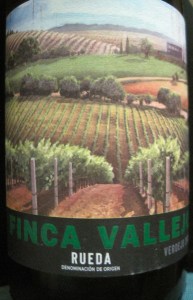
Check out the Finca Vallejo Rueda Verdejo 2022:

Finca Vallejo Rueda Verdejo 2022

Love the label

  • $16.99/bottle
  • 13% ABV
  • Rich, pale gold color
  • Knockout aromas of lime, peach, grapefruit, fennel, melon, etc.
  • Light body with plush, creamy mouthfeel
  • Powerful, refreshing acidity curtailed by juicy citrus fruit flavors
  • Screams “I wanna party with some seafood!”

My “recipe” for fish tacos is simple in the extreme, but wonderful. We all need more easy-to-pull-together dinners. Four basic ingredients. Try it when you’re floundering for what to make for dinner (pun unintended, or not). 😉

The Rambling Vine’s Fish Tacos in a Cinch

  • Flour tortillas (or tortilla/wrap of your choice)
  • White fish fillets of your choice (cod, rockfish, halibut, etc.)
  • Bagged coleslaw mix
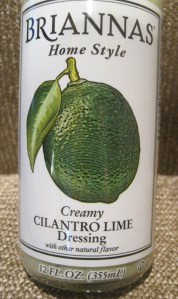
  • Brianna’s ® Home Style Creamy Cilantro Lime Salad Dressing

Warm your tortillas so they’re pliable. Cook your fish to doneness: throw several fillets on a baking sheet lined with parchment paper. Brush fish with some olive oil, salt, and pepper (keep it simple – the dressing will add more flavor later). Bake in the oven at 400 degrees for 18-20 minutes or until cooked to a safe internal temperature of 145 degrees.

For each taco, lay a tortilla flat on a plate, lay on a fish fillet, scatter on a handful of coleslaw mix, and then drizzle on the Brianna’s ® Home Style Creamy Cilantro Lime Salad Dressing (don’t skip that). You’re done!

Brianna's Home Style Creamy Cilantro Lime Dressing

Love this brand and this dressing!

Pour a chilled glass of this Verdejo to go with your dinner and pretend you’re in Rueda, Spain or other warm sunny location of your choice.

Happy Verdejo Day! Let me know if you try the recipe or the wine. 🙂

Pinot Noir & Tempranillo Dance the Mitote in Alumbra Cellars’ Red Blend

I love it when I get to tell you about wines that “grab” me.

These wines are different. Compelling. Unique. Doin’ their own thang. And, they’re really, really good.

These are the wines that stop me in my tracks and I take note of.

After just one sip of this wine at the McMinnville Food + Wine Festival this past March, I committed to a bottle immediately. That bottle was Alumbra Cellars’ 2021 Mitote Red Blend, a surprising blend of Pinot Noir and Tempranillo.

I love blends because they become greater than the sum of their parts. Some of the greatest wines in the world are blends (most notably Bordeaux and Rhône GSMs).

But what I love about this wine is that the blend of grape varieties – in this case, Pinot Noir and Tempranillo – is unexpected and exciting, much like another favorite wine of mine which blends Pinot Noir, Cabernet Sauvignon, and Syrah. It’s not simply another traditional recipe for combining certain grape varieties together; it’s a winemaker’s choice to exercise her vision and realize the potential of two different grape varieties in creating a new style. And in this, winemaker Elena Rodriguez succeeds magnificently! ❤

In Spanish, mitote refers to an indigenous Mexican dance, but it can also mean a party or a scandalous uproar/hubbub. In this case I feel the wine represents less of an  uproar/hubbub and more of a beautiful pas de deux (in Spanish I believe it is “no dos”) between Tempranillo and Pinot Noir; more of a celebration than a brawl, ha ha.

Alumbra Cellars 2021 Mitote Red Blend
14% ABV
60% Tempranillo, 40% Pinot Noir
$32/bottle

Alumbra Cellars 2021 Mitote Red BlendHere are my rambling, effusive tasting notes to give you an idea of the fun carnival of scents and flavors I delighted in. Promise me you will sip some for yourself!

  • Mesmerizing, mysterious nose hinting strongly at cinnamon, cayenne, cumin, pepper
  • Black cherry, bark/wood, blackberry pie à la mode, a sweet minty herbal note (sassafrass?)
  • A bouquet of heady, savory spices but also light, sweet spices
  • Toffee, gingersnap, vanilla, candied rose floral aroma, whiff of leather saddle to tip me off to the presence of Tempranillo
  • Medium ruby with purple core – color actually very close to the purple of the bottle label
  • Medium body, silky smooth texture
  • Minerality showing up
  • No harshness, tartness, bitterness
  • Silky, gentle tannins
  • Warm, prolonged finish
  • More medium body feel even though alcohol level higher

I have no negative criticisms of this wine. Zero.

I foresee this wine going very well with a number of foods, particularly Mexican food.

For a delicious accompaniment to a glass of this wine, grab a bag of your favorite and freshest tortilla chips and whip up this Mushroom Pico de Gallo. I first had a version of this unbelievable dip at a Mexican restaurant in Belfair, Washington. Forget the salsa and bean dips; we couldn’t get enough of this pico and polished off a couple bowls (after that, what’s the point of dinner?). This recipe is the closest thing I could find to what we had in Belfair.

With a little more effort (or another helper), pile some cooked meat on the side and call this dinner!

Some of the best meals to go with wine (I think) are where you just throw a few, simple foods together and then let them all work their collective magic. A mitote.

¡Buen apetito! 🙂

Mushroom Pico de Gallo

Your new favorite dip.

Mushroom Pico de Gallo
Liberally adapted from a recipe by Nina Lee | Food.com

INGREDIENTS

  • 16 oz. crimini mushrooms
  • 1 small red onion
  • 1 jalapeño
  • A giant handful fresh cilantro
  • 4-6 T avocado oil (or olive if that’s what you have)
  • 6-8 T cooking sherry
  • salt and pepper to taste
  • 4 limes, juiced (or to taste – I felt this needed way more acid than the original)

INSTRUCTIONS

  • Finely chop all of the ingredients and mix well in a bowl.
  • Add your avocado oil, lime juice, and cooking sherry to the bowl, mix well, add more if needed.
  • Add salt and pepper to taste.
  • Let sit to allow flavors to meld for about half an hour, if you can even wait that long. Dip in freshest tortilla chips you can find.

Ciao, Frappato: Meet a Charming Sicilian Wine

Disclosure Statement: This post contains affiliate links. When you click on an affiliate link and make a purchase, I receive a commission at no additional cost to you. All opinions are my own.

Here at The Rambling Vine, I have a tendency to befriend unusual grape varieties: basically, to pick the weird wines. This sometimes results in many a dud (I’m looking at you, $4 bottle of Georgian orange wine), but sometimes I unearth vinous treasure. 🍇 As much as I am a purist and love the classics, I also like to take chances on less common grape varieties. It’s my source of adventure! My philosophy is hey, it’s just wine – if you go wrong, order a different glass or bottle. No biggie (well, unless you’ve really splurged, then that bites).

But I also want this site to be a place with reliable recommendations that are delicious, so I never post on anything I don’t love or that I wouldn’t buy myself. Sure, all of our palates vary, and they even change over time (I’m sure I have one wine on here that I reviewed over a decade ago that I don’t like now). But if you are at least enjoying the majority of the wines I’ve got on here, then I’m doing a pretty good job. 🙂

I was originally planning on saving this wine for a post in November as a Thanksgiving meal wine recommendation, and I still stand by that. But there’s no reason to wait that long to share this special wine with you (plus I have other great wine recommendations for Thanksgiving).

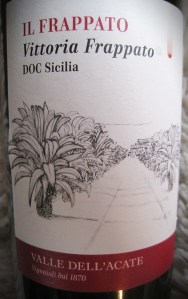
Today, I’m taking the vineyard row less trampled and seeking out something truly exciting and extraordinary. Say, “Ciao, Bella!” to a rare grape from the Mediterranean island of Sicily – Frappato! Tenuta Valle dell'Acate Il Frappato About this wine:
Il Frappato | Vittoria Frappato | DOC Sicilia | Valle Dell’Acate

  • 100% Frappato dry red wine
  • 12.5% ABV
  • Price between $20 – $30, depending on where you purchase
  • Aromas of cranberry, strawberry, and herbs blast out of the glass. I have never smelled anything quite like this wine. This is up there in terms of all-time favorite smelling wines.
  • On the palate: high acid but with soft fruity tannins. Delightful slightly chilled. Made for food.
  • From the winery’s tasting notes: “Aromas are fresh and overpowering with hints of red fruits, blueberries, raspberries, blackberries, violet flowers and sage. Fresh and vivacious flavors with a pleasant and persistent closing. Medium bodied with silky tannins. Best paired with fresh and aged cheeses, Sicilian red tuna, sushi and sashimi.”

I first tried this Frappato along with some other fantastic wines from this same winery at Arista Wine Cellars in Edmonds, Washington. My husband and I were so smitten with this baby we purchased a bottle and then ordered three more shortly thereafter.

The Tenuta Valle dell’Acate estate is in the southeast corner of Sicily and boasts organic vineyards. In the last 15 years or so, the quality of Sicilian wine has improved by leaps and bounds, thanks to better vineyard practices and new folks carrying out the work of growing the grapes and making the wine. As our tasting sheet noted, “It’s a good time to be drinking wine from Sicily.”

This may be true, but caveat emptor! In addition to this wine, I have tried two other Sicilian Frappatos, and neither one was molto bene. So keep in mind that not every Frappato will be as noteworthy as this one. This is the one to get!

To order this wine, purchase here.

As this wine is such a wonderful partner for food, I’ve also got an EASY dinner recipe that goes beautifully with this wine. Here is my riff on Joanna Gaines’ Grilled Raspberry Chipotle Pork Tenderloin from the Magnolia Table cookbook, adapted for the oven instead of the grill. As she states in the recipe introduction, this was the first way she cooked pork tenderloin and it’s been the only way she’s done it since. Ditto!

To round out the meal, serve it with steamed green beans, and either potatoes or rice.

Raspberry-Chipotle Pork Tenderloin
Recipe adapted from The Magnolia Table Cookbook by Joanna Gaines
Yields 8 servings

INGREDIENTS

  • 24 oz. bottle raspberry-chipotle sauce, preferably Fischer & Wieser (too much – save some to serve on the cooked pork)
  • 1/2 cup soy sauce
  • 4 T honey
  • 8 garlic cloves, finely chopped
  • 2 tsp. garlic powder
  • 2 tsp. garlic salt
  • 2 lbs. pork tenderloin
  • Vegetable oil

INSTRUCTIONS

  • Preheat oven to 400°F.
  • In a bowl, whisk together the raspberry-chipotle sauce, soy sauce, honey, garlic, garlic powder, and garlic salt. Place the pork tenderloins in a Pyrex baking dish and pour over the marinade. Roll it around a couple times to thoroughly coat. Cover and marinate in the refrigerator for 6 to 8 hours.
  • Remove the pork from the marinade and place it in a greased baking dish. Brush the pork with some of the marinade, then discard the remaining marinade.
  • Bake until pork reaches a safe internal temperature of 145°F
  • Transfer pork to a cutting board and let rest for 15 minutes. Slice crosswise and serve.
  • Tightly wrap leftover pork in plastic and store in the refrigerator for up to 3 days. Leftover cooked pork can dry out if reheated, but it makes delicious cold sandwiches and a quick taco filling.

Have you tried Frappato? Or made this recipe before? Comment!

Albariño: A Spanish White to Sip this Spring + Recipe

Happy Spring, readers! We are now fully plunged into the midst of this glorious season (at least for those of us who don’t have allergies). Hopefully you are being met with plenty of sunshine, gentle breezes, beautiful flowers that don’t make you reach for the antihistamines, and wine aplenty! 🙂 🍷

While any type of wine is perfectly fine any time of year, there are certain types of weather and seasonal cuisine that spur us to open up specific bottles for specific times. Ain’t nothing wrong with that.

One white wine that I haven’t gotten to know and appreciate until now is Albariño. I’d heard it praised among “folks who know” but the scant times I’d tried it my world did not turn upside down and it left me feeling “meh” in much the same way most Pinot Grigio does (unless they’re these). Those disappointing recommendations can cause you to question the “experts” and wonder why you’re not picking up on the same qualities they are. It can lead to self-doubt. Exploring wine should be fun and lead to self-confidence, even if you disagree with another’s assessment of a wine.

It wasn’t until I took a Spanish wine class that I tried a delicious one and understood a little better what makes this wine special. It made me say, “Whoa!” which in wine tasting is usually a good thing (depending on vocal inflections, of course). This white immediately captured my attention and is well worth seeking out for its great taste, price, and versatility. Your spring wine arsenal is incomplete until you get this!

But first, a brief bit of background on this fun-to-say grape from its fun-to-say place: Albariño (Al-ba-ree-nyoh) is a thick-skinned white grape grown in the region of Rías Baixas (REE-ahs BYE-zhas), in northwest Spain, or Galicia. Galicia, also known as Green Spain, is situated near the Atlantic coast, where abundant rainfall yields abundant greenery. Here, Albariño is made into a lively white wine that is drunk with seafood, and this hallowed pairing has become famous the world over. As someone who lives in the Pacific Northwest, another seafood destination with a climate similar to Rías Baixas, it puzzles me that I haven’t heard Albariño touted more often in restaurants and other wine settings? Well, time to upset the wine press and show this grape the amor it deserves!

Albariño Val Do Sosego Rías Baixas
Denominación de Origen
Albariño Val Do Sosego Rías Baixas

  • $18.99 at Total Wine & More
  • ABV 12.5%
  • Great citrus, peach, and mineral aromas
  • Pale straw yellow
  • Medium body
  • Great acidity in the mouth but not so much that that’s all you get
  • This has a little more fullness/roundness/body/elegance like you get from a Chardonnay, but still with the zippy, highly aromatic fresh fruit you get from a Sauvignon Blanc.
  • This Albariño is beautiful, delicious, spring worthy, and a very agreeable change of pace from your regular white wine (unless that happens to be Albariño, ha! But even so, hunt down this particular wine!). 🙂

I may have mentioned this before, and I believe it still holds true, but Spanish wines have some of the best price to quality ratios in the world (quality is about double the value, at least in the US). So if you buy a bottle of Spanish Tempranillo in the US for $30, the quality of the wine will be on par with more of a $60 bottle of wine. And another one of my favorite things about Spanish wines: because of aging requirements, they are ready to drink upon purchase. No scratching your head, googling how long to age a particular bottle, etc. Open and chug (after decanting, if needed)! Best. News. Ever.

While I did not whip up any fancy seafood dishes like octopus or halibut to pair with this wine (if you do let me know what you made), I did find a tasty and easy recipe that I think you will dig, especially for the spring season, when lighter foods are more de riguer. Here is a lovely light lunch to accompany a glass of this Albariño. I personally found the ratio of bread to filling to be lopsided, so I would recommend more of a tartine/open-faced sandwich concept: a griddled piece of herbed foccacia, topped with the cheese mix, and then with a lightly dressed (O & V) spring mix side salad to balance the dish. You can also use it as a cracker dip. Keep it as a sandwich if you like; it was just way too much bread for me in one sitting (but if you’re drinking a lot maybe you need those extra carbs). 😉

Whatever you do, drink this Albariño outdoors on a beautiful spring day with a friend. It will taste even better. ¡Salud! 🌷

Cherry Ricotta Tartine
Recipe adapted from Jackie Freeman’s book, A Hearty Book of Veggie Sandwiches
Yields 4 servings

INGREDIENTS

  • 1/2 cup dried tart cherries
  • 1 cup ricotta cheese
  • 1/2 cup grated Parmesan cheese
  • 1/2 cup sliced almonds, toasted
  • 2 tsp. fresh orange zest
  • 1 tsp. chopped fresh thyme
  • Kosher salt and freshly ground black pepper
  • 4 pieces herbed foccacia bread, sliced in half
  • Extra-virgin olive oil, for grilling

INSTRUCTIONS

  • Soak the cherries in hot water for 15-20 minutes. Drain well and chop.
  • In a bowl, combine the cherries, ricotta, parmesan, almonds, orange zest, and thyme. Season to taste with salt and pepper.
  • Preheat a panini press or skillet over medium-low heat. Spread each slice of foccacia bread with olive oil. Griddle bread until deep golden brown. Remove, and top with cheese mixture, and serve along side salad.

Love You Bunches Grape Galette and Sparkling Wine

Disclosure Statement: This post contains affiliate links. When you click on an affiliate link and make a purchase, I receive a commission at no additional cost to you. All opinions are my own.

Happy Valentine’s Day, readers! ❤ I hope you fell in love with the dark chocolate + ruby port duo we explored yesterday. For my final post in this mini themed series, I am leaving chocolate behind, diving into homemade dessert territory, and popping open a bottle of bubbly to accompany it. Intrigued? Read on!

I have to admit I am not the biggest fan of sparkling wines (including Champagne), which is reflected in the number of posts I have written on the subject. But every now and then I reluctantly try some more to see what the fuss is all about grow in my appreciation and understanding of wine. In order to keep learning, I have to challenge myself with all wines, even ones I don’t gravitate towards (yes, I mean you, rosé). What’s making me take more notice of sparkling wine lately though is the fact that it can pair well with a number of different types of foods.

I have Total Wine & More to thank for introducing me to this charming sparkling wine from the Burgundy region of France, known as a Crémant de Bourgogne. While these wines are made in the same méthode traditionnelle as their famous neighbors in Champagne, they cannot be called Champagne due to the fact that they are not from the geographic region of Champagne, France. Remember, European wines are usually called by place, not grape variety. This is helpful to us consumers who enjoy sparkling wine once or twice a year but don’t need to spend an arm and a leg on a bottle of the fancy stuff (although there is nothing wrong with loving the fancy stuff). Options like Spanish Cava, Italian Prosecco, this gorgeous sparkler from California, and today’s Crémant de Bourgogne are handy to keep in mind whilst shopping for bubbles.

Louis Bouillot Extra Dry Sparkling Wine

Louis Bouillot Extra Dry Sparkling Wine

  • $25/bottle at Total Wine (approximately half the starting price of true Champagne)
  • 12% ABV
  • Medium body with some sweetness (extra-dry actually means more sugar than brut/dry – I know, makes zero sense), focused and tight perlage (bubbles)
  • Some yeasty aromas but also peach, apple, pear flavors
  • While I am not reviewing the Brut here, it is available on wine.com for you to try, where it retails for around $18-$20/bottle. This one will be less sweet.
  • I definitely recommend this wine, and am already excited for the next time I can pop open another bottle.

When it comes to desserts, I prefer anything in the chocolate, cake, and cookie departments, but that’s not to say I never diverge into other territories. Plus, it’s Valentine’s Day, so I am considering my husband’s preferences here, which fall squarely in the pie and fruit dessert departments. 🙂

This dessert uses only FOUR ingredients and is a snap to throw together, even for non bakers. Plus, how often do you see a dessert made from grapes anyway? Take this unusual recipe for a spin and pair it with this lively and refreshing sparkling wine. Together, they bring out the best in each other (yes, you can use that in your Valentine’s Day card if you must). 😉

Happy Valentine’s Day! ❤

Please note, this galette is very sweet, and for me personally it’s a bit much when paired with the sparkling wine. To tame the sugar a bit, slice up some rich, creamy Brie cheese to balance out the high levels of sweetness in the dessert and also complement the sparkling wine.

For additional dessert ideas from The Rambling Vine, check out:
Sparkling Rosé Cake with Candied Roses
Snickers Cheesecake
Oatmeal Chocolate Chai Tea Cookies

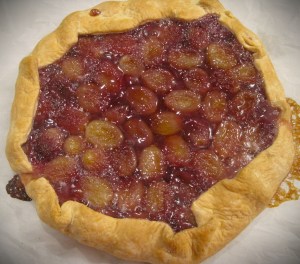
Love You Bunches Grape Galette
Serves 8
Recipe courtesy of Oregon Wine Board
Adapted from Kristin Marchesi of Montinore Estate in Forest Grove, Oregon

Ingredients

  • Pie dough rolled out into a large circle 18-20 inches in diameter* (I used a Jus-Rol pre-rolled pie dough and literally unwrapped it, plopped it on the baking sheet, poured the fruit filling inside, and folded the dough up and around the sides to make a galette)
  • 1 pound seedless grapes (no slicing required, just wash them)
  • 1/2 – 3/4 cup sugar, depending on tartness of grapes
  • 2 tablespoons cornstarch

Preparation

1) Whisk the sugar and cornstarch together and then add it to grapes. Stir to combine until the starch is completely hydrated and sugar has evenly coated the grape skins.

2) Place the dough on a sheet tray lined with parchment paper. Pour the filling into the center of the dough circle and fold the edges over the filling covering the perimeter but not the center. Chill for 20 minutes.

3) Preheat the oven to 400° and bake the galette for 10 minutes, then reduce the heat to 350° and rotate the sheet tray. Continue baking for approximately 30 minutes until the crust is golden brown and the filling is bubbling. Cool for at least 30 minutes before serving.

Love You Bunches Grape Galette

Easier than pie – galette!

Get up to 40% off Select Gift Baskets and Free Shipping on orders of $49+ Code: FREESHIPGIFT

Wine + Chocolate: Finding Dark Chocolate’s Soul Mate

Disclosure Statement: This post contains affiliate links. When you click on an affiliate link and make a purchase, I receive a commission at no additional cost to you. All opinions are my own.

Wine and chocolate… two of God’s most revered gifts and humanity’s most celebrated gustatory creations, coming in a range of colors and flavors. You already know how divine Brachetto and milk chocolate can be together. I posted on it last year and apparently I had posted on it years before. (Oops. Just take that as a sign of how good it is.) 🙂

But are wine and chocolate better together, or should each just be enjoyed on its own? If so, which ones work together and which ones flat out don’t? Since Valentine’s Day is imminent, I’d like to explore this question with you, with the goal of sending you home with an amazing wine and chocolate pairing that will score some serious brownie points with your loved one(s). No pun intended with the brownies.

Today, we’re going to step out of the light and into the dark and sensual realm of chocolat noir. But what to pair with the darkest of the dark, the richest of the rich? Be prepared – it’s an indulgent pairing that may or may not be what you’re thinking.

Compared to milk chocolate, dark chocolate is bitter, with fruity notes, and very tannic, thanks to those blessed polyphenols that are so good for us and cause the grippy sandpapery feeling in our mouths. And what do a lot of red wines tend to be? Dry, bitter, and tannic. You would think all these shared traits would make for a great pairing, but it frequently has the opposite effect in the mouth – bitter and bitter do not make good bedfellows (duh, says every couple alive). Some other red wines probably go well with dark chocolate, but pairing can get tricky and takes some trial and error. You have to take into account more factors in the wine (sweetness, alcohol, acid, tannin, fruit, etc.), and this requires more experimentation than I have time for today (or tonight as I write this).

But one type of red wine is always a sure bet and a foolproof partner to dark chocolate… ruby port.

wine and chocolate pairing

You have to try it to believe it.

Ruby port? you ask, confused. Not Cabernet Sauvignon? Not Merlot?

Um, a resounding yes, and here is why.

Ruby port and dark chocolate are a perfect match because they create balance together. The richness, intensity, and body of both are similar, but the port’s sweetness contrasts beautifully with dark chocolate’s bitterness. Dark chocolate will simply amplify bitterness and tannins in a dry red wine like a Cab or Merlot and make for a disappointing pairing. We can’t have that now, can we?

I am lucky enough to have some Bacovino Rubi 2020 Red Mountain Dessert Wine lying around, and opened some up to pair with dark chocolate. Sumptuous, silky, and made from Washington Syrah grapes versus the traditional Portuguese grapes (various Tourigas and Tintas), it’s a divine treat that showcases well the depth and beauty of Washington grapes in this wine style.

Here is all you need to know about this lovely wine:

Bacovino Rubi 2020 Red Mountain

  • 100% Red Mountain Syrah made into a port-style dessert wine
  • $45/bottle
  • 19.5% ABV
  • Beautiful label that commends itself as an attractive Valentine’s Day gift
  • Sweet and smooth but the acid and alcohol pull it back from “syrup” territory
  • Delicious right now, but imagine laying it down for a number of years – whoa baby! It will just continue to get richer and more complex with age.
  • Deep ruby color
  • The winemaker notes: “Appealing red fruit and white pepper followed by a lengthy, candied finish.”

For the dark chocolate, I used Private Selection 72% Cacao Dark Chocolate Swiss Bar from my local grocery store. It’s absolutely delicious chocolate and is typically less than $3/bar (so you can splurge on this amazing dessert wine). When paired with the port, it’s like a chocolate covered cherry exploding in your mouth. Dear. God.

Bacovino Rubi and Dark Chocolate

Look no further for your Valentine’s Day gifts.

While there are numerous wine and chocolate pairing recommendations for Valentine’s Day, many might not be steering you in the right direction. Ruby port and dark chocolate is a time-tested, decadent, indulgent pairing that is a guaranteed hit. You could use any dark chocolate bars, truffles, or even a flourless chocolate torte. Just make sure it’s dark chocolate, not milk.

Random tip from a winemaker I spoke to not too long ago – she recommended enjoying port/dessert wine as an aperitif (a before dinner drink). I tend to think of port keeping post as the ultimate dessert wine/after dinner drink (which it rightfully does), but what a novel way to think about it: a little treat for when you want to sip some wine while you make dinner. Put it in a little crystal glass and turn cooking dinner into less of a chore. 🙂

Are you a dark chocolate & ruby port fan? Comment below with your favorite brands! And let me know if you try the Rubi. 🙂

Happy Valentine’s Day/Wine & Chocolate Day, readers! ❤

NatGeo Award Classics Campaign

Think Pink: International Rosé Day + Delish Salmon Recipe

Summer greetings, and Happy International Rosé Day! Take time to stop and smell the roses and rosés. 😉

RoseEarlier this month, I was very confused, but then some quick Googling cleared everything up (Googling usually has the opposite effect): in June, there is not only a National Rosé Day but also an International Rosé Day, which is today. I briefly panicked because I’d been planning to share this particular rosé with you for some time, and was afraid I had missed my window of opportunity. Oh, the agony!

As a Washingtonian, I suppose picking a Columbia Valley Rosé isn’t very international of me, but for those of you not in the USA it qualifies. I’ll admit, I’m starting to enjoy rosé more and more, but I even had to create a blog post category for rosé 11 years after starting The Rambling Vine! So while I haven’t covered it much in the past, this one is worth mentioning, because it’s delicious AND the first type of rosé I’ve had using this particular grape. I’m all for distinct and uncommon wines.

I’m also sharing a favorite recipe that is the ultimate easy, yummy, and gorgeous summer meal. It is charming with the wine.

For those not in the know, rosé is a style of wine, not a wine made from pink grapes. 😉 Sorry to break the news. Red wine grapes are harvested, crushed, and the grape skins are allowed to soak with the grape juice for varying periods of time before being separated in order to impart anywhere from the lightest hint of pink to deep fucschia colors. Rosés generally taste more like white wines but I’ve had some that really straddle the line between both red and white wine in terms of their body, tannin, acid, sweetness, and fruit profile. They truly run the gamut of styles.

Common grapes used to make rosé wines include Sangiovese, Barbera, Pinot Noir, Grenache, Merlot, Syrah, and Cabernet Franc (this is just a few examples).

This rosé, however, from the lovely Pine Lake Cellars of West Seattle, is made from Cabernet Sauvignon grapes from the Columbia Valley AVA, and is the only rosé I’ve ever had made from this grape. Cabernet Sauvignon is the “king” of the red wines, and the ultimate steak dinner pairing. It was so interesting to taste this grape as a rosé wine!

Glass of Pine Lake Cellars Rosé

I had to let it outside, it was begging

You can purchase this wine at the Pine Lake Cellars tasting room in West Seattle or through their website, which I’ve linked below. If you’re in the area, check out their cute, stylish tasting room that has food for purchase and is kid and dog friendly. They also feature outdoor covered and heated seating areas. My sweet friend treated me to a tasting here a few months ago and we had a stellar time.

Fair warning: they are running low on this rosé, so if you’d like to try it, get on it. A different rosé of Syrah will be showing up soon. I sincerely hope Pine Lake Cellars revisits this particular Cab rosé in the future. In the mean time, I look forward to trying the Syrah rosé.

Pine Lake Cellars Rosé of Cabernet Sauvignon 2021 Columbia Valley
Pine Lake Cellars Rosé

  • $25/bottle
  • ABV 13.8%
  • Serve slightly chilled
  • In the glass: color is pale copper pink, like traditional ballet tights (you dancers know what I’m talking about)
  • More medium-bodied, unctuous, mouth-filling, hint of sweetness, yet still with crisp, refreshing character
  • Nose: light cherry, honeydew, watermelon, rhubarb, tarragon (?)
  • Mouth: tangerine, plum, black currant cream, celery/fennel, gummy peach candy on finish
  • This is a lower acid rosé

And here is one of my favorite easy summer recipes that goes “swimmingly” with the wine. 🙂

Salmon with Strawberry Scallion Tapenade

Copper River, baby!

Salmon with Strawberry-Scallion Tapenade
Recipe courtesy of Jamie Vespa, RD of Dishing Out Health
With my adaptations | Yields 4 servings
*Get that Copper River Salmon right now if you can!

INGREDIENTS

  • ¾ cup diced strawberries
  •  cup pitted and chopped green olives (I recommend Castelvetrano olives)
  • ¼ cup thinly sliced scallions
  • ¼ cup fresh chopped cilantro or parsley (or a mix of both)
  • 2 Tbsp. red wine vinegar
  • 2 tsp. lower-sodium soy sauce or tamari
  • 4 Tbsp. extra-virgin olive oil, divided
  • 4 (6-oz.) skin-on salmon fillets or one salmon side to feed 4
  • ¾ tsp. kosher salt, divided
  • ½ tsp. freshly ground black pepper, divided

INSTRUCTIONS

  • In a medium bowl, combine strawberries, olives, scallions, herbs, vinegar, soy sauce, 2 Tbsp. of the oil, and ¼ tsp. each salt and black pepper; toss to combine. Set aside.
  • Heat oven to 400 degrees Fahrenheit. Blot salmon fillets or side dry with a paper towel, place on baking sheet, and coat flesh evenly with remaining 2 T olive oil, ½ teaspoon salt, and ¼ teaspoon black pepper.
  • Place salmon in oven once preheated. Cooking time will vary depending on cuts of fish, but for a side of salmon I find 16-18 minutes is just right. Smaller pieces will take way less time. I prefer cooking fish in the oven to save time and especially to avoid oil splatter on the stove. Salmon should be cooked to a safe internal temperature of 145 degrees Fahrenheit.
  • Transfer salmon to a serving platter and spoon tapenade over top.
  • Perfect with fresh bread, arugula salad, and Pine Lake Cellars Rosé! 🙂

Let me know if you try this wine and/or make this recipe.

Cheers to pink food and drink (and even a kitchen sink)! 😉