Hula²: Pork Sliders and Sparkling Maui Pineapple Wine

Aloha, readers! I don’t know what the weather is like where you are, but for the last several weeks we have had nothing but blue skies and full sunshine, albeit with freezing temperatures. If you didn’t have to feel the cold, and ignored the bare trees, you would think you were somewhere warm and humid. Somewhere tropical, even.

Let’s take a break from our usual Cab and Chardonnay and venture into other realms and regions for wine. Let’s entertain some novel possibilities. As you know, wine can be made from more than just grapes; see my past posts on blackberry wine and mead, for example.

Today I’m going to take you on a whirlwind tour to Maui, introduce you to a delightful sparkling pineapple wine, and rock your world with to-die-for Hula Pork Sliders. This is a food and wine equation that yields exponential bliss – read on!

Maui Wine signLast April I was fortunate to travel to Maui and enjoy an afternoon wine tasting at Maui Wine, in the Ulupalakua upcountry. If you are a wine lover who happens to be vacationing on Maui, this is definitely worth the drive up the mountain. Behold the beauty! You can learn more about the Maui Wine experience here.

Maui Wine Tasting RoomAt this idyllic winery, with a rich and varied history (the King of Hawaii used to party here), you can do tastings that feature pineapple based wines, whites, or reds. They gladly poured us tastes of other wines even if those wines were not on our flight. Lovely aloha spirit. 🌺

My favorite red wine that day was the 2022 GSM, from grapes grown in the Ulupalakua Vineyards AVA. It’s a blend of 69% Syrah, 18% Grenache, and 13% Malbec. I believe I enjoyed it more than the single varietal wines. Sometimes at a winery it’s the opposite; I prefer the single varietals over the blends. Maui Wine Tasting RoomOther favorites were the Lokelani Sparkling Rosé and Lehua Raspberry Dessert Wine (made from raspberries from Walla Walla, Washington – on Maui!). Tart, light, just the right amount of sweet. Scrumptious! And I’m in love with this label (Valentine’s is coming soon, ahem). Maui Wine Lehua Raspberry Dessert Wine

But the wine I want you to really pay attention to is the Hula O Maui Pineapple Sparkling Wine. This was given to me as a gift by my sister and brother-in-law who live there, and I didn’t open it up until after I got home since I was waiting to pair the wine with this special recipe. I think I need to order some more of this wine, it was truly special. Sparkling wine is admittedly not my jam, but this won me over and I will happily imbibe this any time.

Maui Wine uses fine Maui Gold pineapples that are not quite ripe to contribute fresh aromatic qualities to the wine. It is a wine made in the traditional method, the same as French Champagne and certain other sparkling wines. I actually really liked this wine and honestly prefer it to traditional sparkling wine made from grapes, even though some of those are excellent. This wine was pure refreshment and made the perfect accompaniment to the pork sliders.

Hula O Maui Sparkling Pineapple WineHula O Maui Sparkling Pineapple Wine

  • $26/bottle
  • Super pale straw/lightest lemon yellow
  • Light, delicate body with fine perlage (bubbles/carbonation)
  • Semi-dry
  • Aromas of pineapple, macadamia nut, green papaya, toast
  • An elegant sparkling wine that stays true to the character of the pineapples it’s made from

And for the ultimate food pairing with this wine, here is my take on Half Baked Harvest’s decadent Hawaiian-style pork sliders from the cookbook, Half Baked Harvest. Pulled pork is one of the darn tastiest things I have ever eaten, and this recipe just may be my ultimate favorite. Do not let my quick, mediocre photo dissuade you. Enjoy! 😋

Hula Pork Sliders from Half Baked Harvest Cookbook

These are absolutely worth the effort, and pure bliss with the sparkling pineapple wine. Paradise!

Hula Pork Sliders
Recipe courtesy of Tieghan Gerard
Half Baked Harvest Cookbook: Recipes from My Barn in the Mountains
Makes 12 sliders

INGREDIENTS

  • 2 1/4 cups pineapple juice
  • 1 – 1-inch knob fresh ginger, peeled and grated (or use refrigerated ginger paste like I do)
  • 2 garlic cloves, minced or grated
  • 1/3 cup packed light brown sugar
  • 2/3 cup low-sodium soy sauce
  • 2/3 cup ketchup
  • 2-3 tablespoons sriracha sauce
  • 2 1/2 pounds pork shoulder or butt, cut into two pieces
  • 2 tablespoons coconut oil
  • 6 large pineapple rings, halved
  • 12 Hawaiian slider buns
  • 12 slices Swiss cheese
  • 1 1/2 cups shredded green lettuce or cabbage (bagged coleslaw mix works great)
  • Melted butter (optional)
  • Poppy seeds (optional)

INSTRUCTIONS

  • Preheat the oven to 325°F.
  • In a large bowl, whisk together the pineapple juice, ginger, garlic, brown sugar, soy sauce, ketchup, and sriracha.
  • Place the pork in a Dutch oven and pour over half the sauce. Cover and transfer to the oven. Roast for 3 to 4 hours, or until the pork is falling off the bone and shreds easily – check the pork once or twice throughout cooking to be sure the sauce is not reducing too much. If it is, add the remaining sauce as needed to keep the pork moist. The pork should be submerged in liquid at least halfway. Shred the pork and add some of the remaining pineapple sauce to the pot, if desired.
  • Heat the broiler to high with a rack in the top third.
  • In a large skillet, melt the coconut oil over medium heat. Add the pineapple slices and cook for 3 to 4 minutes per side, or until caramelized.
  • Arrange the bottom halves of the slider buns on a baking sheet and add a scoop of pork to each. Top each with a slice of Swiss cheese. Place under the broiler for 1 to 2 minutes, or until the cheese has melted.
  • Top each slider with a slice of caramelized pineapple and shredded lettuce or cabbage. If desired, brush the top of each bun with melted butter and sprinkle with poppy seeds.

Crazy for Counoise: Holiday Dinner Wines Part I

A merry Monday to you, readers! We just got back from an epic family adventure in Disneyland. I had hoped to get my Thanksgiving wine recommendation out to you a little earlier but thinking I would have time to write while on vacation was foolish optimism. The Disney experience is not for the faint of heart; you literally go all day and then all night. Fun, but hard. Us adults all required moderate doses of Advil most days. And since the Happiest Place on Earth is also the Germiest Place on Earth, we are now all dealing with various levels of a cold (because who really is going to stay away from Disney after sinking thousands of dollars into a vacation?). Thankfully, mine is barely a whisper of a cold. Viruses encounter my immune system, see I’m carrying, and run for it. Heh heh heh. 🙂

Anyway, thus begins Part I of my Holiday Dinner Wines Series.

a festival of gourdsI was flipping through a Costco magazine recently, and came across a typical “wine pairings for your Thanksgiving meal” article. I skimmed over the list. The wine and food pairing recommendations were great (doesn’t Moscato d’Asti with apple pie sound yummy?), but, unless you’re a wine geek/snob/swimming in money, do you really pair a DIFFERENT wine with SEVERAL COURSES at your gatherings??? Not only is that a ton of wine to buy, that is a ton of alcohol to drink.

At our extended family holiday meals, at least, here is the wine sitch: everybody brings wine, plops it on a designated drinks counter, and then everybody just drinks the wine they brought, unless someone (like me) insists others try what they brought (which I am always doing, so pushy). We don’t care too much about how well it matches the food – we just enjoy the wine we enjoy alongside the food we are eating. And let’s face it, the star of the Thanksgiving show is the turkey dinner, with the multiple traditional side dishes. So it seems to me what we MOST need is a wine that will play well with the major stars of the meal and be a fabulous team player. It will be delightful and welcome, but its welcome it shall not overstay.

While there are many wines clamoring for your attention, I picked this wine especially with Thanksgiving turkey dinner in mind: it partners exceptionally well with other foods, and is beautifully unique. It’s utterly delicious and I can’t think of any reason why anyone would not like it.

The wine you need, ladies and gentlemen, is Bacovino Winery’sCounoise.

First of all, Counoise is not a weird French clown (although he could be? Hmm). Counoise (pronounced “COON – NWAHS”) is one of the red grape varieties allowed in the famous Châteauneuf-du-Pape blends of the Rhône Valley in France. Bacovino sources its Counoise from Washington state’s highly venerated Red Mountain AVA and lets it stand solo.

Here are my tasting notes for Bacovino’s 2021 Signature Counoise:

  • 100% Counoise from Red Mountain AVA
  • $30/bottle
  • A younger, lighter drinking wine
  • Kind of a cross between a dessert wine and a light-bodied red like a Pinot Noir or Frappato
  • Medium garnet/dusty crimson color with clear edge/rim
  • Highly aromatic! Bright and full of cherry, strawberry, raspberry, spice, hazelnut
  • 14.9% ABV
  • Off-dry, so a touch of sweetness
  • Rich, sweet mouth-filling fruit like black cherry, plum, strawberry preserves
  • Very background tannins (wallflowers?) to give a little structure
  • Tart acidity to keep you coming back for more
  • Amazing, warm, lingering finish
  • Serve slightly chilled, but not so chilled you can’t appreciate the aromatics

For those of you in the greater Seattle area, you can probably snag this wine in time for Thanksgiving. And if you’re not, go ahead and order some in time for Christmas; the same sorts of traditional holiday foods will work well with this wine. And even if you don’t celebrate any holidays or pair wines with foods, you still need to get this wine. No excuses (hint hint, it’s wonderful in the summer, too!).

No need to buy half a dozen or more different wines to try and pair with every last item on the menu (although if you are going to do that, please tell me what you did and how you liked the pairings!). Keep it simple, and surprise your loved ones with a delicious and delightful red like Bacovino Counoise.

Just be sure to buy more than you think you’ll need… it’s that good, and Christmas is coming up soon, too, after all. 😉

P.S. Bacovino is opening up a second location on the Seattle Waterfront very soon! Go check it out or see them in the mean time at their Tukwila winery and tasting room.

Sangiovese grapes fermenting at Bacovino Winery

Sangiovese grapes fermenting at Bacovino Winery in Tukwila, Washington. Owner and winemaker Randy Brooks let us help with punch down on one occasion. Talk about a workout!

Related Posts on Bacovino:
Sangiovese
Dessert Wine
Viognier

Ciao, Frappato: Meet a Charming Sicilian Wine

Disclosure Statement: This post contains affiliate links. When you click on an affiliate link and make a purchase, I receive a commission at no additional cost to you. All opinions are my own.

Here at The Rambling Vine, I have a tendency to befriend unusual grape varieties: basically, to pick the weird wines. This sometimes results in many a dud (I’m looking at you, $4 bottle of Georgian orange wine), but sometimes I unearth vinous treasure. 🍇 As much as I am a purist and love the classics, I also like to take chances on less common grape varieties. It’s my source of adventure! My philosophy is hey, it’s just wine – if you go wrong, order a different glass or bottle. No biggie (well, unless you’ve really splurged, then that bites).

But I also want this site to be a place with reliable recommendations that are delicious, so I never post on anything I don’t love or that I wouldn’t buy myself. Sure, all of our palates vary, and they even change over time (I’m sure I have one wine on here that I reviewed over a decade ago that I don’t like now). But if you are at least enjoying the majority of the wines I’ve got on here, then I’m doing a pretty good job. 🙂

I was originally planning on saving this wine for a post in November as a Thanksgiving meal wine recommendation, and I still stand by that. But there’s no reason to wait that long to share this special wine with you (plus I have other great wine recommendations for Thanksgiving).

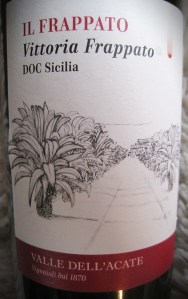
Today, I’m taking the vineyard row less trampled and seeking out something truly exciting and extraordinary. Say, “Ciao, Bella!” to a rare grape from the Mediterranean island of Sicily – Frappato! Tenuta Valle dell'Acate Il Frappato About this wine:
Il Frappato | Vittoria Frappato | DOC Sicilia | Valle Dell’Acate

  • 100% Frappato dry red wine
  • 12.5% ABV
  • Price between $20 – $30, depending on where you purchase
  • Aromas of cranberry, strawberry, and herbs blast out of the glass. I have never smelled anything quite like this wine. This is up there in terms of all-time favorite smelling wines.
  • On the palate: high acid but with soft fruity tannins. Delightful slightly chilled. Made for food.
  • From the winery’s tasting notes: “Aromas are fresh and overpowering with hints of red fruits, blueberries, raspberries, blackberries, violet flowers and sage. Fresh and vivacious flavors with a pleasant and persistent closing. Medium bodied with silky tannins. Best paired with fresh and aged cheeses, Sicilian red tuna, sushi and sashimi.”

I first tried this Frappato along with some other fantastic wines from this same winery at Arista Wine Cellars in Edmonds, Washington. My husband and I were so smitten with this baby we purchased a bottle and then ordered three more shortly thereafter.

The Tenuta Valle dell’Acate estate is in the southeast corner of Sicily and boasts organic vineyards. In the last 15 years or so, the quality of Sicilian wine has improved by leaps and bounds, thanks to better vineyard practices and new folks carrying out the work of growing the grapes and making the wine. As our tasting sheet noted, “It’s a good time to be drinking wine from Sicily.”

This may be true, but caveat emptor! In addition to this wine, I have tried two other Sicilian Frappatos, and neither one was molto bene. So keep in mind that not every Frappato will be as noteworthy as this one. This is the one to get!

To order this wine, purchase here.

As this wine is such a wonderful partner for food, I’ve also got an EASY dinner recipe that goes beautifully with this wine. Here is my riff on Joanna Gaines’ Grilled Raspberry Chipotle Pork Tenderloin from the Magnolia Table cookbook, adapted for the oven instead of the grill. As she states in the recipe introduction, this was the first way she cooked pork tenderloin and it’s been the only way she’s done it since. Ditto!

To round out the meal, serve it with steamed green beans, and either potatoes or rice.

Raspberry-Chipotle Pork Tenderloin
Recipe adapted from The Magnolia Table Cookbook by Joanna Gaines
Yields 8 servings

INGREDIENTS

  • 24 oz. bottle raspberry-chipotle sauce, preferably Fischer & Wieser (too much – save some to serve on the cooked pork)
  • 1/2 cup soy sauce
  • 4 T honey
  • 8 garlic cloves, finely chopped
  • 2 tsp. garlic powder
  • 2 tsp. garlic salt
  • 2 lbs. pork tenderloin
  • Vegetable oil

INSTRUCTIONS

  • Preheat oven to 400°F.
  • In a bowl, whisk together the raspberry-chipotle sauce, soy sauce, honey, garlic, garlic powder, and garlic salt. Place the pork tenderloins in a Pyrex baking dish and pour over the marinade. Roll it around a couple times to thoroughly coat. Cover and marinate in the refrigerator for 6 to 8 hours.
  • Remove the pork from the marinade and place it in a greased baking dish. Brush the pork with some of the marinade, then discard the remaining marinade.
  • Bake until pork reaches a safe internal temperature of 145°F
  • Transfer pork to a cutting board and let rest for 15 minutes. Slice crosswise and serve.
  • Tightly wrap leftover pork in plastic and store in the refrigerator for up to 3 days. Leftover cooked pork can dry out if reheated, but it makes delicious cold sandwiches and a quick taco filling.

Have you tried Frappato? Or made this recipe before? Comment!

Albariño: A Spanish White to Sip this Spring + Recipe

Happy Spring, readers! We are now fully plunged into the midst of this glorious season (at least for those of us who don’t have allergies). Hopefully you are being met with plenty of sunshine, gentle breezes, beautiful flowers that don’t make you reach for the antihistamines, and wine aplenty! 🙂 🍷

While any type of wine is perfectly fine any time of year, there are certain types of weather and seasonal cuisine that spur us to open up specific bottles for specific times. Ain’t nothing wrong with that.

One white wine that I haven’t gotten to know and appreciate until now is Albariño. I’d heard it praised among “folks who know” but the scant times I’d tried it my world did not turn upside down and it left me feeling “meh” in much the same way most Pinot Grigio does (unless they’re these). Those disappointing recommendations can cause you to question the “experts” and wonder why you’re not picking up on the same qualities they are. It can lead to self-doubt. Exploring wine should be fun and lead to self-confidence, even if you disagree with another’s assessment of a wine.

It wasn’t until I took a Spanish wine class that I tried a delicious one and understood a little better what makes this wine special. It made me say, “Whoa!” which in wine tasting is usually a good thing (depending on vocal inflections, of course). This white immediately captured my attention and is well worth seeking out for its great taste, price, and versatility. Your spring wine arsenal is incomplete until you get this!

But first, a brief bit of background on this fun-to-say grape from its fun-to-say place: Albariño (Al-ba-ree-nyoh) is a thick-skinned white grape grown in the region of Rías Baixas (REE-ahs BYE-zhas), in northwest Spain, or Galicia. Galicia, also known as Green Spain, is situated near the Atlantic coast, where abundant rainfall yields abundant greenery. Here, Albariño is made into a lively white wine that is drunk with seafood, and this hallowed pairing has become famous the world over. As someone who lives in the Pacific Northwest, another seafood destination with a climate similar to Rías Baixas, it puzzles me that I haven’t heard Albariño touted more often in restaurants and other wine settings? Well, time to upset the wine press and show this grape the amor it deserves!

Albariño Val Do Sosego Rías Baixas
Denominación de Origen
Albariño Val Do Sosego Rías Baixas

  • $18.99 at Total Wine & More
  • ABV 12.5%
  • Great citrus, peach, and mineral aromas
  • Pale straw yellow
  • Medium body
  • Great acidity in the mouth but not so much that that’s all you get
  • This has a little more fullness/roundness/body/elegance like you get from a Chardonnay, but still with the zippy, highly aromatic fresh fruit you get from a Sauvignon Blanc.
  • This Albariño is beautiful, delicious, spring worthy, and a very agreeable change of pace from your regular white wine (unless that happens to be Albariño, ha! But even so, hunt down this particular wine!). 🙂

I may have mentioned this before, and I believe it still holds true, but Spanish wines have some of the best price to quality ratios in the world (quality is about double the value, at least in the US). So if you buy a bottle of Spanish Tempranillo in the US for $30, the quality of the wine will be on par with more of a $60 bottle of wine. And another one of my favorite things about Spanish wines: because of aging requirements, they are ready to drink upon purchase. No scratching your head, googling how long to age a particular bottle, etc. Open and chug (after decanting, if needed)! Best. News. Ever.

While I did not whip up any fancy seafood dishes like octopus or halibut to pair with this wine (if you do let me know what you made), I did find a tasty and easy recipe that I think you will dig, especially for the spring season, when lighter foods are more de riguer. Here is a lovely light lunch to accompany a glass of this Albariño. I personally found the ratio of bread to filling to be lopsided, so I would recommend more of a tartine/open-faced sandwich concept: a griddled piece of herbed foccacia, topped with the cheese mix, and then with a lightly dressed (O & V) spring mix side salad to balance the dish. You can also use it as a cracker dip. Keep it as a sandwich if you like; it was just way too much bread for me in one sitting (but if you’re drinking a lot maybe you need those extra carbs). 😉

Whatever you do, drink this Albariño outdoors on a beautiful spring day with a friend. It will taste even better. ¡Salud! 🌷

Cherry Ricotta Tartine
Recipe adapted from Jackie Freeman’s book, A Hearty Book of Veggie Sandwiches
Yields 4 servings

INGREDIENTS

  • 1/2 cup dried tart cherries
  • 1 cup ricotta cheese
  • 1/2 cup grated Parmesan cheese
  • 1/2 cup sliced almonds, toasted
  • 2 tsp. fresh orange zest
  • 1 tsp. chopped fresh thyme
  • Kosher salt and freshly ground black pepper
  • 4 pieces herbed foccacia bread, sliced in half
  • Extra-virgin olive oil, for grilling

INSTRUCTIONS

  • Soak the cherries in hot water for 15-20 minutes. Drain well and chop.
  • In a bowl, combine the cherries, ricotta, parmesan, almonds, orange zest, and thyme. Season to taste with salt and pepper.
  • Preheat a panini press or skillet over medium-low heat. Spread each slice of foccacia bread with olive oil. Griddle bread until deep golden brown. Remove, and top with cheese mixture, and serve along side salad.

When Irish Eyes Are Smiling: A GSM to Steal Your Heart Away

Disclosure Statement: This post contains affiliate links. When you click on an affiliate link and make a purchase, I receive a commission at no additional cost to you. All opinions are my own.

Happy Pi Day, readers! It’s hard to believe it’s been one month already since Valentine’s Day. I don’t have any pie recipes for you today (see my Valentine’s Day post on grape galette), but with St. Patrick’s Day looming, I thought I would pull out a cherished bottle from my wine cellar with an utterly fitting name: Irish Eyes. Cue the Bing Crosby song.

This lovely bottle came home with me after a Saturday out tasting solo in Woodinville (a city in Washington state with a bajillion wineries). This wine was not part of the tasting flight that day but I am sure glad my server poured it because it stole my heart and I had to go home with it. As a matter of fact, both wines I purchased that day from two different wineries were not on the flight menu, including a ridiculous Cab Franc that I need to write about soon.

For those of you who don’t know, GSM stands for the three red grape varieties of Grenache, Syrah, and Mourvèdre. These three varieties comprise a famous red wine blend you’ll find traditionally in France’s Rhône Valley and also Spain’s Catalonia region. There is a reason these three grapes are frequent bottle-fellows. Here is a quick snapshot of what each grape variety is like and what each typically contributes to a blend:
Grenache: raspberry, cherry flavors. Medium body, low/medium tannin and acid, high alcohol.
Syrah: blueberry, plum, smoke, pepper, meat flavors. Full body, medium tannin, alcohol, acidity.
Mourvèdre: dark fruits, chocolate, velvety texture. Deep, dark, inky color. Full body, high tannin, medium high alcohol, medium acidity.

Together, they make some of the world’s greatest wine blends. 🍷

Irish Eyes is made by Tinte Cellars, and named in honor of the owners’ Irish parents. Tinte Cellars crafts premium Washington state wine, as evidenced by this exceptional bottle. But not only are they making award-winning delicious wine, they are engaged in a wide range of charitable activities. The family-owned business operates to give back generously to the community through a robust philanthropic program. Check out all the cool things they are doing here. All the more reason to visit them for a tasting, take home a bottle (or a few), and maybe even join their wine club. It sounds like they have a lot of fun doing good. ❤

Here’s their take on a GSM blend:

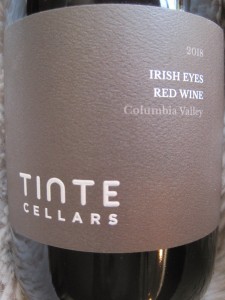
Tinte Cellars Irish Eyes Red Wine

You’ll be smiling once you sip this wine.

Tinte Cellars 2018 Irish Eyes Red Wine Columbia Valley

  • $48/bottle
  • Composition: 41% Grenache, 39% Syrah, 20% Mourvèdre
  • Alcohol: 14.8%
  • Color: Deep ruby
  • Aromas: Raspberry, Blackberry, Plum, Pepper, lavender/rosemary, smoky, touch of leather, orange peel
  • Flavors: cherry jam, orange pekoe tea
  • Tannins: Very soft, gentle, velvety, in the background
  • Body: medium
  • Acidity: Moderate. It’s there to play enough of a role but it’s super even-keel.
  • Finish: Not super long. But not super short, either.
  • Winemaker’s Notes: “Aromas of mixed berries and black tea give way to cherry jam and orange zest on the palate. The finish treats you to berry punch and a hint of butterscotch.”

This wine is delicious on its own so it does not need any food to go with it. I happened to drink some of this along with my dinner of Smoky Lentil Stuffed Sweet Potatoes, and it was very tasty.

I don’t think you can go wrong pairing this with corned beef and cabbage. It certainly has the structure to handle juicy beef and other typical St. Paddy’s Day fare. We are having our Irish feast on Sunday, and my mouth is watering just thinking about the menu. I’ll even be whipping up my Bailey’s Irish Cream cheesecake for dessert. 😋

Have you tried this wine? What did you think? Let me know in the comments.

Happy St. Patrick’s Day, and Happy Almost Spring! 🍀

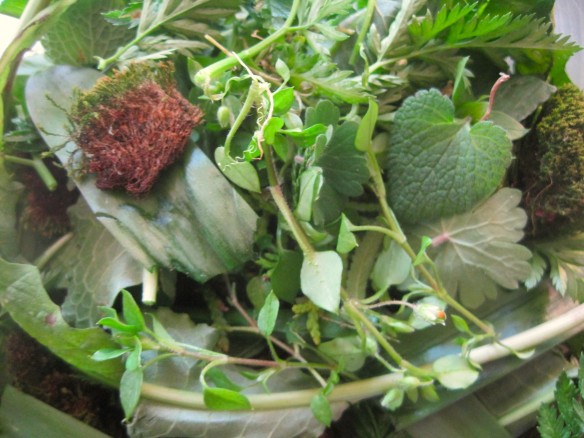
Spring mix from my yard

Spring is springing! My daughter’s “salad” made from weeds and grasses pulled from our yard – I love all the shades and textures of green.

NatGeo Award Classics Campaign

Love You Bunches Grape Galette and Sparkling Wine

Disclosure Statement: This post contains affiliate links. When you click on an affiliate link and make a purchase, I receive a commission at no additional cost to you. All opinions are my own.

Happy Valentine’s Day, readers! ❤ I hope you fell in love with the dark chocolate + ruby port duo we explored yesterday. For my final post in this mini themed series, I am leaving chocolate behind, diving into homemade dessert territory, and popping open a bottle of bubbly to accompany it. Intrigued? Read on!

I have to admit I am not the biggest fan of sparkling wines (including Champagne), which is reflected in the number of posts I have written on the subject. But every now and then I reluctantly try some more to see what the fuss is all about grow in my appreciation and understanding of wine. In order to keep learning, I have to challenge myself with all wines, even ones I don’t gravitate towards (yes, I mean you, rosé). What’s making me take more notice of sparkling wine lately though is the fact that it can pair well with a number of different types of foods.

I have Total Wine & More to thank for introducing me to this charming sparkling wine from the Burgundy region of France, known as a Crémant de Bourgogne. While these wines are made in the same méthode traditionnelle as their famous neighbors in Champagne, they cannot be called Champagne due to the fact that they are not from the geographic region of Champagne, France. Remember, European wines are usually called by place, not grape variety. This is helpful to us consumers who enjoy sparkling wine once or twice a year but don’t need to spend an arm and a leg on a bottle of the fancy stuff (although there is nothing wrong with loving the fancy stuff). Options like Spanish Cava, Italian Prosecco, this gorgeous sparkler from California, and today’s Crémant de Bourgogne are handy to keep in mind whilst shopping for bubbles.

Louis Bouillot Extra Dry Sparkling Wine

Louis Bouillot Extra Dry Sparkling Wine

  • $25/bottle at Total Wine (approximately half the starting price of true Champagne)
  • 12% ABV
  • Medium body with some sweetness (extra-dry actually means more sugar than brut/dry – I know, makes zero sense), focused and tight perlage (bubbles)
  • Some yeasty aromas but also peach, apple, pear flavors
  • While I am not reviewing the Brut here, it is available on wine.com for you to try, where it retails for around $18-$20/bottle. This one will be less sweet.
  • I definitely recommend this wine, and am already excited for the next time I can pop open another bottle.

When it comes to desserts, I prefer anything in the chocolate, cake, and cookie departments, but that’s not to say I never diverge into other territories. Plus, it’s Valentine’s Day, so I am considering my husband’s preferences here, which fall squarely in the pie and fruit dessert departments. 🙂

This dessert uses only FOUR ingredients and is a snap to throw together, even for non bakers. Plus, how often do you see a dessert made from grapes anyway? Take this unusual recipe for a spin and pair it with this lively and refreshing sparkling wine. Together, they bring out the best in each other (yes, you can use that in your Valentine’s Day card if you must). 😉

Happy Valentine’s Day! ❤

Please note, this galette is very sweet, and for me personally it’s a bit much when paired with the sparkling wine. To tame the sugar a bit, slice up some rich, creamy Brie cheese to balance out the high levels of sweetness in the dessert and also complement the sparkling wine.

For additional dessert ideas from The Rambling Vine, check out:
Sparkling Rosé Cake with Candied Roses
Snickers Cheesecake
Oatmeal Chocolate Chai Tea Cookies

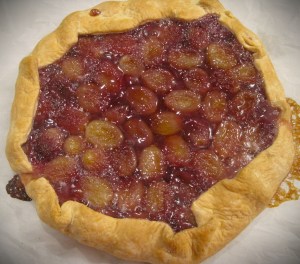
Love You Bunches Grape Galette
Serves 8
Recipe courtesy of Oregon Wine Board
Adapted from Kristin Marchesi of Montinore Estate in Forest Grove, Oregon

Ingredients

  • Pie dough rolled out into a large circle 18-20 inches in diameter* (I used a Jus-Rol pre-rolled pie dough and literally unwrapped it, plopped it on the baking sheet, poured the fruit filling inside, and folded the dough up and around the sides to make a galette)
  • 1 pound seedless grapes (no slicing required, just wash them)
  • 1/2 – 3/4 cup sugar, depending on tartness of grapes
  • 2 tablespoons cornstarch

Preparation

1) Whisk the sugar and cornstarch together and then add it to grapes. Stir to combine until the starch is completely hydrated and sugar has evenly coated the grape skins.

2) Place the dough on a sheet tray lined with parchment paper. Pour the filling into the center of the dough circle and fold the edges over the filling covering the perimeter but not the center. Chill for 20 minutes.

3) Preheat the oven to 400° and bake the galette for 10 minutes, then reduce the heat to 350° and rotate the sheet tray. Continue baking for approximately 30 minutes until the crust is golden brown and the filling is bubbling. Cool for at least 30 minutes before serving.

Love You Bunches Grape Galette

Easier than pie – galette!

Get up to 40% off Select Gift Baskets and Free Shipping on orders of $49+ Code: FREESHIPGIFT

Wine + Chocolate: Finding Dark Chocolate’s Soul Mate

Disclosure Statement: This post contains affiliate links. When you click on an affiliate link and make a purchase, I receive a commission at no additional cost to you. All opinions are my own.

Wine and chocolate… two of God’s most revered gifts and humanity’s most celebrated gustatory creations, coming in a range of colors and flavors. You already know how divine Brachetto and milk chocolate can be together. I posted on it last year and apparently I had posted on it years before. (Oops. Just take that as a sign of how good it is.) 🙂

But are wine and chocolate better together, or should each just be enjoyed on its own? If so, which ones work together and which ones flat out don’t? Since Valentine’s Day is imminent, I’d like to explore this question with you, with the goal of sending you home with an amazing wine and chocolate pairing that will score some serious brownie points with your loved one(s). No pun intended with the brownies.

Today, we’re going to step out of the light and into the dark and sensual realm of chocolat noir. But what to pair with the darkest of the dark, the richest of the rich? Be prepared – it’s an indulgent pairing that may or may not be what you’re thinking.

Compared to milk chocolate, dark chocolate is bitter, with fruity notes, and very tannic, thanks to those blessed polyphenols that are so good for us and cause the grippy sandpapery feeling in our mouths. And what do a lot of red wines tend to be? Dry, bitter, and tannic. You would think all these shared traits would make for a great pairing, but it frequently has the opposite effect in the mouth – bitter and bitter do not make good bedfellows (duh, says every couple alive). Some other red wines probably go well with dark chocolate, but pairing can get tricky and takes some trial and error. You have to take into account more factors in the wine (sweetness, alcohol, acid, tannin, fruit, etc.), and this requires more experimentation than I have time for today (or tonight as I write this).

But one type of red wine is always a sure bet and a foolproof partner to dark chocolate… ruby port.

wine and chocolate pairing

You have to try it to believe it.

Ruby port? you ask, confused. Not Cabernet Sauvignon? Not Merlot?

Um, a resounding yes, and here is why.

Ruby port and dark chocolate are a perfect match because they create balance together. The richness, intensity, and body of both are similar, but the port’s sweetness contrasts beautifully with dark chocolate’s bitterness. Dark chocolate will simply amplify bitterness and tannins in a dry red wine like a Cab or Merlot and make for a disappointing pairing. We can’t have that now, can we?

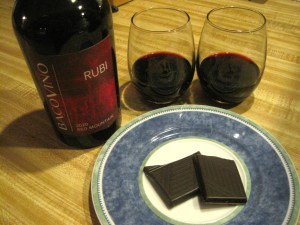
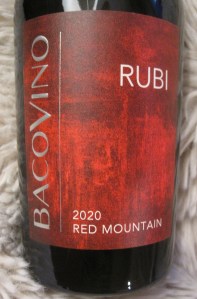
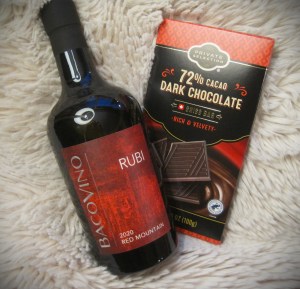
I am lucky enough to have some Bacovino Rubi 2020 Red Mountain Dessert Wine lying around, and opened some up to pair with dark chocolate. Sumptuous, silky, and made from Washington Syrah grapes versus the traditional Portuguese grapes (various Tourigas and Tintas), it’s a divine treat that showcases well the depth and beauty of Washington grapes in this wine style.

Here is all you need to know about this lovely wine:

Bacovino Rubi 2020 Red Mountain

  • 100% Red Mountain Syrah made into a port-style dessert wine
  • $45/bottle
  • 19.5% ABV
  • Beautiful label that commends itself as an attractive Valentine’s Day gift
  • Sweet and smooth but the acid and alcohol pull it back from “syrup” territory
  • Delicious right now, but imagine laying it down for a number of years – whoa baby! It will just continue to get richer and more complex with age.
  • Deep ruby color
  • The winemaker notes: “Appealing red fruit and white pepper followed by a lengthy, candied finish.”

For the dark chocolate, I used Private Selection 72% Cacao Dark Chocolate Swiss Bar from my local grocery store. It’s absolutely delicious chocolate and is typically less than $3/bar (so you can splurge on this amazing dessert wine). When paired with the port, it’s like a chocolate covered cherry exploding in your mouth. Dear. God.

Bacovino Rubi and Dark Chocolate

Look no further for your Valentine’s Day gifts.

While there are numerous wine and chocolate pairing recommendations for Valentine’s Day, many might not be steering you in the right direction. Ruby port and dark chocolate is a time-tested, decadent, indulgent pairing that is a guaranteed hit. You could use any dark chocolate bars, truffles, or even a flourless chocolate torte. Just make sure it’s dark chocolate, not milk.

Random tip from a winemaker I spoke to not too long ago – she recommended enjoying port/dessert wine as an aperitif (a before dinner drink). I tend to think of port keeping post as the ultimate dessert wine/after dinner drink (which it rightfully does), but what a novel way to think about it: a little treat for when you want to sip some wine while you make dinner. Put it in a little crystal glass and turn cooking dinner into less of a chore. 🙂

Are you a dark chocolate & ruby port fan? Comment below with your favorite brands! And let me know if you try the Rubi. 🙂

Happy Valentine’s Day/Wine & Chocolate Day, readers! ❤

NatGeo Award Classics Campaign

Your New Favorite Kiwi Juice: Matua Sauvignon Blanc

Disclosure Statement: This post contains affiliate links. When you click on an affiliate link and make a purchase, I receive a commission at no additional cost to you. All opinions are my own.

Happy February, readers! It is the month of love and I have some LOVELY wines to share with all of you. Get excited! But first, a confession….

I was going to do a Part I of a Valentine’s Day series on pairing wine with chocolate – specifically white chocolate – but while the white chocolate truffles I selected were delicious, they did not work great with either the New Zealand Sauvignon Blanc or the Willamette Valley Pinot Noir I paired them with. Phooey, and those pairing recommendations came directly from a well-known wine blog (yikes). I have integrity, which means I cannot tell a lie and give you a bad wine and chocolate recommendation. Thankfully, these poor pairings gave me a REALLY great idea for a white chocolate and wine pairing, but I’m out of wine dollars for the moment so we’ll save this idea for Valentine’s Day next year.

Stay tuned for a different wine and chocolate pairing coming up before Valentine’s Day! ❤ 

But in the mean time, I need to go ahead and just share this Sauvignon Blanc with you already because I’ve known about it for a while and it’s a crime to withhold this knowledge from you any longer. And wouldn’t you know it? February 6th was Waitangi Day, a national holiday in New Zealand that marks the signing of the Treaty of Waitangi, the country’s founding document. Ha, whaddya know, bro?

So in honor of the glorious wine-producing nation of New Zealand, I present to you, Matua Sauvignon Blanc! This pretty bottle retails for about $11 at my local grocery store, or $14 on wine.com (if you purchase through this link or the one below, it supports the blog, thank you very much). The balance and flavor profile for the price is amazing! A typical Sauvignon Blanc, it offers mouth-puckering acidity, light body, refreshing citrus and mineral flavors with a touch of tropical fruit.

Check it out….

Matua Sauvignon Blanc

Is he sticking his tongue out or salivating because the wine is so good?

Matua Sauvignon Blanc:

  • An excellent price point (which is important these days)
  • From Marlborough, NZ – the global epicenter for New World Sauvignon Blanc
  • 13% ABV
  • Pale straw color with a greenish hue
  • Powerful, scintillating aromas erupt out of the glass: passionfruit, kiwi berry, sugared grapefruit peel, macadamia nut, fresh cut green grass
  • Flavors of citrus, lime, gooseberry, and some tropical fruit (melon)
  • Tart, lively acidity that refreshes and plunges you into pure enjoyment, without being searingly zingy, it also boasts a juicy, full mouthfeel even with its light body
  • Word from the winemaker: “This classic Marlborough Sauvignon Blanc is deliciously pure, bursting with ripe lemon citrus notes and hints of passion fruit and basil. The palate is fresh and vibrant with concentrated blackcurrant leaf and a touch of classic cut grass and green melon. So refreshing, you’ll be left wanting more.”

While I wouldn’t recommend pairing this with white chocolate, it will go great with seafood, chicken, and grilled vegetables. But honestly, it’s so good you should just drink it on its own and not mess with greatness.

I shared this with a friend whose favorite wine is Sauvignon Blanc and she loved it. I hope you do, too! Let me know what you think.

Kia Ora, Bros! 🙂

Love Sauvignon Blanc? I have a review of another fantastic New Zealand Sauvignon Blanc here.

NatGeo Award Classics Campaign

Mexico: Land of Cerveza, Tequila, and… Vino?

Disclosure Statement: This post contains affiliate links. When you click on an affiliate link and make a purchase, I receive a commission at no additional cost to you. All opinions are my own.

In which I try a red and a white wine from Mexico….

Cinco de Mayo is just around the corner, and our cherished Mexican restaurants are about to get CA-ROWDED. (A little trick of mine – eat at an Irish pub on Cinco de Mayo and eat at a Mexican restaurant on St. Patrick’s Day). After all, for most Americans, it’s about the spirit of the celebration, not the actual date, right? 😉 Yep, hasn’t failed me yet.

After fantasizing over chips n’ guac for a moment, I stopped to ask myself if I had ever had any MEXICAN WINE before. No, I don’t believe I have, I concluded. So self and I went to wine.com and searched for Mexican wine, and then ordered some.

Pack your bags and grab your sunglasses and sandals, we’re heading south of the border for a quick tour! This is for those of us who prefer wine over cocktails, and are curious enough to try a different Mexican beverage. It’s not Cinco de Mayo without Margaritas, claro que sí, but just for fun, since this is a blog dedicated to having fun exploring wine, let’s try some Mexican vino together.

(To whet your appetite, I do have a delectable Margarita recipe coming your way later this week. Watch for it, it’s a beauty!)

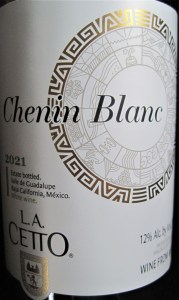
Wine #1: L.A. Cetto Chenin Blanc 2021
L.A. Cetto Chenin Blanc

  • $11/bottle at wine.com
  • 12% ABV
  • Estate bottled/Valle de Guadalupe/Baja California, México
  • Pale yellow with greenish hues
  • Light body, oily texture
  • Strong, refreshing acidity
  • The nose is lovely and highly aromatic. Aromas and flavors include: honeysuckle, peach, yellow apple, pear, honey, banana, melon

Something I did not know about Chenin Blanc is that it maintains a strong level of acidity, even under warm growing conditions. Normally grapes grown in warm climates develop higher levels of sugars than acids.

This would be stellar with fish tacos or pollo a la crema. I tried it with jalapeño-pickled green beans, brie cheese, and whole grain crackers to cure late-night grumbling stomach woes. Great flavors and pairing!

I was surprised by this little Chenin Blanc – it was very nice!

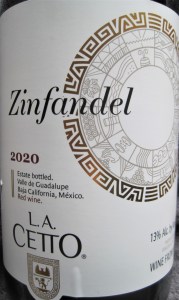
Wine #2: L.A. Cetto Zinfandel 2020
L.A. Cetto Zinfandel

  • $11/bottle at wine.com
  • 13% ABV
  • Estate bottled/Valle de Guadalupe/Baja California, México
  • Medium ruby with magenta tint
  • Light body, medium acidity, dry
  • Tannins are soft, gentle, in the background
  • Moderate finish
  • The nose is really lovely. Initial aromas: peach pie, cinnamon, juicy fresh strawberry, red cherry, watermelon, rhubarb, lemon blossom, pepper, clay. After several days of being open, it showed strong hibiscus, cranberry, and cherry.

My guess before I even tried this was that it would be highly similar to a California red – full body, higher alcohol, lower acid, off dry/residual sugar, and moderate tannins.

Here is what I discovered: this Mexican Zinfandel was absolutely nothing like any other Zinfandel I’ve ever had before. Not even Italian Primitivo, which is genetically similar to Zinfandel.

This was quite different from the dark, inky Zinfandels I’m accustomed to; it lacks the complexity, full body, and moderate tannins. I don’t know if that is an issue with the grapes or the winemaking. Truth be told, even though Zinfandel grapes produce dark, rich wines, their skins are actually rather thin, which should translate to lighter bodied, less tannic wines.

This wine was interesting in that it was so unusual from what I’ve typically experienced in Zinfandel. It does develop more complexity after a few more days of being open, and good on it, it is quite long-lasting without suffering the ill effects of extended bottle opening.

Treat this Zinfandel like a light, juicy, fresh red, and it will make you happy. This Zinfandel could be muy complementario with chile verde. I haven’t tried it, but if you do, let me know if it worked. 🙂

In conclusion, I personally preferred the Chenin Blanc overall, but I would recommend trying both (at only $11/bottle, they are each an easy way to explore Mexican vino). The Zinfandel was fine; it was just unusual for Zinfandel and that was why I had a hard time comparing it. But if you can treat it with an open mind, especially if you’re not a huge California Zinfandel fan, you might actually enjoy this wine. L.A. Cetto also makes a Chardonnay and a Cabernet Sauvignon. Wine.com also offers another label from Mexico that is spendier and from a different region, which I have not tried.

Have you ever had Mexican wine? Comment below!

Nat Geo Wines of the World

An Argentinian Treasure for World Malbec Day

Disclosure Statement: This post contains affiliate links. When you click on an affiliate link and make a purchase, I receive a commission at no additional cost to you. All opinions are my own.

Hear ye, hear ye! Today I doth proclaim World Malbec Day, a day to solemn ourselves and pay tribute to the magnificent Malbec grape, and all its vinous manifestations, forsooth (rolls up scroll).

Yep, here we are with another wine holiday on our hands. This time it’s World Malbec Day; yea verily yea (I really need to start using that phrase IRL)! It’s interesting that Tannat Day and Malbec Day are so close together on the calendar, and they are the signature grapes of neighboring countries Uruguay (Tannat) and Argentina (Malbec). Not sure if this was done on purpose or not, but it makes sense to continue our little South American sojourn, so vámanos.

Malbec is a wine I have intensely adored, especially in my beginning days of wine exploration. And I still love it. I haven’t had it as much lately because I’ve been spending my wine budget elsewhere, but for me and many in the world it’s a classic.

I’ve had wonderful Malbecs from my home state of Washington, but today I’m unlocking my wine treasure chest to introduce you to one of my favorite Argentinian Malbecs, which will give you a great idea of why Malbec shines in this country.

Malbec and Tannat have similar backstories. In the 16th century, Spanish missionaries spread vinifera plantings throughout Argentina to establish a supply of sacramental wine. Using the farming practices of the natives, the Spanish irrigated the vineyards in the valley with ice/snow melt from the Andes Mountains. In the late 1800s and early 1900s, many European immigrants came to Argentina and brought with them new grape varieties, including Malbec. Both Tannat and Malbec are grapes native to southwest France.

This particular Malbec is magical. I used this wine in a class I taught to illustrate Old World vs. New World wine characteristics (essentially, warmer climates yield grapes with higher sugar content, and cooler climates yield grapes with higher acid content, because they don’t ripen as much as their warm climate counterparts). Everyone loved it, and this beauty just got more interesting and sumptuous the longer it revealed itself in the decanter.

For best results, decant for 30-60 minutes prior to drinking. If it’s for a group, pour out the whole bottle into a decanter.

Here are the details and my impressions of the wine:

Phebus Malbec Gran Reserva Mendoza Argentina

Phebus Malbec Gran Reserva Mendoza Argentina. Photo courtesy Total Wine.

Phebus Malbec Gran Reserva Mendoza Argentina

  • $27/bottle at Total Wine
  • Full body, lots of heft, 15% ABV
  • Good acidity providing solid structure
  • Bold, unfolding layers of blackberry, black cherry, coffee, chocolate, tobacco
  • Velvety texture
  • Long, complex, irresistible finish

As I have regrettably lost my tasting notes from the last time I had this wine, my list may be missing a few details, but I’m providing you with the product description from Total Wine, which sums up my recollection as well:

“A very complex and elegant wine with floral aromas of violets, black cherries and licorice. On the palate the wine is deep and rich, perfectly balanced with delicate silky tannins and well integrated French oak. Perfect with a juicy steak, game, rich cheeses and chocolate desserts.”

My husband picked up this wine from Total Wine years ago. We first had it with a roast and it was magnífico. It’s one wine we turn to again and again and we are always floored by its quality. Remember, Argentina is also famous for its excellent beef, so Malbec + steak = natural harmony.

Total Wine also sells the Phebus Malbec ($14) and the Phebus Malbec Reserva ($17) in addition to the Gran Reserva ($27). I’ve had the Reserva which is still excellent – not as outstanding as the GR but nevertheless a wonderful wine for the price. You can try the others, but the Gran Reserva is unbeatable in style and quality. Go ahead and splurge on this version, I assure you it’s worth it!

For fun, buy all three bottles and do side-by-side tasting comparisons. See if you think they are each worth their price. Call it your World Malbec Day fiesta!

Happy World Malbec Day! Do you have a favorite Malbec I should know about? ¡Dígame! 🙂

Nat Geo Wines of the World