A Rocks District Gem to Rock Your World

Ah, Syrah… one of the world’s great noble varieties. It can sneak across the stage in the background: dark, cloaked, brooding, and mysterious, but it can also slide out onto front and center stage screaming its head off, shredding an electric guitar at a dizzyingly fast pace. And then, everything in between. It can be so many different styles, depending on where it is grown, and how it is vinified.

Que sera sera, or rather, Que Syrah, sera. What Syrah is, it will be.

I need “Que Syrah, sera” on a t-shirt or bumper sticker. 🙂

You think you know Syrah? Think again. Have you ever been fortunate enough to taste a Syrah borne out of the Milton-Freewater Rocks District in Oregon? Well, my friend, let’s chat….

Wines from the Rocks District AVA (American Viticultural Area) have gained acclaim for their distinctly savory and mineral characteristics, which make them taste especially unique.

Let me give you a quick geography lesson….

Take a glance at this map of Washington state wine AVAs and below it the Oregon state wine AVAs:
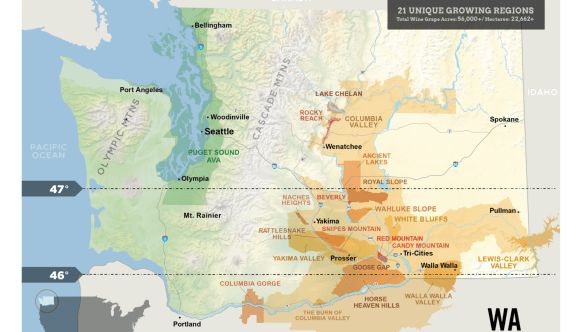
As you can see on the Washington map, the Walla Walla Valley AVA includes land in both Washington and Oregon states. The Rocks District of Milton-Freewater (#22 on the Oregon map) is situated WITHIN the borders of the larger Walla Walla Valley AVA, but is completely on the Oregon side of the Walla Walla Valley AVA.

The only wineries that can put Rocks District AVA on the label have to produce AND bottle their wine in the state of Oregon, which is where the Rocks District AVA is. However, many Washington producers, even though they may source grapes from the very nearby Rocks District, are producing and bottling wine in Washington STATE, so they can only label their wines with the Walla Walla Valley AVA.

So, chances are high I’ve very likely had a Syrah from Walla Walla that contained Rocks District grapes. But with a Washington winery, it wouldn’t necessarily indicate so on the label. On the Washington side, digging deeper is required (sorry for all the rock puns, they’re gonna come flying). 😉

There. Clear as alluvial silt? Hopefully that didn’t hurt your brain too much. If so, take a sip of wine.

So, what makes the Rocks District soil unique? Why all the fuss? In a nutshell, tons of basalt cobbles spewed from a volcanic eruption and deposited by flood waters.

There is literally no topsoil which forces the vines to go DEEP into the earth, to struggle, and this causes the grapes to be lower in number of clusters and smaller in berry size (leading to more powerful, concentrated wine).

These topographical and climatic conditions result in some jaw-droppingly incredible wine, not just with powerful body and tannins, but with aromas and flavors of meat and brine.

Incidentally, if you’d like to read a bit more about minerality in wine from a winemaker (it’s very interesting and not too long), check out winemaker Matt Brain’s  (no, not a typo for Brian – I triple checked) 🙂 article on minerality in wine. Basically, according to Brain,

“… minerality in the soil does not seem to be the major contributor to minerality in the glass. Soils that are thin or deprived of organic matter, however, may contribute to a less fruity and floral grape, allowing mineral characters to be more easily identified.”

Hence why Rocks District wine aromas and flavors come across more pronounced on the mineral spectrum than the fruit/flowers/herbs/spices/etc. spectrums.

This particular Syrah is one I fell in love with at the McMinnville Wine + Food Classic in Oregon. It has rocked me to my molten core every time I’ve tried it and I’ve held on to my one bottle for long enough now. Time to pop the cork and relive the magic!

Rue Cler Rocks District Syrah

Rue Cler Rocks District Syrah

  • $48/bottle
  • 14.4% ABV
  • Sourced from Noble Rock Vineyard in Milton-Freewater, Oregon, Rocks District AVA
  • Winemaker’s notes: “2019 Rocks District Syrah is soft and subtle but lookin’ sharp. Black fruit takes a backseat to savory meats, crushed violets and brine. A charcuterie for the senses! Huckleberries and wet stone give great acid that lingers on the finish. Decant to discover layers of earth and umami in your glass.”
  • Medium ruby color
  • Black plum, soft violet floral component, boysenberry, minerals
  • Very full and soft, not as much punch as I recall it having
  • Aromatic complexity that blew me away initially was not as strong at home
  • Tannins are there but not overpowering
  • Some acidity but very discreet
  • The complex fruit seems to vanish quickly
  • Still, a delicious wine I would buy again

While I was a little surprised this wine didn’t have quite as much acidity as I remember it having when I had it at SIP, it nevertheless delivered much pleasure. Wine is constantly evolving, and it’s highly susceptible to the different environments we drink them in (hello, dinner cooking in the kitchen with poor ventilation) and the various physical states WE consume them in (time of day, hormone levels, and so many other things ALL influence how a wine tastes to us).

This wine is a wonderful introduction to the Rocks District Syrah genre. It is a wine to savor and explore, and I would absolutely buy this wine again.

I hope to unearth some more red wines (especially Syrahs) from The Rocks District of Milton-Freewater. These are something phenomenal and extraordinary. I’m hooked!

Here is a cheat sheet of other wineries using Rocks District fruit if you’d like to go on the hunt for some fine bottles o’ wine: Rocks District Wineries.

Have you ever tried a Rocks District Syrah? Comment!

McMinnville Wine + Food Classic 2023: A Review

On Friday, March 10th, I got up early and hit the road to make the journey down to McMinnville, Oregon, where the 30th Annual McMinnville Wine + Food Classic was taking place. I had not been since 2019, so the absence had definitely compounded my excitement.

This event goes for three days (Friday, Saturday, and Sunday) at the Evergreen Aviation and Space Museum, and is a fundraiser for St. James School in McMinnville, OR. You can purchase tickets for as many days as you like. They even offer shuttle service from downtown McMinnville to the Museum.

McMinnville Wine + Food Classic 2023, Evergreen Aviation and Space Museum. Photo courtesy Eagle Eye Droneography.

McMinnville Wine + Food Classic 2023, Evergreen Aviation and Space Museum. Photo courtesy Eagle Eye Droneography.

There are tons of wineries, but also distilleries, cideries, meaderies, breweries (all the eez). There is obviously food, and a handful of artisans and crafters. You can peruse all of the 2023 participating vendors here.

I tried numerous pours of wine. I would have loved to have tried some other alcoholic products but stuck to my original plan (maybe next year).

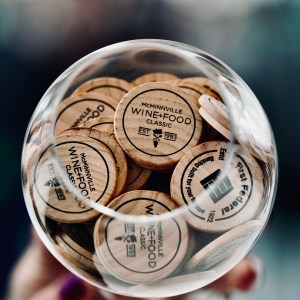
Your ticket purchase includes two tasting tokens. At most places, one token is equal to one pour, but for certain specialty and library wines, two or even three tokens might be required. I wound up purchasing 15 additional tokens, and that was MORE than enough. Having an additional day or two to try more wines would be ideal but I could only attend one day.

Tasting tokens for the McMinnville Wine + Food Classic 2023, Evergreen Aviation and Space Museum. Photo courtesy Eagle Eye Droneography.

Tasting tokens for the McMinnville Wine + Food Classic 2023, Evergreen Aviation and Space Museum. Photo courtesy Eagle Eye Droneography.

I obviously was not able to try every single wine and winery at the festival, but out of the ones I did, here are five wineries and their wines that stood out to me, and that you would not be remiss in checking out. Please note that at some of these vendors I only tried one pour, so this is based on the limited amount I tried that day. I also would have loved to have purchased more bottles but, alas, budgets. 🙂

  1. Denison Cellars 2019 Björnson Vineyard Pinot Noir: This wine really captivated me. Their Pinot was elegant, complex, expressive, beautiful. I sure wish I could have tasted their full line-up but I was trying to spread my tasting tokens out to try more wineries. Time to plan a private tasting at their vineyard in Salem! From the tasting notes: “The resulting wine is deep ruby in color and displays aromas of black cherry, pomegranate, and cranberry. With hints of cola and all-spice, the ripe, velvety tannins provide structure for rich, mouth-filling volume. Flavors of dark red fruit persist into a lingering finish.” $48/bottle. *Of special note for Oregonians: FREE LOCAL DELIVERY for those in Yamhill County, Salem, and Portland with any 3+ bottle purchase. I cannot wait to return and taste more of their wines.
  2. Patton Valley Wines 2018 Lange Vineyard Pinot Noir: Patton Valley has been a brand for over 25 years, but at the moment they are a nomadic winery with no permanent tasting room. I think that’s cool because I’m sure it allows them to save a ton of money and put that towards great winemaking; plus it’s a chance to get creative and have some fun, different tasting options. This was a delicious Pinot Noir I decided to take home as well. $55/bottle. According to the tasting notes, it has a “lush red fruited nose” and a “broad and silky palate.” This is a winery whose offerings you must try if you’re into specific Pinot Noir clones from particular Willamette Valley area vineyards. Visit their website to order wines and to learn where they are pouring.
  3. Domaine de Broglie 2019 Clone 777 Pinot Noir: Established in 2019, Domaine de Broglie is a more recent newcomer to the Dundee Hills AVA. This estate is owned by Francis Ford Coppola and was previously Vista Hills Vineyard. At the 2023 McMinnville Wine Competition, this showstopper wine took home Best of Show, Best Red Wine, and Double Gold! Uh-huh. Here are the tasting notes, you’ll see why: “Aromas of mushrooms, cedar, and forest floor mingle with sweeter aromas of vanilla coffee. A savory, well rounded palate counterpointed with notes of strawberries, red fruit, and salted caramel. An outstanding wine, showcasing the range of expression found in Oregon Pinot Noir.” $62/bottle, 100% Pinot Noir. This wine is music in a glass! This is the indulgence bottle. I did take this beauty home. (I also recall a tried a very enchanting Chardonnay).
  4. Rue Cler 2019 Rocks Syrah: Oh, wow! This is one I will be buying in the future, so intriguing and delicious. $48/bottle, sourced from Noble Rock Vineyard in Milton-Freewater, OR. From the tasting notes: “Black fruit takes a backseat to savory meats, crushed violets and brine…. Huckleberries and wet stone give great acid that lingers on the finish…. Decant to discover layers of earth and umami in your glass.” If you like wines with savory flavors and plenty going on, you’ll love this! Side note: I did not try their Walla Walla Syrah, but one of my tasting companions did and she kept going back for more sips. 🙂
  5. Siltstone 2021 Willamette Valley Pinot Noir: What I especially enjoyed about Siltstone Wines was they make a very good, very drinkable Pinot Noir for $24/bottle. You’re greeted with aromas of cherry, red fruit, and vanilla spice on the nose, and flavors of cherry cola and plum on the palate. The wine is medium-bodied with balanced tannins and a soft smoky finish. As much as I love ultra-fine, premium Pinot Noirs, I just can’t afford them all the time, and I’ll bet you can’t, either. And while $24 for a bottle of wine is a lot for many people (especially right now), when you look at overall pricing for good quality Pinot Noir, you’ll see that it’s very difficult to find GOOD stuff like this in this price range. This is a bargain for lovely Pinot Noir. I also would love to try more of their wines someday.

This event is a great way to get acquainted with a variety of fantastic Willamette Valley wineries all under one roof, and a great excuse to do something fun with your friends.

Have you been to the McMinnville Wine + Food Classic? If so, what did you try and like there? Comment below!

McMinnville Wine + Food Classic 2023, Evergreen Aviation and Space Museum. Photo courtesy Eagle Eye Droneography.

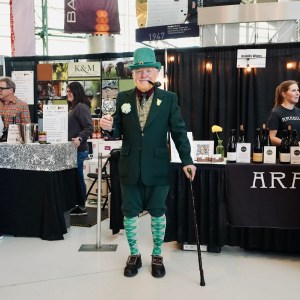
Definitely the best dressed guest! Photo courtesy Eagle Eye Droneography.

How to Survive (and Thrive!) at a Wine Festival

I love wine festivals. I love the excitement of a gigantic room filled with a dazzling array of wines waiting to be tasted and interesting and fun people to talk to about wine. I love strolling around, perusing the tables with their bottles all lined up, many flanked with medals for various wine awards, being loaded up with pours, swirling my glass, downing divine liquids. Heaven!

But I don’t love the toll the higher than normal amount of alcohol takes on my body. Personally, two big glasses of wine (no, not this kind) spread out over the course of an evening, is my limit (As an Amazon Associate, I earn from qualifying purchases). And I have zero desire to try and break personal records here.

So how do you enjoy a wine festival without going overboard and waking up the next day with a raging headache, empty wallet, or other ill fates? In short, regret?

McMinnville Wine + Food Classic March 2019

McMinnville Wine + Food Classic, taken March 2019 at the Evergreen Aviation and Space Museum in McMinnville, Oregon. No, they didn’t let us climb in the planes.

Fear not, it’s not impossible; you can have your wine and drink it, too! Remember you are not here to compete; you are here to do as many tastings as your body will allow you to do comfortably. A wine festival is kind of a weird amalgam of speed dating and a trade show. But done with balance and moderation in mind, it’s great fun. 

I lay before you my wine festival wisdom! In no particular order…

1. Have a designated driver. Non-negotiable, and probably the most important consideration. Even if you don’t “plan on drinking that much” – it’s just best practice to have someone assume this responsibility.

2. Go with friends. Obviously if you have a DD the assumption is that you are going with friends. It’s hard to see people in person these days (life, busy), so it’s almost a superhuman feat when we do get ourselves together. Make this experience worthwhile and enjoy this time with your friends.

3. Make friends. Get chatty (that won’t be hard after a few sips). 😛 Don’t be obnoxious, but you’re in a room with a bunch of fellow wine lovers – swap stories. Make more friends!

4. Hydrate. Alcohol dehydrates you. The rule is at least one glass of water for each 5 oz. glass of wine. Take it seriously. Bring that water bottle and use it. Keep refilling it.

5. Take away the pain. Bring an OTC pain reliever in case wine headache sets it.

6. Take notes! Since I’m on my phone enough already I prefer to take wine tasting notes with a pen and basic cheap spiral notebook. That works for me. Do what works for you. Snap photos with your camera, use your favorite app, etc. 

7. Set a budget and stick with it. Also take into account your wine storage situation at home. You might not have room right now for a whole extra case of wine.

8. Mind your blood sugar. Go with a fairly full stomach, but not so full you don’t have room for wine. Bring bland crackers like water crackers to clear your palate and some salted nuts & dried fruit to elevate your blood sugar should the need arise (and it will!). Bring funds for meals and snacks, depending how long you are there.

9. Pace yourself. This is not a race! Relax. Easy does it, tiger.

10. Don’t just swallow your wine. Those of you wine tasting pros, keep reading. Those of you less familiar with proper wine tasting form, a quick lesson:

Take a sip, keep it in your mouth while you swish it and swirl it around, letting all the details of the wine register on your tongue and through your retronasal olfaction (your sense of smell that comes up to your nose from your mouth). Trill the wine, sucking some air into your mouth while you have wine in your mouth to aerate the wine. The air will actually help encourage the release of more of the wine’s aroma molecules. Then swallow. Exhale through your nose with your mouth closed for even more aromas.

For Olympian-level trilling action (and also plenty of talking), check out WineLibrary TV for endless examples of trilling and expectorating. 🙂

11. Don’t be afraid to spit out your wine (“expectorate”). Ask your wine server for a dump bucket. You can try a lot more wines without getting buzzed if you do this. It lets you get 90% of the picture of a wine, although you do miss out on the finish a little, since you are not swallowing in this instance (“finish” is how a wine concludes after swallowing, or the end experience of a sip of wine). BUT you still get all the information you need about the wine’s body, structure, and flavors. So it’s a win-win (wine-win?).

If you are really digging the wine you’re tasting, swallow; if not, spit.

You can also just take a small sip, savor, and swallow your wine, then dump the rest of your pour into the bucket to save your alcohol bandwidth for other wines.

12. Know and own your personal limit and practice acceptance. Remember, you absolutely cannot sample every single wine from every last winery here, and you won’t. Enjoy the ones you pick and remember that just leaves more for another time. Don’t be afraid to throw in the towel when you are truly done tasting for the day. Stop before your body starts complaining loudly!

And remember, palate fatigue is real. Our palates start to tire after tasting a high number of wines. This is when everything starts to taste AMAZING and when you frequently decide to purchase wine (naturally!), so just remember that when you bring home that bottle and it doesn’t taste quite as AMAZING as you remember it tasting at your beloved wine festival. This is why it really is better to only do so many tastes at one time, because you truly can’t enjoy the wines to their fullest with a muddled palate.

How about you? Have you been to any wine festivals? Love ’em? Hate ’em? Fun stories to share? Comment!