A Rocks District Gem to Rock Your World

Ah, Syrah… one of the world’s great noble varieties. It can sneak across the stage in the background: dark, cloaked, brooding, and mysterious, but it can also slide out onto front and center stage screaming its head off, shredding an electric guitar at a dizzyingly fast pace. And then, everything in between. It can be so many different styles, depending on where it is grown, and how it is vinified.

Que sera sera, or rather, Que Syrah, sera. What Syrah is, it will be.

I need “Que Syrah, sera” on a t-shirt or bumper sticker. 🙂

You think you know Syrah? Think again. Have you ever been fortunate enough to taste a Syrah borne out of the Milton-Freewater Rocks District in Oregon? Well, my friend, let’s chat….

Wines from the Rocks District AVA (American Viticultural Area) have gained acclaim for their distinctly savory and mineral characteristics, which make them taste especially unique.

Let me give you a quick geography lesson….

Take a glance at this map of Washington state wine AVAs and below it the Oregon state wine AVAs:
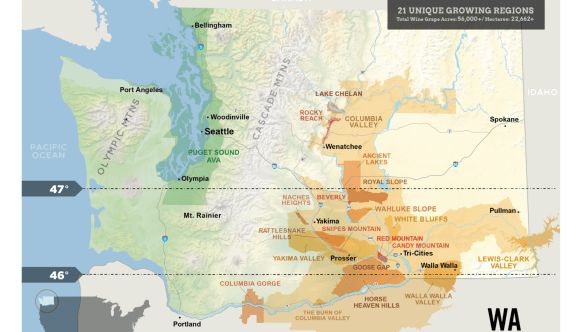
As you can see on the Washington map, the Walla Walla Valley AVA includes land in both Washington and Oregon states. The Rocks District of Milton-Freewater (#22 on the Oregon map) is situated WITHIN the borders of the larger Walla Walla Valley AVA, but is completely on the Oregon side of the Walla Walla Valley AVA.

The only wineries that can put Rocks District AVA on the label have to produce AND bottle their wine in the state of Oregon, which is where the Rocks District AVA is. However, many Washington producers, even though they may source grapes from the very nearby Rocks District, are producing and bottling wine in Washington STATE, so they can only label their wines with the Walla Walla Valley AVA.

So, chances are high I’ve very likely had a Syrah from Walla Walla that contained Rocks District grapes. But with a Washington winery, it wouldn’t necessarily indicate so on the label. On the Washington side, digging deeper is required (sorry for all the rock puns, they’re gonna come flying). 😉

There. Clear as alluvial silt? Hopefully that didn’t hurt your brain too much. If so, take a sip of wine.

So, what makes the Rocks District soil unique? Why all the fuss? In a nutshell, tons of basalt cobbles spewed from a volcanic eruption and deposited by flood waters.

There is literally no topsoil which forces the vines to go DEEP into the earth, to struggle, and this causes the grapes to be lower in number of clusters and smaller in berry size (leading to more powerful, concentrated wine).

These topographical and climatic conditions result in some jaw-droppingly incredible wine, not just with powerful body and tannins, but with aromas and flavors of meat and brine.

Incidentally, if you’d like to read a bit more about minerality in wine from a winemaker (it’s very interesting and not too long), check out winemaker Matt Brain’s  (no, not a typo for Brian – I triple checked) 🙂 article on minerality in wine. Basically, according to Brain,

“… minerality in the soil does not seem to be the major contributor to minerality in the glass. Soils that are thin or deprived of organic matter, however, may contribute to a less fruity and floral grape, allowing mineral characters to be more easily identified.”

Hence why Rocks District wine aromas and flavors come across more pronounced on the mineral spectrum than the fruit/flowers/herbs/spices/etc. spectrums.

This particular Syrah is one I fell in love with at the McMinnville Wine + Food Classic in Oregon. It has rocked me to my molten core every time I’ve tried it and I’ve held on to my one bottle for long enough now. Time to pop the cork and relive the magic!

Rue Cler Rocks District Syrah

Rue Cler Rocks District Syrah

  • $48/bottle
  • 14.4% ABV
  • Sourced from Noble Rock Vineyard in Milton-Freewater, Oregon, Rocks District AVA
  • Winemaker’s notes: “2019 Rocks District Syrah is soft and subtle but lookin’ sharp. Black fruit takes a backseat to savory meats, crushed violets and brine. A charcuterie for the senses! Huckleberries and wet stone give great acid that lingers on the finish. Decant to discover layers of earth and umami in your glass.”
  • Medium ruby color
  • Black plum, soft violet floral component, boysenberry, minerals
  • Very full and soft, not as much punch as I recall it having
  • Aromatic complexity that blew me away initially was not as strong at home
  • Tannins are there but not overpowering
  • Some acidity but very discreet
  • The complex fruit seems to vanish quickly
  • Still, a delicious wine I would buy again

While I was a little surprised this wine didn’t have quite as much acidity as I remember it having when I had it at SIP, it nevertheless delivered much pleasure. Wine is constantly evolving, and it’s highly susceptible to the different environments we drink them in (hello, dinner cooking in the kitchen with poor ventilation) and the various physical states WE consume them in (time of day, hormone levels, and so many other things ALL influence how a wine tastes to us).

This wine is a wonderful introduction to the Rocks District Syrah genre. It is a wine to savor and explore, and I would absolutely buy this wine again.

I hope to unearth some more red wines (especially Syrahs) from The Rocks District of Milton-Freewater. These are something phenomenal and extraordinary. I’m hooked!

Here is a cheat sheet of other wineries using Rocks District fruit if you’d like to go on the hunt for some fine bottles o’ wine: Rocks District Wineries.

Have you ever tried a Rocks District Syrah? Comment!
A White Wine for Fall and Winter (Yes, You Read That Correctly)

Disclosure Statement: This post contains affiliate links. When you click on an affiliate link and make a purchase, I receive a commission at no additional cost to you. All opinions are my own.

Greetings, readers! It’s good to be back on the blog. The last time we spoke I was lauding the juicy scrumptiousness of blackberry wine. Then summer happened, brimming with fun in the sun, kid activities, a sickness or two, and a surgery for me. Sadly, my wine blogging ambitions had to take a backseat. Life gets busy and in those down moments it was often my desire for a nap or Netflix that won out.

But it’s time to get back to business. There are just too darn many amazing wines to write about and to try. I love the French saying, “Life’s too short to drink bad wine” but honestly the motto that resonates most with me is “So many wines, so little time.” (Anyone know where I can get that as a T-shirt of baseball cap?) 😉

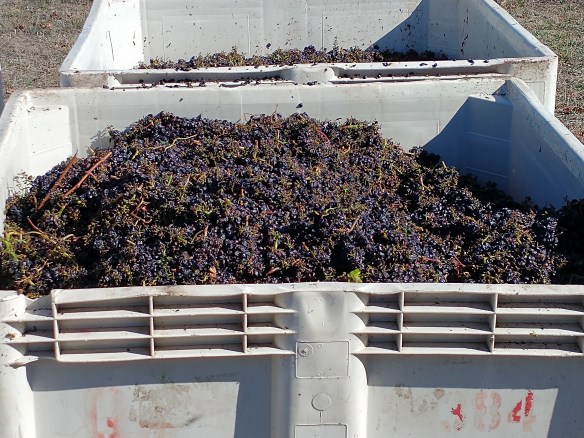
Harvested grapes at David Hill Vineyards

Harvested grapes waiting to be turned into wine.

ANYWAY…. It’s November. Fall is well underway, the harvest has happened, the elections are over, and Thanksgiving is staring us in the face, just over the river and through the woods (not to fear, my Thanksgiving wine recommendation will be coming up next!). Everyone take a Deep. Calming. Breath. I’m enjoying the fact that there are still some vividly colored leaves hanging on to the trees, illuminating otherwise often-gloomy grey skies.

November to me is when we settle in collectively for a season of coziness. I’m making lots of soups for dinner, snuggling in ultra-soft blankets, and filling my coffee with pumpkin spice creamer. Cozy and homey. My wineglass lately has been full of excellent Pinot Noirs, whose lightness and complexity beg for the kind of contemplative savoring unique to fall.

But we’ll save Pinot Noir for another day… what I most want to talk to you about today is an unusual Pinot Blanc. I tried this particular wine in Oregon a month ago. It truly embodies the spirit of fall in a white wine. This Pinot Blanc is from David Hill Winery in Forest Grove, Oregon. David Hill Vineyards and Winery is LIVE certified and uses low impact, organic farming methods to pamper these special grapes and bring out their maximum potential, and the efforts pay off handsomely in delicious wines.

David Hill Vineyards & Winery, Forest Grove, OR

The day we tasted at David Hill Winery. Heaven on earth.

As I may have mentioned before, Oregon white wines have seriously captured my fancy and have been commanding plenty of attention as of late. This winery is a wonderful place to discover some phenomenal old-growth varieties and taste a spectacular array of wines.

The oldest vines in the vineyard were planted from rootstock, brought back from Alsace, France, by UC Davis graduate Charles Coury in 1965. Wines made from Coury’s plantings are part of the winery’s Discovery Series label. Some of the other intriguing varieties include Riesling, Sylvaner, Chasselas, Melon de Bourgogne, Gewürztraminer, and Pinot Noir. The Sylvaner may very well be getting its own blog post here in the future, and my husband and I are huge fans of their noble rot-affected Riesling. 😋

Wine grapes at David Hill Vineyards

White wine grapes just about ready for harvest at David Hill Vineyards. Soaking up that golden sunshine.

Come get to know this Pinot Blanc that is unlike any other Pinot Blanc I’ve had to date:
David Hill Vineyards & Winery Tualatin Hills Block 22 Pinot Blanc 2023

  • David Hill Vineyards & Winery Discovery Series 2023 Block 22 Pinot Blanc
  • 100% Estate-Grown Pinot Blanc
  • Get this: this wine is aged in 100% chestnut barrels. Chestnut barrel aged wines are something you don’t taste everyday. Chestnut wood barrels were used in many European wineries before a global blight wiped out a large portion of chestnut trees. So it’s a real treat to taste a wine fermented and aged in something besides oak, stainless steel, or concrete.
  • $32/bottle
  • ABV 11.28%
  • From the tasting notes: “Aromas of golden apple and brown pear with a hint of nectarine and river rock meet the freshness of dill and fennel to round out the nose of our 2023 Pinot Blanc.” These notes carry over to the palate “along with subtle Marcona almond” giving “a warming, comforting… textural component through the finish. This wine is reminiscent of… fall spices and late summer notes.”

Isn’t that just gorgeous? 🍂

You need this wine for light refreshment when you are outside enjoying a still-warm autumn afternoon, just as much as you need this wine when you are indoors, at night, curled up on the couch next to a fireplace, ready to relax and soak in all this wine’s autumnal glory. And it’s begging to play with fancy cheeses. 🙂 It’s got it all!

So don’t EVER put away your whites, just because it’s after Labor Day. 😉 This rich and complex Pinot Blanc is perfect for fall, winter, and beyond.

Cheers! 🙂 🥂

25 Most Wanted Wines

Food & Wine Gift Baskets

Great Bottles to Give

Celebrate Oregon Wine Month with Baco Noir Dessert Wine

Disclosure Statement: This post contains affiliate links. When you click on an affiliate link and make a purchase, I receive a commission at no additional cost to you. All opinions are my own.

How is this month slipping away from us SO quickly? And by the way, spring seemed like a flash in the pan this year, are we in spring or summer? My brain and body are having a hard time distinguishing what mode we are in. So before any more time sneaks away, it’s time to devote a post to good Oregonian juice in honor of Oregon Wine Month!

I ADORE Oregon wine, do you? Perhaps a large reason is that I have spent a lot of time down there exploring and trying lots of wines, so the gorgeous settings and scenery have helped seal my devotion. I would probably say similar things about other places if I visited them more often.

I love all varieties and styles of wine and Oregon has an incredible range to offer. There’s so much more than simply Willamette Valley Pinot Noir (although that’s one of my favorites) – I thought we’d journey farther south in the state and also venture into dessert wine territory, which we haven’t been to in a while. Baco Noir is a rare grape that here has been made into a dessert wine. Port fans, pay heed!

Melrose Vineyards is an estate winery located in Roseburg, Oregon. Roseburg is located in the southern part of the state, in the Umpqua Valley AVA. The climate is Mediterranean, with very warm and dry summers and cool and wet winters. Summer also has greater diurnal temperature variation than in winter.

So what is Baco Noir? According to Wikipedia, Baco Noir is “a hybrid red wine grape variety produced by Francois Baco from a cross of Vitis Vinifera var. Folle Blanche, a French wine grape, and an unknown variety of Vitis riparia indigenous to North America.” Baco Noir is cultivated throughout Oregon, including River’s Edge Winery in Elkton, whose Pinot Noir I introduced you to a while back.

We found this wine when we wandered into Face Rock Creamery in Bandon, OR last summer (try their Vampire Slayer Cheese Curds!). The Creamery is a mecca for gargantuan ice cream cones, especially in the warm summer months. Seeing we had kids in tow, the kind gal inside almost stopped us at the door and let us know that sadly they were out of ice cream that day. We told her that was OK; we were there for the cheese – and turns out the wine, too! Their retail store has a great selection of various Oregon wines and I couldn’t help picking up a couple unusual bottles while we were there, along with some cheeses. This was one of the bottles.

Solstice Solera VII Melrose Vineyards Baco Noir Dessert Wine Umpqua Valley

Solstice Solera VII Melrose Vineyards Baco Noir Dessert Wine Umpqua Valley

Solstice Solera VII Melrose Vineyards
Baco Noir Dessert Wine Umpqua Valley
Melrose Vineyards, Roseburg, OR
$19/bottle
ABV 19.8%
“It has layers of woven complexity of currant, fig, praline caramel, with deep tones of dark chocolate. The age of this VII Solera became accentuated with the most recent vintage to keep the fruit in focus and amazing. The winemaker’s favorite longstanding wine.”

My husband adores this wine. I also loved it, and I wish I had taken more technical, detailed notes, but alas, that did not happen. I recall it being heavy but elegant, rich, warming, lovely sweetness, and alluringly complex. Like a Port in some ways but also something completely different. Basically… YUM!

I think this sumptuous dessert wine could be very congenial with pecan pie, marionberry cheesecake, or a brownie, or else some tasty cheeses and fresh fruit. I have not personally tried any of those pairings (I may be BSing right now?) 😉 but I have a hunch those would all work.

Cheers to Oregon, its wine, and the “lush-y” month of May! What delightful wines from Oregon have you found? Share!

Explore Wines from Across the Country.

McMinnville Wine + Food Classic 2023: A Review

On Friday, March 10th, I got up early and hit the road to make the journey down to McMinnville, Oregon, where the 30th Annual McMinnville Wine + Food Classic was taking place. I had not been since 2019, so the absence had definitely compounded my excitement.

This event goes for three days (Friday, Saturday, and Sunday) at the Evergreen Aviation and Space Museum, and is a fundraiser for St. James School in McMinnville, OR. You can purchase tickets for as many days as you like. They even offer shuttle service from downtown McMinnville to the Museum.

McMinnville Wine + Food Classic 2023, Evergreen Aviation and Space Museum. Photo courtesy Eagle Eye Droneography.

McMinnville Wine + Food Classic 2023, Evergreen Aviation and Space Museum. Photo courtesy Eagle Eye Droneography.

There are tons of wineries, but also distilleries, cideries, meaderies, breweries (all the eez). There is obviously food, and a handful of artisans and crafters. You can peruse all of the 2023 participating vendors here.

I tried numerous pours of wine. I would have loved to have tried some other alcoholic products but stuck to my original plan (maybe next year).

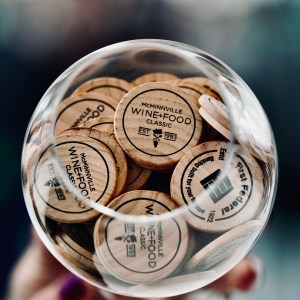
Your ticket purchase includes two tasting tokens. At most places, one token is equal to one pour, but for certain specialty and library wines, two or even three tokens might be required. I wound up purchasing 15 additional tokens, and that was MORE than enough. Having an additional day or two to try more wines would be ideal but I could only attend one day.

Tasting tokens for the McMinnville Wine + Food Classic 2023, Evergreen Aviation and Space Museum. Photo courtesy Eagle Eye Droneography.

Tasting tokens for the McMinnville Wine + Food Classic 2023, Evergreen Aviation and Space Museum. Photo courtesy Eagle Eye Droneography.

I obviously was not able to try every single wine and winery at the festival, but out of the ones I did, here are five wineries and their wines that stood out to me, and that you would not be remiss in checking out. Please note that at some of these vendors I only tried one pour, so this is based on the limited amount I tried that day. I also would have loved to have purchased more bottles but, alas, budgets. 🙂

  1. Denison Cellars 2019 Björnson Vineyard Pinot Noir: This wine really captivated me. Their Pinot was elegant, complex, expressive, beautiful. I sure wish I could have tasted their full line-up but I was trying to spread my tasting tokens out to try more wineries. Time to plan a private tasting at their vineyard in Salem! From the tasting notes: “The resulting wine is deep ruby in color and displays aromas of black cherry, pomegranate, and cranberry. With hints of cola and all-spice, the ripe, velvety tannins provide structure for rich, mouth-filling volume. Flavors of dark red fruit persist into a lingering finish.” $48/bottle. *Of special note for Oregonians: FREE LOCAL DELIVERY for those in Yamhill County, Salem, and Portland with any 3+ bottle purchase. I cannot wait to return and taste more of their wines.
  2. Patton Valley Wines 2018 Lange Vineyard Pinot Noir: Patton Valley has been a brand for over 25 years, but at the moment they are a nomadic winery with no permanent tasting room. I think that’s cool because I’m sure it allows them to save a ton of money and put that towards great winemaking; plus it’s a chance to get creative and have some fun, different tasting options. This was a delicious Pinot Noir I decided to take home as well. $55/bottle. According to the tasting notes, it has a “lush red fruited nose” and a “broad and silky palate.” This is a winery whose offerings you must try if you’re into specific Pinot Noir clones from particular Willamette Valley area vineyards. Visit their website to order wines and to learn where they are pouring.
  3. Domaine de Broglie 2019 Clone 777 Pinot Noir: Established in 2019, Domaine de Broglie is a more recent newcomer to the Dundee Hills AVA. This estate is owned by Francis Ford Coppola and was previously Vista Hills Vineyard. At the 2023 McMinnville Wine Competition, this showstopper wine took home Best of Show, Best Red Wine, and Double Gold! Uh-huh. Here are the tasting notes, you’ll see why: “Aromas of mushrooms, cedar, and forest floor mingle with sweeter aromas of vanilla coffee. A savory, well rounded palate counterpointed with notes of strawberries, red fruit, and salted caramel. An outstanding wine, showcasing the range of expression found in Oregon Pinot Noir.” $62/bottle, 100% Pinot Noir. This wine is music in a glass! This is the indulgence bottle. I did take this beauty home. (I also recall a tried a very enchanting Chardonnay).
  4. Rue Cler 2019 Rocks Syrah: Oh, wow! This is one I will be buying in the future, so intriguing and delicious. $48/bottle, sourced from Noble Rock Vineyard in Milton-Freewater, OR. From the tasting notes: “Black fruit takes a backseat to savory meats, crushed violets and brine…. Huckleberries and wet stone give great acid that lingers on the finish…. Decant to discover layers of earth and umami in your glass.” If you like wines with savory flavors and plenty going on, you’ll love this! Side note: I did not try their Walla Walla Syrah, but one of my tasting companions did and she kept going back for more sips. 🙂
  5. Siltstone 2021 Willamette Valley Pinot Noir: What I especially enjoyed about Siltstone Wines was they make a very good, very drinkable Pinot Noir for $24/bottle. You’re greeted with aromas of cherry, red fruit, and vanilla spice on the nose, and flavors of cherry cola and plum on the palate. The wine is medium-bodied with balanced tannins and a soft smoky finish. As much as I love ultra-fine, premium Pinot Noirs, I just can’t afford them all the time, and I’ll bet you can’t, either. And while $24 for a bottle of wine is a lot for many people (especially right now), when you look at overall pricing for good quality Pinot Noir, you’ll see that it’s very difficult to find GOOD stuff like this in this price range. This is a bargain for lovely Pinot Noir. I also would love to try more of their wines someday.

This event is a great way to get acquainted with a variety of fantastic Willamette Valley wineries all under one roof, and a great excuse to do something fun with your friends.

Have you been to the McMinnville Wine + Food Classic? If so, what did you try and like there? Comment below!

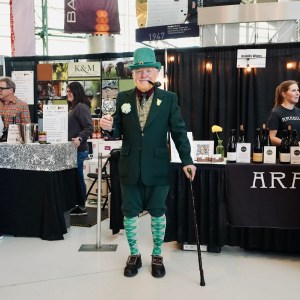
McMinnville Wine + Food Classic 2023, Evergreen Aviation and Space Museum. Photo courtesy Eagle Eye Droneography.

Definitely the best dressed guest! Photo courtesy Eagle Eye Droneography.

Charcuterie with my Cuties and Wine for Valentine’s Night

Happy Valentine’s Day! I hope however you are celebrating today that you are feeling the love. ❤

If you are thinking “I’d like to make this day a little extra Valentine-y” but don’t want to go down the usual routes; if you need inspiration for a dinner that is delicious, interesting, fun, and relatively inexpensive (it’s utterly flexible), and is also something slightly fancy for the love holiday, look no further. It also does not require a reservation, parking, dressing up, and the like. It’s great for one person, for a couple, or for as large or small a group as you desire. So if that’s you this Valentine’s Day, I’ve got you covered.

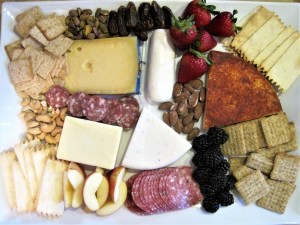
One of the great things about wine is the special company it keeps with food. And the illustrious charcuterie board (a.k.a. Lunchables for Grown-Ups) has become the golden standard for enjoying with wine. In case you need enlightening, a charcuterie board is simply several types of prepared meats served with various cheeses, crackers, breads, nuts, olives, fruit, assorted condiments like mustard, jam, etc. all presented together on a large serving platter.

During the pandemic, when we were not eating out because restaurants were only offering to-go, I decided to throw together an epic smorgasbord with anything and everything charcuterie-related: several types of cheese and crackers, a couple salamis or other meats, sliced pears, berries, grapes, nuts, etc. I also bought several bottles of wine to pair specifically with the cheeses I had selected. We dined al fresco.

The kids LOVED it, because they got to eat cheese, crackers, and salami for dinner, and put what they wanted on their plates. I loved it for obvious reasons and also for the rare praises instead of moans and complaints from the picky eater cohort.

We did this a couple times and since it’s been a while, I decided it would be fun to do it again for Valentine’s night.

I slaved so hard in the kitchen… opening up packaged stuff and putting it on a platter, I’m exhausted… 😉

I’ve got a cheese collection from Costco (the Kirkland Signature Cheese Flight they sell around the winter holidays) which features the following cheeses: cow’s milk cheese from Belgium, aged cow’s milk cheddar from England, goat’s milk cheese with honey from Spain, sheep’s milk pecorino cheese with truffles from Italy, and cow’s milk cheese with tomatoes, onions, and spices from the USA.

When you make a charcuterie board, you can use whatever cheeses you like, but to keep it interesting, aim for:

– three to four (or more!) different cheeses
– a mix of soft, semi-soft, and hard cheeses
– a mix of different types of milk (e.g. sheep, cow, goat)

For wine, I went with a black pinot and a white pinot (literally Pinot Noir and Pinot Blanc) from different AVAs (American Viticultural Areas – unique designated wine grape growing areas) in Washington and Oregon. According to Erin Doman, all Pinots (Noir, Gris, Blanc, Meunier, etc.) are mutations of the same variety.

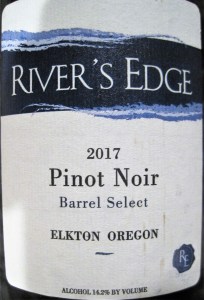
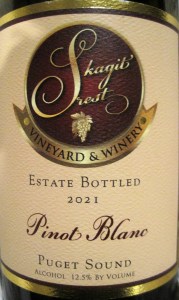
We’re drinking Skagit Crest Vineyard & Winery Pinot Blanc from Washington (specifically the Puget Sound AVA) and River’s Edge Winery Barrel Select Pinot Noir from Oregon (specifically the Elkton AVA, one of Oregon’s newer AVAs). You can pair almost any wine with various cheeses (more on that later), but for this article’s sake I am just focusing on these two elegant beauties.

Pinot Noir and Pinot Blanc grapes both make lighter bodied wines with moderately strong acidity (makes your mouth pucker) so they work especially well when paired with creamy cheeses. Some wines are great on their own and some are meant to be drunk with food. These wines are delightful each on their own and they shine bright with the cheeses.

The River’s Edge Pinot is bursting with juicy, plush aromas of dark cherry, blueberry, spices, and something woody. My favorite cheese match with the Pinot Noir is the Italian pecorino with truffles. The truffle notes in the cheese really complement the mushroom notes in the Pinot Noir. So earthy and complex, I love it! This is a great Pinot Noir for wine drinkers who like full flavors and good substance (like me, ha ha). 🙂

Skagit Crest’s Pinot Blanc is an exceptional companion to cheese! It is like smelling a springtime wedding: flowers hugged by some robust honeycomb, lime, grapefruit, and a little gravel. On the palate there is excellent acidity with no astringency or harshness, moderate alcohol and flavors of stone and citrus fruits. It’s very similar to Pinot Gris/Grigio (same grape, just French and Italian names), but I love this subtly different and refreshing change from typical Pinot Gris. For cheese partners, the Belgian cheese and the Spanish honey goat cheese were both great with this wine.

I am hoping to do more food and wine pairing recommendations in the future, but for now would highly encourage you to seek out these particular wines and enjoy them with some cheese. Bon appétit!