What to Drink with Easter Dinner (or, Why Pinot Noir Is Your Answer to Everything)

The Easter holiday is fast approaching, and so is the pressure to go shopping and pick out the perfect wine to go with your feast. As if the rest of the to-do list weren’t enough! Trying to match the right wine to your meal can cause so much stress it makes you want to dive head first into the Peeps and jelly beans! If you’re putting out the wine S.O.S. signal, I see you, and I’m here to help. Deep breaths, ahhhh.

First of all, banish the word perfect from your wine vocabulary, and replace it with great. Trying to find the perfect wine pairing sounds like too much pressure and highly unrealistic. But a great pairing, that is doable!

If you’re doing something traditional along the lines of ham, lamb, or salmon, you need to set your sights on delightful, drinkable Pinot Noir. Pinot Noir is one red wine that will go beautifully with all three of these proteins. While no two Pinots are exactly the same, in general this is what you will get from a glass of Pinot Noir and why it is a consummate pairing wine for so many foods:

  • Light to medium body, although some verge on medium to hinting at full-bodied, depending on things like climate, weather, region, etc. The body of a wine should match the “weight” or heaviness, of a food in your mouth.
  • Subtle, integrated, elegant tannins that don’t clash or compete with the texture of the food.
  • Moderate acidity. A wine needs to be more acidic than the food at hand, so this is a great option for pairing that won’t get lost in your mouth.

Fair warning: I prefer my Pinots to have more heft, fullness, and richness than some, so if you err on the side of super light-bodied Pinots with ultra-delicate aromas and flavors, these might not be up your alley. When I drink wine, I want to taste wine, not fruity water, right?

Anyway, here are two Pinot Noirs (one from Washington and one from Oregon) that I really admire and that deserve a spot on your Easter table. The Washingtonian clocks in at $27/bottle and the Oregonian at $35/bottle. Both are delicious wines and excellent values for their quality tiers.
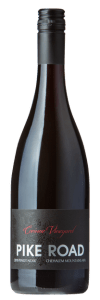
Pike Road Corrine Vineyard Pinot Noir

Pike Road Corrine Vineyard Pinot Noir. Photo courtesy Pike Road Wines.

For the Oregon selection: I tasted the Pike Road 2019 Corrine Vineyard Pinot Noir at the McMinnville Wine + Food Classic this past month. It is $35/bottle and utterly delicious! The grapes are from the Chehalem Mountains AVA, and the Corrine Vineyard was planted in 1989 at the intersection of marine and volcanic soils. The vineyard is a “warmer site for Pinot Noir, producing intense fruit, heady aromatics, and lots of structure.” Yum! You can “expect wines with a big ripe core of concentrated fruit and a bright, fresh profile” with red fruit, spice, and floral tones. Sounds lovely.

For the Washington selection: who else but Skagit Crest Vineyard & Winery? All of their Pinot Noir is estate grown and produced. I have tried the 2016, 2017, and 2018 vintages, all side by side, and all are completely different wines. I love each one for different reasons. Right now I’m drawn to the 2017 Pinot Noir, with its “red fruit, rose hips, forest floor and spice rack components, framed by raspberry tea tannins and lemon oil.” We will most likely be opening this up Easter night.

Skagit Crest Pinot Noir 2017

Skagit Crest Pinot Noir 2017

I asked Owner and Winemaker Chuck Jackson what he would recommend, and while he said either vintage would go well with any of the meats, he would opt for the 2017 Pinot Noir with darker meats & heavier seasonings and the 2018 Pinot Noir with lighter meats & less intense seasonings. He would definitely choose the 2018 Pinot Noir for lamb. This beauty has elegant, subtle fruit and spice in the vein of Burgundian Pinot Noir, and is drinking round and balanced right now.

There are tons of great wines out there – so dang many. Don’t get hung up on finding the ultimate “perfect” pairing for your particular food, because there is definitely more than one wine that will work with your food. Some may be more wonderful than others, but it’s a fun chance to learn.

Obviously you can pair more than just Pinot Noir with these foods, but I hope you see the broad appeal and versatility of this grape, and why it can work so well with so many foods.

What wines have you enjoyed pairing with ham, lamb, or salmon? Tell me about it in the comments. One can never have too many good food and wine pairing ideas!

Happy Easter!
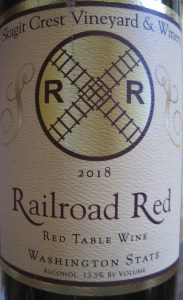
Three Noble Reds, One Outstanding Blend: Skagit Crest Railroad Red

Railroad Red Marries Three Noble Reds Together in One Outstanding Blend

March is Washington Wine Month, a month celebrating the state’s abundant delicious wine and a not so subtle way of trying to get you the consumer to buy more coveted grape juice. 😉

As I sit here reflecting on what I love most about Washington wine, two things come to mind: outstanding quality for the value and uniqueness of place. For Washington Wine Month, although I have plenty of great recommendations to share, I want to introduce you to a unique, truly outstanding Washington wine that encapsulates these values.

Like many people, I enjoy certain value wines at the grocery store (there is a time and a place for everything), but there is not always a distinct sense of place in some of those wines, as many are blended from where ever the winemaker could get decent grapes, and many times they are highly modified and manipulated to cover up poor quality grapes or simply to keep a consistent product.

Every once in a while, it’s good to get up and challenge our palates with something on a different level – to go digging for some true Washington treasure.

Ready for something fun? Here you go!

Skagit Crest Vineyard and Winery is one of my all-time favorite Washington wineries, owned and run by Chuck and Donna Jackson in the Puget Sound AVA. They grow and vint Pinot Noir, Chardonnay, Pinot Blanc, Pinot Gris, Sauvignon Blanc, and a Rosé of Pinot Noir, on their estate in Sedro Woolley, Washington. They also have a tasting room in La Conner, about a half an hour or so away. I have thoroughly enjoyed all of their wines, and I will definitely be posting on more in the future.

They have a red blend consisting of a rather unusual cast of characters that are not typically cast all together: Cabernet Sauvignon, Syrah, and Pinot Noir. These are noble grape varieties, meaning they are among the most popular and widely planted grapes around the world and still largely retain their character even in different growing regions and treatment by winemakers. That’s why a Cabernet Sauvignon from France and a Cabernet Sauvignon from Washington will still both share a lot in common, even though there are various differences in the final product.

If you’re an oenophile (lover of wine) or a Francophile (lover of France) or both (Francoenophile? Ah, how about vin-ophile?), you have probably heard of these famous places. These are three of France’s top winegrowing regions:

  • Bordeaux (famed for blends of Cabernet Sauvignon, Merlot, etc.)
  • Rhone (famed for blends of Syrah, Grenache, Mourvédre, etc.)
  • Burgundy (famed for Pinot Noir and Chardonnay, etc.)

These regions have been growing these particular grapes for centuries, and each region is known for being the absolute best place to grow certain specific varieties. Basically, winemakers from these regions are allowed to make wine only from approved grapes grown in that place and never blend from other regions. French wine laws tend to be very strict in that regard, in order to protect the reputation of their unique wines.

But that’s France, this is America. We go about our winemaking in ways similar and vastly different from France, in part because we are not bound by as many rules and regulations.

Leave it to winemaker Chuck Jackson to shrug at the traditional rulebook on red blends and throw three wonderful reds together in his signature Railroad Red Blend.

I asked Chuck what originally inspired him to create this blend, and this was what he told me:

“In the early planning days of the winery I wanted to offer a Bordeaux blend (likely Cab, Merlot and Cab Franc) and/or a Rhone style blend (likely Syrah, Grenache and Mourvedre) to our eventual line up of wines both of which I really love. After our first harvest from our vineyard it quickly became apparent that was a bit of a pipe dream. Making our own wines and adding Cabernet and Syrah from Eastern Washington was logistically a challenge enough. Adding the other varietals would have meant up to 4 more trips over the hill for grapes and stress our winery for space to make and store the wines for aging. So that dream died.

There was still a desire to have a red blend and I puzzled over just how to do that without stretching us too thin. It finally dawned on me that a potential blend was right in front of us. With three red wines in hand, why not try it. Thus with the 2017 reds we put together our “red blend”, one barrel worth. It was delicious and Railroad Red was born.

The name was Donna’s inspiration given we have a Burlington Northern railroad line running by the west side of our property and vineyard going north to Sumas at the Canadian border. I was subsequently tempted to rename it Trifecta being a blend of Burgundy,  Bordeaux and the Rhone wines. Donna was stuck on Railroad Red so it stands.”

Cabernet Sauvignon and Syrah both require a different growing climate (lots of warmth and sunshine), so the Syrah is sourced from the Yakima Valley AVA (specifically Crawford Vineyard near Prosser) and the Cabernet Sauvignon is sourced from the Horse Heaven Hills AVA (specifically Martinez Vineyard right across the street from the famed Champoux Vineyards). The Pinot Noir is from their own estate grapes (the Puget Sound AVA). Those of you in the know are aware that Pinot Noir is challenging to grow and make into wine (I call it the “picky princess of the grape family”) and the fact that Chuck can create superb Pinot Noir in Western Washington is a testament to his high knowledge and skill.

Skagit Crest Vineyard & Winery Railroad Red

Railroad Red: a genius blend of Washington reds.

So let’s take a closer look at the  Skagit Crest Vineyard & Winery 2019 Railroad Red. Three distinctly delicious Washington wines from three different locales, happily carousing in one blend:

  • $30/bottle
  • 13.5% ABV
  • 2019 Blend is 50% Pinot Noir/30% Syrah/20% Cabernet Sauvignon
  • Deep ruby color, full body, dry
  • Well-integrated gripping tannins
  • High, mouth-watering acidity
  • Aromas/flavors: cherry, strawberry, dusty plum, red flower (hibiscus or geranium?), vanilla, touch of chocolate, baking spice, earth (clay or rocks)
  • Finish/length: bright finish, but long, warm, complex, unfolding, lovely

The wine description reads, “Bright berry and cherry aromas with light hints of oak. Cherry and plum on the front to mid-palate. Peppery tones with gravelly earthy flavors in the back palate, lingering bright finish.”

The photo above is of the 2018 label. I love the 2018 blend and also enjoyed the 2019 blend, although they are very different. The 2018 was very round and plush and juicy, but still with that great structure and overall balance I love. That year’s blend consisted of 50% Pinot Noir, 25% Cabernet Sauvignon, and 25% Syrah.

The 2019 blend is wonderful. Because of the high acidity, the 2019 could age a few more years and become really interesting and “gentler” but it’s great to drink now, too. Give your bottle a day or so after opening and that will soften the acid a bit and open up more flavors.

I cannot recommend this blend enough. Make haste and visit their tasting room in La Conner or arrange for a private tasting and tour at their Sedro Woolley Vineyard and Winery (available by appointment only). I’ve done both and suggest you do the same!

Hint hint! April is the month of the Skagit Valley Tulip Festival – so make your plans now to see the gorgeous tulips and sip the gorgeous Skagit Crest wines.

Cheers! 🙂

Skagit Valley Tulip Festival bloom

You have to see it to believe it. A bloom I snapped at the Skagit Valley Tulip Festival in 2022.

A special thank you to Chuck and Donna Jackson for answering my questions. 🙂 

Charcuterie with my Cuties and Wine for Valentine’s Night

Happy Valentine’s Day! I hope however you are celebrating today that you are feeling the love. ❤

If you are thinking “I’d like to make this day a little extra Valentine-y” but don’t want to go down the usual routes; if you need inspiration for a dinner that is delicious, interesting, fun, and relatively inexpensive (it’s utterly flexible), and is also something slightly fancy for the love holiday, look no further. It also does not require a reservation, parking, dressing up, and the like. It’s great for one person, for a couple, or for as large or small a group as you desire. So if that’s you this Valentine’s Day, I’ve got you covered.

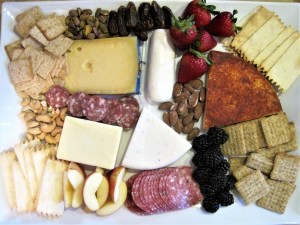
One of the great things about wine is the special company it keeps with food. And the illustrious charcuterie board (a.k.a. Lunchables for Grown-Ups) has become the golden standard for enjoying with wine. In case you need enlightening, a charcuterie board is simply several types of prepared meats served with various cheeses, crackers, breads, nuts, olives, fruit, assorted condiments like mustard, jam, etc. all presented together on a large serving platter.

During the pandemic, when we were not eating out because restaurants were only offering to-go, I decided to throw together an epic smorgasbord with anything and everything charcuterie-related: several types of cheese and crackers, a couple salamis or other meats, sliced pears, berries, grapes, nuts, etc. I also bought several bottles of wine to pair specifically with the cheeses I had selected. We dined al fresco.

The kids LOVED it, because they got to eat cheese, crackers, and salami for dinner, and put what they wanted on their plates. I loved it for obvious reasons and also for the rare praises instead of moans and complaints from the picky eater cohort.

We did this a couple times and since it’s been a while, I decided it would be fun to do it again for Valentine’s night.

I slaved so hard in the kitchen… opening up packaged stuff and putting it on a platter, I’m exhausted… 😉

I’ve got a cheese collection from Costco (the Kirkland Signature Cheese Flight they sell around the winter holidays) which features the following cheeses: cow’s milk cheese from Belgium, aged cow’s milk cheddar from England, goat’s milk cheese with honey from Spain, sheep’s milk pecorino cheese with truffles from Italy, and cow’s milk cheese with tomatoes, onions, and spices from the USA.

When you make a charcuterie board, you can use whatever cheeses you like, but to keep it interesting, aim for:

– three to four (or more!) different cheeses
– a mix of soft, semi-soft, and hard cheeses
– a mix of different types of milk (e.g. sheep, cow, goat)

For wine, I went with a black pinot and a white pinot (literally Pinot Noir and Pinot Blanc) from different AVAs (American Viticultural Areas – unique designated wine grape growing areas) in Washington and Oregon. According to Erin Doman, all Pinots (Noir, Gris, Blanc, Meunier, etc.) are mutations of the same variety.

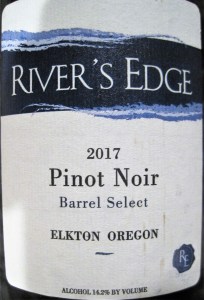
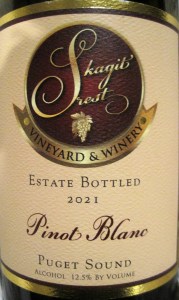
We’re drinking Skagit Crest Vineyard & Winery Pinot Blanc from Washington (specifically the Puget Sound AVA) and River’s Edge Winery Barrel Select Pinot Noir from Oregon (specifically the Elkton AVA, one of Oregon’s newer AVAs). You can pair almost any wine with various cheeses (more on that later), but for this article’s sake I am just focusing on these two elegant beauties.

Pinot Noir and Pinot Blanc grapes both make lighter bodied wines with moderately strong acidity (makes your mouth pucker) so they work especially well when paired with creamy cheeses. Some wines are great on their own and some are meant to be drunk with food. These wines are delightful each on their own and they shine bright with the cheeses.

The River’s Edge Pinot is bursting with juicy, plush aromas of dark cherry, blueberry, spices, and something woody. My favorite cheese match with the Pinot Noir is the Italian pecorino with truffles. The truffle notes in the cheese really complement the mushroom notes in the Pinot Noir. So earthy and complex, I love it! This is a great Pinot Noir for wine drinkers who like full flavors and good substance (like me, ha ha). 🙂

Skagit Crest’s Pinot Blanc is an exceptional companion to cheese! It is like smelling a springtime wedding: flowers hugged by some robust honeycomb, lime, grapefruit, and a little gravel. On the palate there is excellent acidity with no astringency or harshness, moderate alcohol and flavors of stone and citrus fruits. It’s very similar to Pinot Gris/Grigio (same grape, just French and Italian names), but I love this subtly different and refreshing change from typical Pinot Gris. For cheese partners, the Belgian cheese and the Spanish honey goat cheese were both great with this wine.

I am hoping to do more food and wine pairing recommendations in the future, but for now would highly encourage you to seek out these particular wines and enjoy them with some cheese. Bon appétit!