Wine in Sacred Places

In Which I Discover Phenomenal Cabernet from Mosquito Fleet Winery

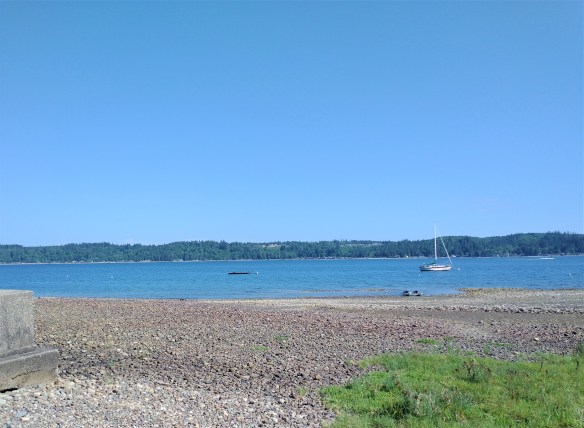
Do you have those sacred places on earth where you feel at home, or somehow closer to heaven because of the beauty of the place? Is it a beach, a mountain, a cute small town? Hood Canal, WA is one such place that holds a special spot in my heart. My great-grandparents built a cabin out on a piece of property right on the water, and it’s still standing and in the family! It has been a huge part of my life, from childhood through parenthood. It’s been a refuge, especially during the pandemic when we were isolating and being careful. A place to fully relax and be.
Hood Canal

My sacred place… Hood Canal

In recent years, every time my husband and I would drive out for some down time at the cabin, we would pass by a tasting room in Belfair with “Mosquito Fleet Winery” printed in elegant script across the building, tempting us with the prospect of delicious wine. A wine-tasting room to me is like an iPad to a kid – very very hard to resist! 🙂 Every time we passed it we said to ourselves, “We’ve got to stop in there sometime.” But with young children in tow, and often on a tight schedule, it just didn’t happen.

Mosquito Fleet Winery SignageWell, we finally DID stop in – last summer, I believe. Our kids were with us but they are older and better able to handle the occasional wine tasting with Mom and Dad every once in a while. It’s not like it takes all day to sip 5 or 6 wine pours… it’s good to learn some patience and that the day is not just about what they want to do. The people working at the tasting room were very kind and even gave the kids some popcorn and juice for a snack.

I should pause a second and give you a quick bit of history on the winery’s name. And I must say, it’s nice to have a Washington state winery pay tribute to local history rather than donning an awkward mock French name like Château Belfair or Domaine du Canal. 🙂 Also, while there are literal fleets of mosquitos at Hood Canal (I wish they didn’t love me quite so much – must be the wine in my bloodstream?), the name has no connection to that ecological fact. 😉

For those of you unfamiliar with the name, Mosquito Fleet refers to the fleet of various steamboats that transported people and cargo throughout the many waterways of Washington state, from the inlets of Puget Sound and the San Juan Islands, from the 1840s until about the 1950s. Mosquito Fleet Winery honors the spirit of bringing people together through their wines. I love it!

Anyway, hubby and I each did a tasting and enjoyed the wines presented. We wound up going home with a gorgeous bottle of Mosquito Fleet Cabernet Sauvignon Columbia Valley 2019. To me, this was a standout wine – the kind of excellent Washington Cabernet Sauvignon you can pull out and enjoy with an equally excellent steak dinner, or simply to savor uninhibited. Perfect for Memorial Day BBQ fare, I may add.

Here are the details of this particular wine:
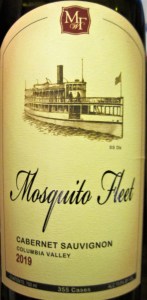
Mosquito Fleet Winery Cabernet Sauvignon

Divine wine from Hood Canal: Mosquito Fleet Winery Cabernet Sauvignon

355 cases produced
$45/bottle
13.8% ABV
95% Cabernet Sauvignon, 5% Cabernet Franc
From the winemaker: “A beautiful Cabernet Sauvignon with notes of blueberry, blackberry and anise. It has a beautifully full mouthfeel with nice, juicy acids and beautifully rounded out tannins that linger. It was aged predominantly in new French oak barrels which lend a nice aroma of oak and elegance.”
My impression: superb fruit, rich yet elegant, appealing texture, noteworthy balance – a wine of outstanding quality! ❤

Mosquito Fleet Winery prides itself on producing wines that are “hand-crafted with time-tested ‘Old World’ winemaking techniques of centuries past. This small lot, labor intensive approach helps produce memorable wines and memorable times for any occasion.”

As someone who just purchased a very disappointing bottle of cheap-sad-crap-red from the grocery store for our latest excursion to the Canal (I’ll blame the economy, whether I’m justified or not), I understand and appreciate the effort that goes into crafting fine Cabernet Sauvignon using the best fruit, the best winemaking techniques, and new French oak barrels. There is such a difference, and while I can’t afford to drink higher-priced wines every day (let’s be real, I don’t drink wine every day), if I want to experience real pleasure from a wine, I usually have to spend a bit more. But it’s well worth it. There truly is nothing like a truly fine wine. Truly. 🙂

Hood Canal is a beautiful place to relax and unwind, especially with a visit to Mosquito Fleet Winery thrown in. Go try it sometime. Maybe it will become one of your special places. ❤

Drinking wine at Hood Canal

Full disclosure: this was not Mosquito Fleet Cab, rather, ’twas a bland and mediocre substitute, but I was still determined to enjoy my time at the beach! 🙂

Let’s toast to those who made the greatest sacrifice on this Memorial Day 2023. ❤

American Flag and MoonSpecial thanks to Jacquie for your assistance in answering my questions!
Nat Geo Wines of the World

A French Connection for International Chardonnay Day

Disclosure Statement: This post contains affiliate links. When you click on an affiliate link and make a purchase, I receive a commission at no additional cost to you. All opinions are my own.

Today is a double whammy: May 25th is International Chardonnay Day, as well as National Wine Day for the USA. I must be insane or a glutton for punishment for posting twice today, but oh well. You have your wine reading cut out for you for a while! 🙂

For National Wine Day, I am saving a little bit of time by utilizing an expert on Virginia wine, Matt Fitzsimmons. I took this as an excuse to learn about wine in a different part of my country. Matt has his own blog over at Wine Trails and Wanderlust, and he is graciously letting me reblog his post on Virginia wines for this holiday. His excellent post covers all you need to know and then some about Virginia wine (don’t worry, it’s not too long, I made it sound like it might be lengthy). Do check it out! You will learn a lot and get bit by the wine travel bug (I know I did!).

So for International Chardonnay Day, then, I thought I would turn to La Belle France, birthplace of the esteemed Chardonnay grape. For Americans who are not experts or at least moderately familiar with them, European wines can often be mysterious and perplexing. But with a few recommendations to point you in the right direction, you can be well on your way to enjoying some truly lovely wines from Europe. I love my local and American wines, but branching out to other continents is great fun. Don’t let it scare you, and don’t be a vino xenophobe! 🙂

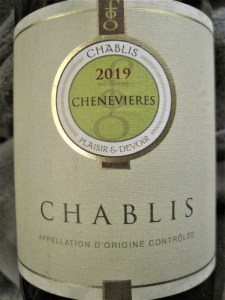
The French region of Burgundy is world-renowned for its Pinot Noir red wine and Chardonnay white wine. This particular Chardonnay I selected is from the Chablis appellation in Burgundy.

Domaine Chenevieres Chablis

The perfect place to begin exploring fine French Chardonnay… Chablis

2019 Domaine Chenevieres Chablis

  • Appellation d’Origine Controlee
  • Currently $27/bottle at Total Wine
  • 12.5% ABV
  • Medium body
  • Elegant, crisp and refreshing, good minerality (this is not a rich, buttery, oaky California or Australia Chardonnay with tropical fruit flavors)
  • Delicate balanced fruit profile – pear, apple, mandarin, apricot, floral – if white wines like Sauvignon Blanc and Pinot Gris make you pucker with their tart citrus flavors, you might be more receptive to gentler, rounder Chardonnay

Here’s how and where this wine was made:

“Domaine Chenevieres is located in ‘La Chapelle Vaupelteigne,’ a hamlet located in the northern side of the Chablis appellation in Burgundy. 100% Chardonnay vines grown on a plateau with kimmeridgian limestone soils. Fermentation with indigenous yeasts in stainless-steel vats to preserve the minerality and purity of the fruit.”

According to Wine Enthusiast, limestone soils are naturally alkaline with high pH levels. Limestone is essentially calcified sediment from shells, coral, and other seabed debris. Because of this unique chemical composition, limestone soil is reputed to increase minerality and acidity in the grapes that grow in it, although many scientists claim the evidence is lacking. I say the proof is in the pudding, and if you try this Chardonnay you can’t miss the definite mineral character of the wine and the unique influence the soil sure seems to have on the grapes. Yet the debate rages on….

I really liked this Chardonnay, and would gladly buy it again, either when I’m in the mood for such a wine or looking for a really nice white wine to go with seafood. The price wasn’t so out of the park that you felt like you’d been socked in the gut. This is a great white wine to keep in your back pocket (so to speak) for bringing to dinner parties or any event where there will be white wine/Chardonnay drinkers.

Total Wine also sells several other Chablis from Domaine Chenevieres, from different vineyards and classifications. I believe the higher prices reflect higher quality or more prestigious vineyards. I was perfectly satisfied with the $27 introductory bottle, but you do you.

Salut to Chardonnay, and Vive La France! ❤

Happy International Chardonnay Day! Do you have a favorite? Comment below!

Nat Geo Wines of the World

Celebrate Oregon Wine Month with Baco Noir Dessert Wine

Disclosure Statement: This post contains affiliate links. When you click on an affiliate link and make a purchase, I receive a commission at no additional cost to you. All opinions are my own.

How is this month slipping away from us SO quickly? And by the way, spring seemed like a flash in the pan this year, are we in spring or summer? My brain and body are having a hard time distinguishing what mode we are in. So before any more time sneaks away, it’s time to devote a post to good Oregonian juice in honor of Oregon Wine Month!

I ADORE Oregon wine, do you? Perhaps a large reason is that I have spent a lot of time down there exploring and trying lots of wines, so the gorgeous settings and scenery have helped seal my devotion. I would probably say similar things about other places if I visited them more often.

I love all varieties and styles of wine and Oregon has an incredible range to offer. There’s so much more than simply Willamette Valley Pinot Noir (although that’s one of my favorites) – I thought we’d journey farther south in the state and also venture into dessert wine territory, which we haven’t been to in a while. Baco Noir is a rare grape that here has been made into a dessert wine. Port fans, pay heed!

Melrose Vineyards is an estate winery located in Roseburg, Oregon. Roseburg is located in the southern part of the state, in the Umpqua Valley AVA. The climate is Mediterranean, with very warm and dry summers and cool and wet winters. Summer also has greater diurnal temperature variation than in winter.

So what is Baco Noir? According to Wikipedia, Baco Noir is “a hybrid red wine grape variety produced by Francois Baco from a cross of Vitis Vinifera var. Folle Blanche, a French wine grape, and an unknown variety of Vitis riparia indigenous to North America.” Baco Noir is cultivated throughout Oregon, including River’s Edge Winery in Elkton, whose Pinot Noir I introduced you to a while back.

We found this wine when we wandered into Face Rock Creamery in Bandon, OR last summer (try their Vampire Slayer Cheese Curds!). The Creamery is a mecca for gargantuan ice cream cones, especially in the warm summer months. Seeing we had kids in tow, the kind gal inside almost stopped us at the door and let us know that sadly they were out of ice cream that day. We told her that was OK; we were there for the cheese – and turns out the wine, too! Their retail store has a great selection of various Oregon wines and I couldn’t help picking up a couple unusual bottles while we were there, along with some cheeses. This was one of the bottles.

Solstice Solera VII Melrose Vineyards Baco Noir Dessert Wine Umpqua Valley

Solstice Solera VII Melrose Vineyards Baco Noir Dessert Wine Umpqua Valley

Solstice Solera VII Melrose Vineyards
Baco Noir Dessert Wine Umpqua Valley
Melrose Vineyards, Roseburg, OR
$19/bottle
ABV 19.8%
“It has layers of woven complexity of currant, fig, praline caramel, with deep tones of dark chocolate. The age of this VII Solera became accentuated with the most recent vintage to keep the fruit in focus and amazing. The winemaker’s favorite longstanding wine.”

My husband adores this wine. I also loved it, and I wish I had taken more technical, detailed notes, but alas, that did not happen. I recall it being heavy but elegant, rich, warming, lovely sweetness, and alluringly complex. Like a Port in some ways but also something completely different. Basically… YUM!

I think this sumptuous dessert wine could be very congenial with pecan pie, marionberry cheesecake, or a brownie, or else some tasty cheeses and fresh fruit. I have not personally tried any of those pairings (I may be BSing right now?) 😉 but I have a hunch those would all work.

Cheers to Oregon, its wine, and the “lush-y” month of May! What delightful wines from Oregon have you found? Share!

Explore Wines from Across the Country.

Sparkling Rosé Cake with Candied Roses for Mother’s Day

Disclosure Statement: This post contains affiliate links. When you click on an affiliate link and make a purchase, I receive a commission at no additional cost to you. All opinions are my own. 

Mother’s Day is Sunday, and here in the Puget Sound area of Washington we are looking at forecasted highs close to 90 degrees! I’m perspiring just thinking about it. This is no time for dry reds that are going to overheat Mom (although, of course, it’s your mom, get the lady what she wants). Time to present her with a chilled, refreshing, bubbly beverage, of the pink variety since this is a female holiday, after all – sparkling rosé! Treat Mom like the queen she is with All Queens Rosé Brut. Bonus points if you get her outside, have her put her feet up somewhere comfortable, and bring her a glass of this chilled wine. What an amazing child she raised! 😉

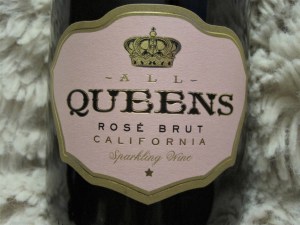
Here are the details of this scintillating wine. As you can see, the name and label make it very giftable and cute.

All Queen Brut Rose

The Ultimate Mother’s Day Beverage

All Queens Rosé Brut California

  • $15/bottle at Total Wine
  • Sparkling Wine from Lodi, California
  • Lovely light/medium salmon pink color
  • Brut (dry – no sweetness or residual sugar)
  • Light body, 11.5% ABV
  • High acidity
  • Aromas and flavors of strawberry, cherry, peach, tangerine

This wine is befitting a lavish Mother’s Day brunch. Try it with Eggs Benedict and a whole host of other delicious foods. It’s very difficult to screw up pairing this wine with other foods – in fact, sparkling wines are extremely versatile (kinda like moms) and go better with more foods than practically any other wine style out there (say, wha?).

If you really want to go over the top, and win the Child of the Millenium award, whip up this pretty in pink cake using 1 cup of your sparkling rosé. It’s picture perfect for Mother’s Day or any springtime/feminine occasion, such as Easter or a bridal shower. This cake is moist, fluffy, very tasty, and baking it will make your house smell like a French pâtisserie (ooh la la).

I think edible candied flower petals make anything look utterly posh, so don’t be shy and use the recommended candied rose petals on top; they are delicious and will wow Mom. I have also used candied violet petals on a lemon cake, yum! (As an Amazon Associate, I earn from qualifying purchases)

To all the mothers out there, a very Happy Mother’s Day! Thank you for mothering well. Take a moment to have your cake and drink it, too. You deserve it. ❤

Sparkling Rose Cake with Candied Rose Petals

“Eat Me!”

Sparkling Rosé Cake with Candied Rose Petals
Adapted from a recipe by Kevin Lee Jacobs | agardenforthehouse.com

Chef’s Notes
1) If you don’t have the large capacity Bundt pan as I did not, pour into a regular Bundt pan about 3/4 way full, then use the rest of the batter for cupcakes or a smaller cake pan.
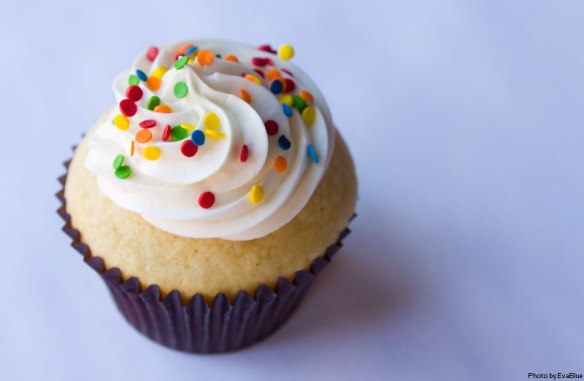
2) Since my Bundt cake fell apart upon turning out from the pan (alas, it happens), I took pictures of the cupcakes that I made from the same batter.
3) We don’t use artificial food coloring so the natural food coloring I used to make the cake batter pink is extremely light.

Equipment

  • A large-capacity Bundt pan (10 1/2 inches wide and 4 1/2 inches deep), generously sprayed with cooking spray (I use sunflower oil)

Ingredients

The dry ingredients:

  • 3 1/2 cups all-purpose flour
  • 1 teaspoon baking soda
  • 1/2 teaspoon baking powder
  • 3/4 teaspoon table salt

The wet ingredients

  • 1 cup (2 sticks) unsalted butter, at room temperature
  • 2 1/4 cups sugar
  • 4 large eggs
  • 1 cup sour cream
  • 2 teaspoons pure vanilla extract
  • 1 teaspoon strawberry extract (I did not find this in my local grocery stores, easiest to buy from Amazon) (As an Amazon Associate, I earn from qualifying purchases)
  • 1 cup All Queens Brut Rosé at room temp (or other pink Champagne, Prosecco, or sparkling wine)
  • Optional: pink or red food coloring

The glaze:

  • 1 1/2 cups sifted confectioners’ sugar
  • 2-4 tablespoons water
  • 1/2 teaspoon pure vanilla extract
  • Candied Rose Petals (As an Amazon Associate, I earn from qualifying purchases)

Instructions

  • Center the oven rack; preheat oven to 350°F. In a large bowl, whisk together the dry ingredients. In the bowl of a standing mixer, beat the butter and sugar at medium-high speed until pale and fluffy — about 5 minutes. At medium speed, add the eggs one at a time, beating well after each addition. Beat in the sour cream, and the vanilla and strawberry extracts.
  • At low speed, add the dry ingredients in three additions, alternating with the sparkling wine, beginning and ending with the flour. At medium high speed, quickly beat in the (optional) food coloring.
  • Pour the batter into the prepared Bundt pan. Use a spatula to spread the batter up against the sides, and away from the center (this encourages a level surface during baking). Bake until a skewer inserted in the cake comes out clean — about 1 hour. Let the cake cool in the pan for 10 minutes, then unmold and let cool completely.
  • In a medium bowl, beat together the confectioners’ sugar, 2 tablespoons of water, and the vanilla extract. Add more water as needed to achieve a thick but pourable glaze. Drizzle the glaze generously over the cake.
  • Before glaze sets, adorn cake with candied rose petals.
Sparkling Rose Cakes with Candied Rose Petals

The trick is not to eat them before Mom has a crack at them.

Time to stock up for warm weather wine drinking!
Take 10% off your purchase of 6+ bottles with code TAKE10

Mexico: Land of Cerveza, Tequila, and… Vino?

Disclosure Statement: This post contains affiliate links. When you click on an affiliate link and make a purchase, I receive a commission at no additional cost to you. All opinions are my own.

In which I try a red and a white wine from Mexico….

Cinco de Mayo is just around the corner, and our cherished Mexican restaurants are about to get CA-ROWDED. (A little trick of mine – eat at an Irish pub on Cinco de Mayo and eat at a Mexican restaurant on St. Patrick’s Day). After all, for most Americans, it’s about the spirit of the celebration, not the actual date, right? 😉 Yep, hasn’t failed me yet.

After fantasizing over chips n’ guac for a moment, I stopped to ask myself if I had ever had any MEXICAN WINE before. No, I don’t believe I have, I concluded. So self and I went to wine.com and searched for Mexican wine, and then ordered some.

Pack your bags and grab your sunglasses and sandals, we’re heading south of the border for a quick tour! This is for those of us who prefer wine over cocktails, and are curious enough to try a different Mexican beverage. It’s not Cinco de Mayo without Margaritas, claro que sí, but just for fun, since this is a blog dedicated to having fun exploring wine, let’s try some Mexican vino together.

(To whet your appetite, I do have a delectable Margarita recipe coming your way later this week. Watch for it, it’s a beauty!)

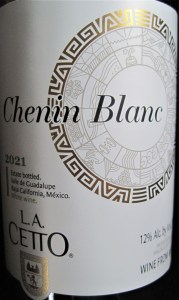
Wine #1: L.A. Cetto Chenin Blanc 2021
L.A. Cetto Chenin Blanc

  • $11/bottle at wine.com
  • 12% ABV
  • Estate bottled/Valle de Guadalupe/Baja California, México
  • Pale yellow with greenish hues
  • Light body, oily texture
  • Strong, refreshing acidity
  • The nose is lovely and highly aromatic. Aromas and flavors include: honeysuckle, peach, yellow apple, pear, honey, banana, melon

Something I did not know about Chenin Blanc is that it maintains a strong level of acidity, even under warm growing conditions. Normally grapes grown in warm climates develop higher levels of sugars than acids.

This would be stellar with fish tacos or pollo a la crema. I tried it with jalapeño-pickled green beans, brie cheese, and whole grain crackers to cure late-night grumbling stomach woes. Great flavors and pairing!

I was surprised by this little Chenin Blanc – it was very nice!

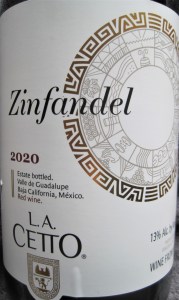
Wine #2: L.A. Cetto Zinfandel 2020
L.A. Cetto Zinfandel

  • $11/bottle at wine.com
  • 13% ABV
  • Estate bottled/Valle de Guadalupe/Baja California, México
  • Medium ruby with magenta tint
  • Light body, medium acidity, dry
  • Tannins are soft, gentle, in the background
  • Moderate finish
  • The nose is really lovely. Initial aromas: peach pie, cinnamon, juicy fresh strawberry, red cherry, watermelon, rhubarb, lemon blossom, pepper, clay. After several days of being open, it showed strong hibiscus, cranberry, and cherry.

My guess before I even tried this was that it would be highly similar to a California red – full body, higher alcohol, lower acid, off dry/residual sugar, and moderate tannins.

Here is what I discovered: this Mexican Zinfandel was absolutely nothing like any other Zinfandel I’ve ever had before. Not even Italian Primitivo, which is genetically similar to Zinfandel.

This was quite different from the dark, inky Zinfandels I’m accustomed to; it lacks the complexity, full body, and moderate tannins. I don’t know if that is an issue with the grapes or the winemaking. Truth be told, even though Zinfandel grapes produce dark, rich wines, their skins are actually rather thin, which should translate to lighter bodied, less tannic wines.

This wine was interesting in that it was so unusual from what I’ve typically experienced in Zinfandel. It does develop more complexity after a few more days of being open, and good on it, it is quite long-lasting without suffering the ill effects of extended bottle opening.

Treat this Zinfandel like a light, juicy, fresh red, and it will make you happy. This Zinfandel could be muy complementario with chile verde. I haven’t tried it, but if you do, let me know if it worked. 🙂

In conclusion, I personally preferred the Chenin Blanc overall, but I would recommend trying both (at only $11/bottle, they are each an easy way to explore Mexican vino). The Zinfandel was fine; it was just unusual for Zinfandel and that was why I had a hard time comparing it. But if you can treat it with an open mind, especially if you’re not a huge California Zinfandel fan, you might actually enjoy this wine. L.A. Cetto also makes a Chardonnay and a Cabernet Sauvignon. Wine.com also offers another label from Mexico that is spendier and from a different region, which I have not tried.

Have you ever had Mexican wine? Comment below!

Nat Geo Wines of the World

Hooray for Viognier!

To my white wine drinking readers, let me offer my sincerest apologies… the last several posts have all been on BBRs (big bold reds). You are no doubt growing impatient as you wait for me to recommend a great white that is not a shark. Tell you what: we’ll change things up today and shift gears with a BBW (big bold white), how ’bout? 🙂

Hooray for Viognier! Today is International Viognier Day, and boy am I excited. Viognier (vee-ohn-yay) is perhaps my favorite white wine ever, and if you haven’t tried this wine yet, hold on to the edge of your seat, because you are in for a treat! 🙂

Viognier is a grape that almost didn’t survive. That would be a miserable world, let’s not think about that. But there were only a scant number of acres of it hanging on for dear life in the Rhône Valley in France in the 1960s when some erudite drinkers smacked themselves up the sides of their heads and said, “Wait a second, this cannot and shall not be!” Good on them for rescuing this lovely grape from virtual extinction.

While Viognier is still not terribly common, it is now cultivated around the world. In the USA in particular, California and Virginia are well-known regions for growing Viognier. Oregon and Washington also grow excellent Viognier. In France, Viognier wine is known as Condrieu (remember, many European wines are named by place not by grape variety).

When I learned International Viognier Day was rolling around, it did not take me a single moment to decide which Viognier to write about: the 2020 Signature Viognier from Bacovino Winery (see my post on their incredible Sangiovese). Sourced from Walla Walla Valley grapes, it is fragrant, rich, and full-bodied but still with pleasant, refreshing acidity.

Bacovino Signature Viognier Walla Walla Valley

Bacovino Signature Viognier Walla Walla Valley

Here are the details and my impressions of the wine:

  • $27/bottle at Bacovino Winery
  • Fermented in 100% stainless steel. Whole cluster press, settling for one day, cold fermentation in stainless, lees stirred weekly, traditional cold stabilization in stainless, then bottle aged for 3 months
  • 14.5% ABV
  • Pale straw color
  • Rich, full body, supple mouthfeel, honey-like texture
  • Medium acidity
  • Enchanting aromatic bouquet: honeysuckle, grapefruit, stone fruit (peach or nectarine), and some tropical fruit also (kiwi and/or lychee)
  • Refreshing citrus and melon flavors on the palate

I love wines from the Walla Walla Valley AVA, so I asked Bacovino winemaker Randy Brooks why he chose this particular AVA for Viognier grapes. He responded:

“Walla Walla is perfect for growing Viognier, warm days and cool nights preserve the natural acidity of the grape while allowing the gentle development of both aromatics and body. Viticulturists in Walla Walla have a wealth of experience growing some of the highest quality Viognier in the world, allowing us to make a well-balanced wine that is expressive and can be enjoyed throughout the year.”

Randy likens his Viognier to a warm spring day and notes that it “pairs exceptionally well with Thai food.”

There you go, folks! We just solved your Friday night dinner and drink dilemmas: Thai food and Bacovino Viognier for the win! 🙂

So how do we get our paws on this wine? the ravenous white wine drinkers demand. Well, you can order it through Bacovino’s website or purchase directly at the winery.

Sadly, Bacovino has low stock of this wine right now, and is not planning on making any more Viognier for the time being (noooooo!).

So, as Janis Joplin sang, get it while you can! Because once it’s gone, it’s gone!

Do you love Viognier as much as I do? Comment!

PS: Go taste wine at Bacovino soon! Or if you can’t get there in person, you can order their wines online. Here are all of their new releases (see website for several other current releases). Plenty to keep you busy, and let me tell you, they are fantastic! ❤

Signature Chardonnay – Ancient Lakes of Columbia Valley
Signature Rivalon (blend) – Columbia Valley
Signature Counoise – Red Mountain
Signature GSM – Red Mountain
Vintner’s Merlot (extended oak aging) – Yakima Valley
Vintner’s Cabernet Franc – Columbia Valley
Vintner’s Petit Verdot – Red Mountain
Reserve Syrah – Red Mountain

Happy 11th Birthday to The Rambling Vine!

Disclosure Statement: This post contains affiliate links. When you click on an affiliate link and make a purchase, I receive a commission at no additional cost to you. All opinions are my own.

The Rambling Vine turns 11 today! I published my very first post here on 4/20/12 (purely coincidental date), lamenting the imagery of the word “blog.” Now, likewise, I can’t bring myself to use the word “blogaversary” – such a tangled, ugly word, am I right? We’ll stick with birthday, or anniversary. 🙂

https://upload.wikimedia.org/wikipedia/commons/c/c2/Cupcake_Camp_Montreal_2009_%284113329873%29.jpg
I began this website as a place to record memorable wines and as a creative playground for my writing alter ego. I am having so much fun getting back into blog life; crafting posts and sharing about the special and interesting wines I have come across. Those of you reading along, THANK YOU, especially those of you who have been patiently waiting while I raised babies and was kinda busy. Sticking to a schedule has definitely helped keep me consistent.

In honor of hitting blog adolescence (I’m sure this will be much easier than human adolescence), I am sharing with you a red wine that I’ve not simply loved and been impressed with, but a wine that is in a whole other category unto itself. Everything I desire in a great wine is here in spades. I can’t recommend this enough.

Like adolescence, this wine is powerful with a lot going on, but unlike adolescence, it is balanced and knows who it is.

Here you go:
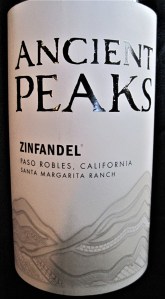
Ancient Peaks Zinfandel Paso Robles Santa Margarita Ranch

Ancient Peaks Paso Robles Zinfandel Santa Margarita Ranch

The zin that stole my heart! Ancient Peaks Paso Robles Zinfandel Santa Margarita Ranch.

$18/bottle on wine.com
Full body, 15% ABV
This was a wine that originally came home with us from La Conner Sips, a wine shop in one of our favorite small towns to get away. My initial thoughts were that this was as close to red wine perfection as you can get! Everything is in perfect balance and harmony – good fruit, good strength, sweetness/dryness, etc. Stunning how excellent this wine is.

Here are the winemaker notes:
“The 2017 Zinfandel presents bright boysenberry aromas with hints of sandalwood and vanilla. A juicy, jammy texture is loaded with generous flavors of wild raspberry, black cherry, plum, mocha and cedar. Spicy black pepper notes join mouthwatering acidity on a beautifully balanced finish. The juicy, spicy character of the 2017 Zinfandel is a perfect match for fine comfort foods, including grilled chicken flatbread, Italian sausages, Santa Maria-style tri-tip and Pepper Jack cheeseburgers.”

Wilfred Wong of wine.com described the 2017 vintage as “an explosion on the palate” and that this wine is “not for the faint of heart.”

Don’t let that description of a wild pre-teen freak you out. It still boasts exceptionally balanced richness and depth.

While I originally tried the 2017 vintage and that is out of stock on wine.com, the 2020 vintage is available on wine.com through my affiliate link here.

Here are the tasting notes for the 2020 vintage. It’s still Zinfandel from the same vineyard and winery, so very similar:

“The 2020 Zinfandel makes an immediate statement with bright, jammy aromas of raspberry, cinnamon spice and vanilla cream. Luscious, rounded flavors of red cherry, raspberry and blackberry unfold across a beautifully weighted mouthfeel, all under- pinned by deeper hints of roast coffee and black pepper. Smooth, juicy acidity brings impressive balance to a uniquely elegant finish.”

Words fail me. I don’t know how to stress how exceptional this wine is, other than the fact that I chose it as my blog anniversary celebration wine.

Grab a bottle, it’s only $18! And raise a glass to your favorite wine blog. 😉

Happy 11th birthday, Rambling Vine! You’re turning into an incredible young blog and I can’t wait to see what your adolescence holds in store for you. ❤

(And by the way, it’s time we had some “talks.”)

An Argentinian Treasure for World Malbec Day

Disclosure Statement: This post contains affiliate links. When you click on an affiliate link and make a purchase, I receive a commission at no additional cost to you. All opinions are my own.

Hear ye, hear ye! Today I doth proclaim World Malbec Day, a day to solemn ourselves and pay tribute to the magnificent Malbec grape, and all its vinous manifestations, forsooth (rolls up scroll).

Yep, here we are with another wine holiday on our hands. This time it’s World Malbec Day; yea verily yea (I really need to start using that phrase IRL)! It’s interesting that Tannat Day and Malbec Day are so close together on the calendar, and they are the signature grapes of neighboring countries Uruguay (Tannat) and Argentina (Malbec). Not sure if this was done on purpose or not, but it makes sense to continue our little South American sojourn, so vámanos.

Malbec is a wine I have intensely adored, especially in my beginning days of wine exploration. And I still love it. I haven’t had it as much lately because I’ve been spending my wine budget elsewhere, but for me and many in the world it’s a classic.

I’ve had wonderful Malbecs from my home state of Washington, but today I’m unlocking my wine treasure chest to introduce you to one of my favorite Argentinian Malbecs, which will give you a great idea of why Malbec shines in this country.

Malbec and Tannat have similar backstories. In the 16th century, Spanish missionaries spread vinifera plantings throughout Argentina to establish a supply of sacramental wine. Using the farming practices of the natives, the Spanish irrigated the vineyards in the valley with ice/snow melt from the Andes Mountains. In the late 1800s and early 1900s, many European immigrants came to Argentina and brought with them new grape varieties, including Malbec. Both Tannat and Malbec are grapes native to southwest France.

This particular Malbec is magical. I used this wine in a class I taught to illustrate Old World vs. New World wine characteristics (essentially, warmer climates yield grapes with higher sugar content, and cooler climates yield grapes with higher acid content, because they don’t ripen as much as their warm climate counterparts). Everyone loved it, and this beauty just got more interesting and sumptuous the longer it revealed itself in the decanter.

For best results, decant for 30-60 minutes prior to drinking. If it’s for a group, pour out the whole bottle into a decanter.

Here are the details and my impressions of the wine:

Phebus Malbec Gran Reserva Mendoza Argentina

Phebus Malbec Gran Reserva Mendoza Argentina. Photo courtesy Total Wine.

Phebus Malbec Gran Reserva Mendoza Argentina

  • $27/bottle at Total Wine
  • Full body, lots of heft, 15% ABV
  • Good acidity providing solid structure
  • Bold, unfolding layers of blackberry, black cherry, coffee, chocolate, tobacco
  • Velvety texture
  • Long, complex, irresistible finish

As I have regrettably lost my tasting notes from the last time I had this wine, my list may be missing a few details, but I’m providing you with the product description from Total Wine, which sums up my recollection as well:

“A very complex and elegant wine with floral aromas of violets, black cherries and licorice. On the palate the wine is deep and rich, perfectly balanced with delicate silky tannins and well integrated French oak. Perfect with a juicy steak, game, rich cheeses and chocolate desserts.”

My husband picked up this wine from Total Wine years ago. We first had it with a roast and it was magnífico. It’s one wine we turn to again and again and we are always floored by its quality. Remember, Argentina is also famous for its excellent beef, so Malbec + steak = natural harmony.

Total Wine also sells the Phebus Malbec ($14) and the Phebus Malbec Reserva ($17) in addition to the Gran Reserva ($27). I’ve had the Reserva which is still excellent – not as outstanding as the GR but nevertheless a wonderful wine for the price. You can try the others, but the Gran Reserva is unbeatable in style and quality. Go ahead and splurge on this version, I assure you it’s worth it!

For fun, buy all three bottles and do side-by-side tasting comparisons. See if you think they are each worth their price. Call it your World Malbec Day fiesta!

Happy World Malbec Day! Do you have a favorite Malbec I should know about? ¡Dígame! 🙂

Nat Geo Wines of the World

Tannat: The Polyphenol Jackpot

Disclosure Statement: This post contains affiliate links. When you click on an affiliate link and make a purchase, I receive a commission at no additional cost to you. All opinions are my own.

There is a holiday for literally everything now. From World Compliment Day to Super Mario Day to No Dirty Dishes Day (does a magical cleaning fairy come on that day?), there is no shortage of weird holidays. And why not? Every day that we are alive is worth celebrating – might as well have fun celebrating different things.

As I was surfing the Interwebs not too long ago, I came across a scad of wine holidays, including today’s Tannat Day. Realizing I’ve only had one Tannat in my life (to my knowledge) and that I have never blogged about it on here, I took it as a good excuse to pick out a bottle and learn a little more about this prized grape. Learning never ends for an oenophile!

So, here we are… Happy Tannat Day!

Just what is Tannat, anyway?

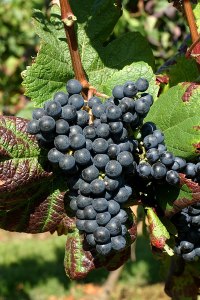
A cluster of the French grape variety Tannat. Doris Schneider, Julius Kühn-Institut (JKI), Federal Research Centre for Cultivated Plants, Institute for Grapevine Breeding Geilweilerhof - 76833 Siebeldingen, GERMANY

A cluster of the French grape variety Tannat. Photo courtesy Doris Schneider, Julius Kühn-Institut (JKI), Federal Research Centre for Cultivated Plants, Institute for Grapevine Breeding Geilweilerhof – 76833 Siebeldingen, GERMANY

Tannat is a red wine grape that originated in southwestern France, where it is known as Madiran (French wines go by place name not grape name). French immigrants hauled cuttings of their favorite grape down to Uruguay in the 1800s and began cultivating it. While it is grown in numerous countries the world over (including the USA), it has established itself as the top dog wine of Uruguay, in much the same way Malbec has become Argentina’s flagship grape.

Tannat grapes have extra thick skin and a higher amount of seeds inside than other wine grapes. Tannins come from the grape skins, seeds, and stems, and become an important part of wine during fermentation. When the wine is put in oak barrels for aging and development, this also imparts wood tannins. Thus, Tannat wines are by nature super tannic, but good winemakers will tame the tannins through practices like micro oxygenation and oak barrel aging, which allow small amounts of oxygen to soften the wine’s tannins. But not too much, because the high tannin levels are also the trait that will make Tannats age well/last a long time.

So, what’s all the health hype about? Tannins are polyphenols (one well-known one is resveratrol), or antioxidants, which are extremely important for our cell health. Tannins in wine are what cause bitter, astringent, sandpapery, or gritty sensations in your mouth. And Tannat has among the highest levels of polyphenols of any wine period. Other wines with mega-high levels of polyphenols include Sagrantino, Touriga Nacional, and Xinomavro (Wine Folly The Master Guide, pg. 19).

A fellow wine lover’s description of this Tannat on Twitter was compelling enough for me to purchase a bottle of the famed elixir. I decided it was time to get fully acquainted with this varietal, and what better day than on Tannat Day.

You who like big, bold, full-bodied reds, meet your new friend. A high quality friend whose price tag is very reasonable. And one who is very amiable. 🙂

Here are the details and my impressions of the wine:

Bodega Garzon Uruguay Reserva Tannat 2020

Bodega Garzon Uruguay Reserva Tannat 2020

Bodega Garzón Uruguay Reserva Tannat 2020

  • Currently $18/bottle on wine.com
  • Deep purple
  • Medium/full body
  • Dry!
  • 14% ABV
  • Low-medium acidity
  • Very smooth texture
  • This wine is bitter from the tannins, but the resulting texture is not grippy or sandy at all, very well-integrated and full
  • Aromas upon opening: rustic, earthy, animal, herbal, black fruits more subtle
  • Aromas after decanting 1 hour+: black fruits, smoke, spice, minerals, graphite
  • Flavors: black fruits (berry, cherry, plum, olive), meaty
  • Not a long finish
  • This wine is fine to sip solo, but because it is quite dry and bitter, I would recommend serving this wine with food to really let it shine (barbecue obviously and other rich, fatty dishes)

So there you have it. You can’t go wrong with this Tannat; it has good ratings from critics across the board and is lauded for being a top example of Uruguayan Tannat in this price range. Start here and then proceed onward to other Tannats.

Raise a glass of Tannat today. Cheers to your good health! ❤

Anyone else imbibing Tannat today? Where from? Thumbs up/down? Comment!

Nat Geo Wines of the World

Blind Tasting Seminar: Washington vs. the World

Disclosure Statement: This post contains affiliate links. When you click on an affiliate link and make a purchase, I receive a commission at no additional cost to you. All opinions are my own.

UFC fanatics thrill when two top contenders have a highly anticipated match. With similar fervor, oenophiles get excited over blind wine tastings. Which Sauvignon Blanc will come out on top… the Chilean or the Washingtonian? Should Bordeaux from France hold the keys to the chateau, or does victory belong to another rival? There’s nothing quite like squaring off two anonymous glasses of vino to see what they’re really made of.

I had the great fortune to attend a blind tasting seminar in Seattle at Taste Washington, the state’s premier food and wine festival. For those unfamiliar with blind tasting, it simply means being able to see, smell, and drink a glass of wine but not knowing any details at all about the identity of the wine until the very end of the tasting. In this seminar, called “Washington vs. the World: The Ultimate Blind Tasting,” several of the best Washington wines were pitted against several of the best wines of other famous world regions. Here was the course description:

“Washington wine continues to captivate a global audience. From incredibly high scores from critics, and growing international investment in our state, this has become THE place to make wine. The number of those considered ‘legends’ in Washington wine is increasing at a rapid clip, and the wines they produce continue to cannonball onto the world stage. This is your chance to get into the heart of the action with the winemakers, themselves, and take a deep dive into some of our state’s most chart-topping wines. We’ll even take it one step further by putting some of them up against the best from around the world so you can decide for yourself where Washington stands.”

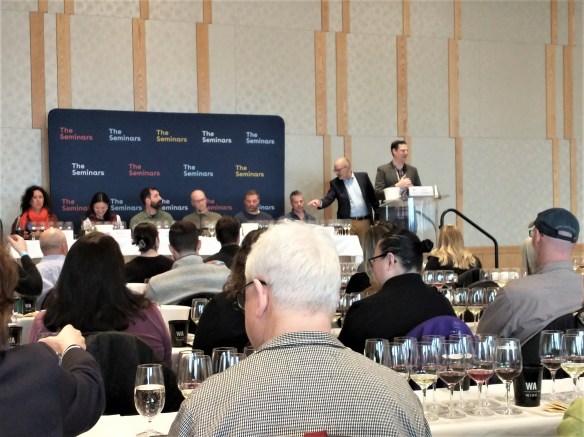
Taste Washington 2023 Blind Tasting Seminar Panel

Members of the panel for the Taste Washington 2023 seminar, “Washington vs. the World: The Ultimate Blind Tasting”

The seminar was moderated by Doug Charles, owner of award-winning wine shop Compass Wines in Anacortes, WA (on my list to visit!). The rest of the panel included Washington winemakers and a wine educator/writer, all of whom were also tasting the wines blind:

  • Peter Devison | Devison Vintners
  • Jason Gorski | DeLille Cellars
  • Devyani Gupta | Valdemar Estates
  • Justin Neufeld | JB Neufeld
  • Alex Stewart | Matthews
  • Elaine Chukan Brown | Award-Winning Global Wine Educator & Writer

We went through each wine one by one, with plenty of time to swirl/sniff/sip/savor/spit (if needed), jot down notes, and listen to the panel share their thoughts on the wines. It was also open to audience participation, so we were able to ask questions and share feedback. The whole event ran for an hour and a half.

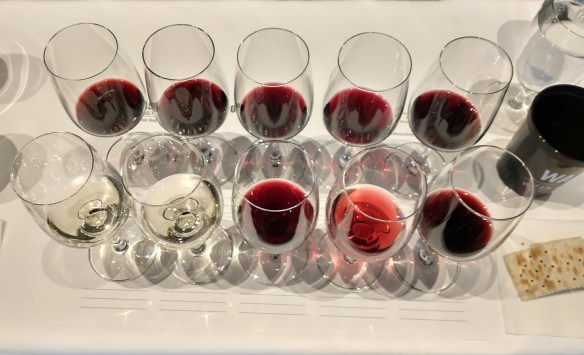
Here were the wines we tried (order in picture: 1-5 is bottom row left to right, then 6-10 is top row left to right):

  1. Château Picque Caillou, Blanc, Pessac-Léognan, 2017, $42
  2. DeLille, Chaleur Blanc, Columbia Valley, 2021, $42
  3. Devison, Above the Flood, GSM, Boushey Vineyard, Yakima Valley, 2020, $54
  4. Sadie Family, Soldaat, Piekenierskloof, 2021, $92
  5. Matthews, Reserve, Columbia Valley, 2013, $55
  6. Château La Fleur, Grand Cru, Saint-Émilion, 2019, $146
  7. Grgich Family, Estate Grown Cabernet Sauvignon, Napa Valley, 2018, $75
  8. JB Neufeld, Old Goat Cabernet Sauvignon, Yakima Valley, 2016, $55
  9. Valdemar, Syrah, Blue Mountain Vineyard, Walla Walla Valley, 2020, $75
  10. Porseleinberg, Syrah, Swartland, 2016, $102
Wines used in Taste Washington 2023 seminar, "Washington vs. the World: The Ultimate Blind Tasting"

Wines used in Taste Washington 2023 seminar, “Washington vs. the World: The Ultimate Blind Tasting”

I enjoyed each wine for different reasons, but if I had to pick a couple that really stood out to me, I’d pick #3 and #9. These are wines I would pour a nice big glass of and relax with on the couch, or pour for company to savor together. Both featured wonderful Washington Syrah (from Yakima Valley and Walla Walla Valley, respectively), and I appreciated getting to try a couple different producers I’d never had before.

Thanks to all my studious drinking, I did happen to guess all of the Washington and other origin wines correctly (not the other locations specifically, just that they were clearly not Washington). It has definitely helped that I have been trying wines from around the world through The Everyday Guide to Wine course (As an Amazon Associate, I earn from qualifying purchases) so some of these flavor profiles and styles were not completely out of left field. I also know my own backyard Washington wines well enough by now to be confident in my assessment. This was a really great exercise for me to do and it was worth the investment ($95 for the event). Considering several of the bottles sampled were very costly, it was a small price to pay for the chance to try these wines and others, and to hear experts discuss them simultaneously. I hope to attend another seminar next year.

A few things I learned from this experience:

  • A couple wines reeked on the nose but tasted amazing on the palate. That was surprising. I’ve had wines with Brett (Brettanomyces yeast) – the funky barnyard/Band-Aid smell – and I usually appreciate it, but not everyone does. I did not mind it in the #7. The other unusual trait I hadn’t encountered before was volatile acidity (I think – I am not 100% certain on this – my notes failed me). All I know was that one of the wines had a highly unusual, pungent note on the nose, but on the palate was delicious. Funny how that works.
  • Washington wine is insanely brilliant and is perhaps my all-time favorite wine region. So many fantastic iterations and interpretations. So good it’s scary.
  • I will never learn everything there is to learn about wine… it is endless. Perfect material for a blog! ❤

Have any of you ever participated in blind wine tastings? Or did anyone attend Taste Washington this year (2023)? Comment below!

World Taste Tour – Only $59.99 for 12 globetrotting wines, BONUS bottles and glasses