Red Purists, Take Note: The Allure of Australian Chardonnay

Disclosure Statement: This post contains affiliate links. When you click on an affiliate link and make a purchase, I receive a commission at no additional cost to you. All opinions are my own.

This Aussie Chardonnay May Make You Rethink Your Red Wine Only Allegiance

Most wine drinkers fall into the two main camps of red wine drinkers and white wine drinkers. While some are “all or nothing” red or white drinkers, I’d venture to say many of us prefer one camp over the other, but we don’t exclusively identify with just that one type of wine (ahem, politics, anyone?).

I myself prefer red wine over white. It’s usually much more interesting to me and also the health-promoting polyphenols are found in the reds, not the whites, so it’s for that reason also.

However, Chardonnay is a white wine that surprises me at each new encounter and causes me to question my red-wine-only preferences. It is such an intriguing grape, expressing itself in the glass in countless different ways. I’ve become fascinated with it lately, and my goal is to become better acquainted with it. #winegoals

Chardonnay is a noble white wine grape that is grown all over the world and does well in a variety of climates. It can be aged in oak barrels, which impart notes of vanilla, coconut, etc. or in stainless steel tanks, which do not impart any flavors and allow the wine to express itself in an unadulterated fashion. Some Chardonnays undergo malolactic fermentation, a process whereby malic acid is converted to lactic acid, and this results in the unctuous, buttery notes you sometimes get in a Chardonnay.

Penfolds Max's Chardonnay Adelaide HillsIn keeping with my little Aussie theme this week, I’ve got a wonderful Chardonnay for you (not Yellow Tail). 😉 This Australian Chardonnay I tried recently made me weep with ecstasy made me stand back and take note of how serious and attention-worthy some white wines can be! It’s from the Adelaide Hills region in South Australia. Penfolds notes that it is “A contemporary style Chardonnay, fresh and finely structured. This wine delivers pure fruit flavours balanced by bright, crisp natural acidity and complexity afforded from time in barrel.” According to Wine Folly: The Master Guide (As an Amazon Associate, I earn from qualifying purchases), some Aussie winemakers are – get this – bridging the gap between the two style camps of oak-aged Chardonnay and stainless steel Chardonnay, and combining the two in their bottles of wine. A great idea I can get behind because the wine it yields is outstanding!

Here is the scoop on the Penfolds Max’s Chardonnay 2018:

  • $20.99
  • Pale straw color
  • Full body, 13% ABV
  • Modest acidity
  • Aromas/flavors: stone fruits, baked apple, lime, grapefruit, rose, white flowers, balanced by compelling minerality
  • Moderate finish, good warmth and acidity on the finish

So, whether you fancy white or red, look around for this Chardonnay when you want a wine that is beautiful, strong, elegant, and endlessly intriguing.

How about you? Do you have an Australian (or any) kind of Chardonnay you love? Do tell!

*Unfortunately this particular wine is out of stock at the moment on wine.com. 😦

But when I asked for some other similar recommendations, these were mentioned. 🙂

Please note I have not personally tried these yet, but they sound great and are in keeping with the style of the Penfolds Chardonnay. Until then, keep your eyes peeled for this wine or try the following!

McMinnville Wine + Food Classic 2023: A Review

On Friday, March 10th, I got up early and hit the road to make the journey down to McMinnville, Oregon, where the 30th Annual McMinnville Wine + Food Classic was taking place. I had not been since 2019, so the absence had definitely compounded my excitement.

This event goes for three days (Friday, Saturday, and Sunday) at the Evergreen Aviation and Space Museum, and is a fundraiser for St. James School in McMinnville, OR. You can purchase tickets for as many days as you like. They even offer shuttle service from downtown McMinnville to the Museum.

McMinnville Wine + Food Classic 2023, Evergreen Aviation and Space Museum. Photo courtesy Eagle Eye Droneography.

McMinnville Wine + Food Classic 2023, Evergreen Aviation and Space Museum. Photo courtesy Eagle Eye Droneography.

There are tons of wineries, but also distilleries, cideries, meaderies, breweries (all the eez). There is obviously food, and a handful of artisans and crafters. You can peruse all of the 2023 participating vendors here.

I tried numerous pours of wine. I would have loved to have tried some other alcoholic products but stuck to my original plan (maybe next year).

Your ticket purchase includes two tasting tokens. At most places, one token is equal to one pour, but for certain specialty and library wines, two or even three tokens might be required. I wound up purchasing 15 additional tokens, and that was MORE than enough. Having an additional day or two to try more wines would be ideal but I could only attend one day.

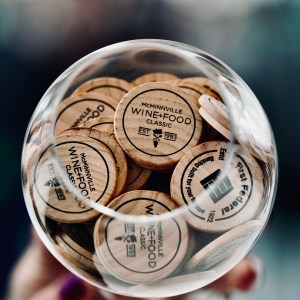
Tasting tokens for the McMinnville Wine + Food Classic 2023, Evergreen Aviation and Space Museum. Photo courtesy Eagle Eye Droneography.

Tasting tokens for the McMinnville Wine + Food Classic 2023, Evergreen Aviation and Space Museum. Photo courtesy Eagle Eye Droneography.

I obviously was not able to try every single wine and winery at the festival, but out of the ones I did, here are five wineries and their wines that stood out to me, and that you would not be remiss in checking out. Please note that at some of these vendors I only tried one pour, so this is based on the limited amount I tried that day. I also would have loved to have purchased more bottles but, alas, budgets. 🙂

  1. Denison Cellars 2019 Björnson Vineyard Pinot Noir: This wine really captivated me. Their Pinot was elegant, complex, expressive, beautiful. I sure wish I could have tasted their full line-up but I was trying to spread my tasting tokens out to try more wineries. Time to plan a private tasting at their vineyard in Salem! From the tasting notes: “The resulting wine is deep ruby in color and displays aromas of black cherry, pomegranate, and cranberry. With hints of cola and all-spice, the ripe, velvety tannins provide structure for rich, mouth-filling volume. Flavors of dark red fruit persist into a lingering finish.” $48/bottle. *Of special note for Oregonians: FREE LOCAL DELIVERY for those in Yamhill County, Salem, and Portland with any 3+ bottle purchase. I cannot wait to return and taste more of their wines.
  2. Patton Valley Wines 2018 Lange Vineyard Pinot Noir: Patton Valley has been a brand for over 25 years, but at the moment they are a nomadic winery with no permanent tasting room. I think that’s cool because I’m sure it allows them to save a ton of money and put that towards great winemaking; plus it’s a chance to get creative and have some fun, different tasting options. This was a delicious Pinot Noir I decided to take home as well. $55/bottle. According to the tasting notes, it has a “lush red fruited nose” and a “broad and silky palate.” This is a winery whose offerings you must try if you’re into specific Pinot Noir clones from particular Willamette Valley area vineyards. Visit their website to order wines and to learn where they are pouring.
  3. Domaine de Broglie 2019 Clone 777 Pinot Noir: Established in 2019, Domaine de Broglie is a more recent newcomer to the Dundee Hills AVA. This estate is owned by Francis Ford Coppola and was previously Vista Hills Vineyard. At the 2023 McMinnville Wine Competition, this showstopper wine took home Best of Show, Best Red Wine, and Double Gold! Uh-huh. Here are the tasting notes, you’ll see why: “Aromas of mushrooms, cedar, and forest floor mingle with sweeter aromas of vanilla coffee. A savory, well rounded palate counterpointed with notes of strawberries, red fruit, and salted caramel. An outstanding wine, showcasing the range of expression found in Oregon Pinot Noir.” $62/bottle, 100% Pinot Noir. This wine is music in a glass! This is the indulgence bottle. I did take this beauty home. (I also recall a tried a very enchanting Chardonnay).
  4. Rue Cler 2019 Rocks Syrah: Oh, wow! This is one I will be buying in the future, so intriguing and delicious. $48/bottle, sourced from Noble Rock Vineyard in Milton-Freewater, OR. From the tasting notes: “Black fruit takes a backseat to savory meats, crushed violets and brine…. Huckleberries and wet stone give great acid that lingers on the finish…. Decant to discover layers of earth and umami in your glass.” If you like wines with savory flavors and plenty going on, you’ll love this! Side note: I did not try their Walla Walla Syrah, but one of my tasting companions did and she kept going back for more sips. 🙂
  5. Siltstone 2021 Willamette Valley Pinot Noir: What I especially enjoyed about Siltstone Wines was they make a very good, very drinkable Pinot Noir for $24/bottle. You’re greeted with aromas of cherry, red fruit, and vanilla spice on the nose, and flavors of cherry cola and plum on the palate. The wine is medium-bodied with balanced tannins and a soft smoky finish. As much as I love ultra-fine, premium Pinot Noirs, I just can’t afford them all the time, and I’ll bet you can’t, either. And while $24 for a bottle of wine is a lot for many people (especially right now), when you look at overall pricing for good quality Pinot Noir, you’ll see that it’s very difficult to find GOOD stuff like this in this price range. This is a bargain for lovely Pinot Noir. I also would love to try more of their wines someday.

This event is a great way to get acquainted with a variety of fantastic Willamette Valley wineries all under one roof, and a great excuse to do something fun with your friends.

Have you been to the McMinnville Wine + Food Classic? If so, what did you try and like there? Comment below!

McMinnville Wine + Food Classic 2023, Evergreen Aviation and Space Museum. Photo courtesy Eagle Eye Droneography.

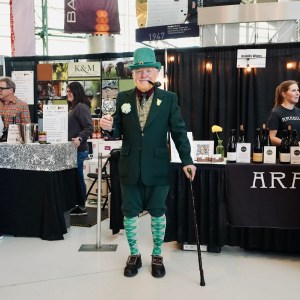
Definitely the best dressed guest! Photo courtesy Eagle Eye Droneography.

Three Noble Reds, One Outstanding Blend: Skagit Crest Railroad Red

Railroad Red Marries Three Noble Reds Together in One Outstanding Blend

March is Washington Wine Month, a month celebrating the state’s abundant delicious wine and a not so subtle way of trying to get you the consumer to buy more coveted grape juice. 😉

As I sit here reflecting on what I love most about Washington wine, two things come to mind: outstanding quality for the value and uniqueness of place. For Washington Wine Month, although I have plenty of great recommendations to share, I want to introduce you to a unique, truly outstanding Washington wine that encapsulates these values.

Like many people, I enjoy certain value wines at the grocery store (there is a time and a place for everything), but there is not always a distinct sense of place in some of those wines, as many are blended from where ever the winemaker could get decent grapes, and many times they are highly modified and manipulated to cover up poor quality grapes or simply to keep a consistent product.

Every once in a while, it’s good to get up and challenge our palates with something on a different level – to go digging for some true Washington treasure.

Ready for something fun? Here you go!

Skagit Crest Vineyard and Winery is one of my all-time favorite Washington wineries, owned and run by Chuck and Donna Jackson in the Puget Sound AVA. They grow and vint Pinot Noir, Chardonnay, Pinot Blanc, Pinot Gris, Sauvignon Blanc, and a Rosé of Pinot Noir, on their estate in Sedro Woolley, Washington. They also have a tasting room in La Conner, about a half an hour or so away. I have thoroughly enjoyed all of their wines, and I will definitely be posting on more in the future.

They have a red blend consisting of a rather unusual cast of characters that are not typically cast all together: Cabernet Sauvignon, Syrah, and Pinot Noir. These are noble grape varieties, meaning they are among the most popular and widely planted grapes around the world and still largely retain their character even in different growing regions and treatment by winemakers. That’s why a Cabernet Sauvignon from France and a Cabernet Sauvignon from Washington will still both share a lot in common, even though there are various differences in the final product.

If you’re an oenophile (lover of wine) or a Francophile (lover of France) or both (Francoenophile? Ah, how about vin-ophile?), you have probably heard of these famous places. These are three of France’s top winegrowing regions:

  • Bordeaux (famed for blends of Cabernet Sauvignon, Merlot, etc.)
  • Rhone (famed for blends of Syrah, Grenache, Mourvédre, etc.)
  • Burgundy (famed for Pinot Noir and Chardonnay, etc.)

These regions have been growing these particular grapes for centuries, and each region is known for being the absolute best place to grow certain specific varieties. Basically, winemakers from these regions are allowed to make wine only from approved grapes grown in that place and never blend from other regions. French wine laws tend to be very strict in that regard, in order to protect the reputation of their unique wines.

But that’s France, this is America. We go about our winemaking in ways similar and vastly different from France, in part because we are not bound by as many rules and regulations.

Leave it to winemaker Chuck Jackson to shrug at the traditional rulebook on red blends and throw three wonderful reds together in his signature Railroad Red Blend.

I asked Chuck what originally inspired him to create this blend, and this was what he told me:

“In the early planning days of the winery I wanted to offer a Bordeaux blend (likely Cab, Merlot and Cab Franc) and/or a Rhone style blend (likely Syrah, Grenache and Mourvedre) to our eventual line up of wines both of which I really love. After our first harvest from our vineyard it quickly became apparent that was a bit of a pipe dream. Making our own wines and adding Cabernet and Syrah from Eastern Washington was logistically a challenge enough. Adding the other varietals would have meant up to 4 more trips over the hill for grapes and stress our winery for space to make and store the wines for aging. So that dream died.

There was still a desire to have a red blend and I puzzled over just how to do that without stretching us too thin. It finally dawned on me that a potential blend was right in front of us. With three red wines in hand, why not try it. Thus with the 2017 reds we put together our “red blend”, one barrel worth. It was delicious and Railroad Red was born.

The name was Donna’s inspiration given we have a Burlington Northern railroad line running by the west side of our property and vineyard going north to Sumas at the Canadian border. I was subsequently tempted to rename it Trifecta being a blend of Burgundy,  Bordeaux and the Rhone wines. Donna was stuck on Railroad Red so it stands.”

Cabernet Sauvignon and Syrah both require a different growing climate (lots of warmth and sunshine), so the Syrah is sourced from the Yakima Valley AVA (specifically Crawford Vineyard near Prosser) and the Cabernet Sauvignon is sourced from the Horse Heaven Hills AVA (specifically Martinez Vineyard right across the street from the famed Champoux Vineyards). The Pinot Noir is from their own estate grapes (the Puget Sound AVA). Those of you in the know are aware that Pinot Noir is challenging to grow and make into wine (I call it the “picky princess of the grape family”) and the fact that Chuck can create superb Pinot Noir in Western Washington is a testament to his high knowledge and skill.

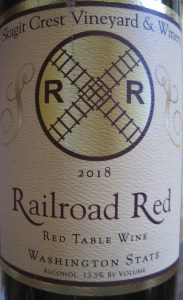
Skagit Crest Vineyard & Winery Railroad Red

Railroad Red: a genius blend of Washington reds.

So let’s take a closer look at the  Skagit Crest Vineyard & Winery 2019 Railroad Red. Three distinctly delicious Washington wines from three different locales, happily carousing in one blend:

  • $30/bottle
  • 13.5% ABV
  • 2019 Blend is 50% Pinot Noir/30% Syrah/20% Cabernet Sauvignon
  • Deep ruby color, full body, dry
  • Well-integrated gripping tannins
  • High, mouth-watering acidity
  • Aromas/flavors: cherry, strawberry, dusty plum, red flower (hibiscus or geranium?), vanilla, touch of chocolate, baking spice, earth (clay or rocks)
  • Finish/length: bright finish, but long, warm, complex, unfolding, lovely

The wine description reads, “Bright berry and cherry aromas with light hints of oak. Cherry and plum on the front to mid-palate. Peppery tones with gravelly earthy flavors in the back palate, lingering bright finish.”

The photo above is of the 2018 label. I love the 2018 blend and also enjoyed the 2019 blend, although they are very different. The 2018 was very round and plush and juicy, but still with that great structure and overall balance I love. That year’s blend consisted of 50% Pinot Noir, 25% Cabernet Sauvignon, and 25% Syrah.

The 2019 blend is wonderful. Because of the high acidity, the 2019 could age a few more years and become really interesting and “gentler” but it’s great to drink now, too. Give your bottle a day or so after opening and that will soften the acid a bit and open up more flavors.

I cannot recommend this blend enough. Make haste and visit their tasting room in La Conner or arrange for a private tasting and tour at their Sedro Woolley Vineyard and Winery (available by appointment only). I’ve done both and suggest you do the same!

Hint hint! April is the month of the Skagit Valley Tulip Festival – so make your plans now to see the gorgeous tulips and sip the gorgeous Skagit Crest wines.

Cheers! 🙂

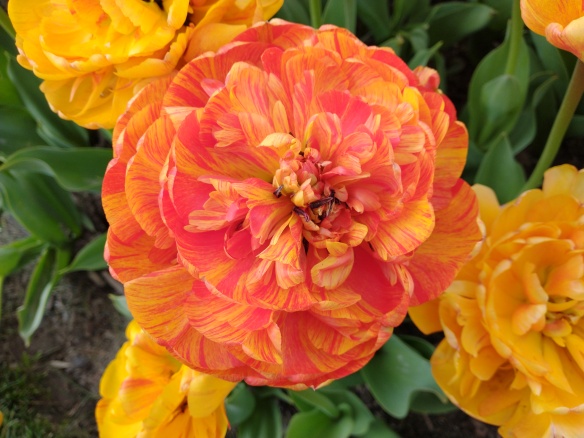
Skagit Valley Tulip Festival bloom

You have to see it to believe it. A bloom I snapped at the Skagit Valley Tulip Festival in 2022.

A special thank you to Chuck and Donna Jackson for answering my questions. 🙂 

How to Survive (and Thrive!) at a Wine Festival

I love wine festivals. I love the excitement of a gigantic room filled with a dazzling array of wines waiting to be tasted and interesting and fun people to talk to about wine. I love strolling around, perusing the tables with their bottles all lined up, many flanked with medals for various wine awards, being loaded up with pours, swirling my glass, downing divine liquids. Heaven!

But I don’t love the toll the higher than normal amount of alcohol takes on my body. Personally, two big glasses of wine (no, not this kind) spread out over the course of an evening, is my limit (As an Amazon Associate, I earn from qualifying purchases). And I have zero desire to try and break personal records here.

So how do you enjoy a wine festival without going overboard and waking up the next day with a raging headache, empty wallet, or other ill fates? In short, regret?

McMinnville Wine + Food Classic March 2019

McMinnville Wine + Food Classic, taken March 2019 at the Evergreen Aviation and Space Museum in McMinnville, Oregon. No, they didn’t let us climb in the planes.

Fear not, it’s not impossible; you can have your wine and drink it, too! Remember you are not here to compete; you are here to do as many tastings as your body will allow you to do comfortably. A wine festival is kind of a weird amalgam of speed dating and a trade show. But done with balance and moderation in mind, it’s great fun. 

I lay before you my wine festival wisdom! In no particular order…

1. Have a designated driver. Non-negotiable, and probably the most important consideration. Even if you don’t “plan on drinking that much” – it’s just best practice to have someone assume this responsibility.

2. Go with friends. Obviously if you have a DD the assumption is that you are going with friends. It’s hard to see people in person these days (life, busy), so it’s almost a superhuman feat when we do get ourselves together. Make this experience worthwhile and enjoy this time with your friends.

3. Make friends. Get chatty (that won’t be hard after a few sips). 😛 Don’t be obnoxious, but you’re in a room with a bunch of fellow wine lovers – swap stories. Make more friends!

4. Hydrate. Alcohol dehydrates you. The rule is at least one glass of water for each 5 oz. glass of wine. Take it seriously. Bring that water bottle and use it. Keep refilling it.

5. Take away the pain. Bring an OTC pain reliever in case wine headache sets it.

6. Take notes! Since I’m on my phone enough already I prefer to take wine tasting notes with a pen and basic cheap spiral notebook. That works for me. Do what works for you. Snap photos with your camera, use your favorite app, etc. 

7. Set a budget and stick with it. Also take into account your wine storage situation at home. You might not have room right now for a whole extra case of wine.

8. Mind your blood sugar. Go with a fairly full stomach, but not so full you don’t have room for wine. Bring bland crackers like water crackers to clear your palate and some salted nuts & dried fruit to elevate your blood sugar should the need arise (and it will!). Bring funds for meals and snacks, depending how long you are there.

9. Pace yourself. This is not a race! Relax. Easy does it, tiger.

10. Don’t just swallow your wine. Those of you wine tasting pros, keep reading. Those of you less familiar with proper wine tasting form, a quick lesson:

Take a sip, keep it in your mouth while you swish it and swirl it around, letting all the details of the wine register on your tongue and through your retronasal olfaction (your sense of smell that comes up to your nose from your mouth). Trill the wine, sucking some air into your mouth while you have wine in your mouth to aerate the wine. The air will actually help encourage the release of more of the wine’s aroma molecules. Then swallow. Exhale through your nose with your mouth closed for even more aromas.

For Olympian-level trilling action (and also plenty of talking), check out WineLibrary TV for endless examples of trilling and expectorating. 🙂

11. Don’t be afraid to spit out your wine (“expectorate”). Ask your wine server for a dump bucket. You can try a lot more wines without getting buzzed if you do this. It lets you get 90% of the picture of a wine, although you do miss out on the finish a little, since you are not swallowing in this instance (“finish” is how a wine concludes after swallowing, or the end experience of a sip of wine). BUT you still get all the information you need about the wine’s body, structure, and flavors. So it’s a win-win (wine-win?).

If you are really digging the wine you’re tasting, swallow; if not, spit.

You can also just take a small sip, savor, and swallow your wine, then dump the rest of your pour into the bucket to save your alcohol bandwidth for other wines.

12. Know and own your personal limit and practice acceptance. Remember, you absolutely cannot sample every single wine from every last winery here, and you won’t. Enjoy the ones you pick and remember that just leaves more for another time. Don’t be afraid to throw in the towel when you are truly done tasting for the day. Stop before your body starts complaining loudly!

And remember, palate fatigue is real. Our palates start to tire after tasting a high number of wines. This is when everything starts to taste AMAZING and when you frequently decide to purchase wine (naturally!), so just remember that when you bring home that bottle and it doesn’t taste quite as AMAZING as you remember it tasting at your beloved wine festival. This is why it really is better to only do so many tastes at one time, because you truly can’t enjoy the wines to their fullest with a muddled palate.

How about you? Have you been to any wine festivals? Love ’em? Hate ’em? Fun stories to share? Comment!

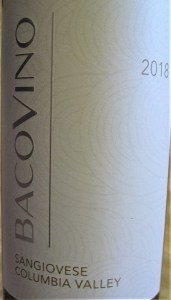
A New Favorite: Bacovino Sangiovese + Recipe

Bacovino Winery: Creating Beautiful and Bountiful Wines that are Truthful Expressions of Washington Terroir

If you’ve been drinking wine long enough, and tried a good handful of varieties, you get it – we all have certain wines that are not at the top of our favorites list. I’ve mentioned a time or two that I could care less about Pinot Grigio (ugh, even saying it gets me annoyed, ha ha). Well, the red wine equivalent of that for me has tended to be Sangiovese. When doing a red wine tasting, no matter where, the Sangiovese is often my least favorite wine. Yes, sometimes they’re OK, but I’m not usually compelled to purchase a bottle like I would a tried-and-true Cab or Syrah.

But that all changed at Bacovino Winery. My typical aversion to Sangiovese toppled when I tried this particularly wowing wine.

Bacovino Winery opened its tasting room in November 2021 in Tukwila, Washington, which is literally the first city bordering Seattle to the south. Owner and Winemaker Randy Brooks is an ardent fan of Washington grapes (me, too!) and is committed to honoring the character of each grape variety through the highest quality winemaking. You can read more about his winemaking philosophy and practices here.

I have been in the tasting room several times now and every time I have gone in I am treated extremely well by friendly, knowledgeable people, and I enjoy some truly special and delicious wines. The wines are outstanding examples of Washington terroir. My personal favorites are their Viognier, Merlot, and – whoddathunkit – Sangiovese (I will post on these other favorites in the future!). In fact, their Sangiovese might be my favorite of their wines, and it is definitively one of the best Sangioveses I have ever had.

So how does one of my lesser favorite red varieties hop to the top of my “MUST DRINK” list?

This is not a typical Italian/Old World Sangiovese with sky high acidity, brisk/coarse tannins, and even a touch of bitterness. This is Washington/New World fruit that has been made into a very pleasing and drinkable wine. It’s got the lightest amount of sweetness, round and present fruit and spice notes, and balanced acidity, alcohol, and tannins that make it exceedingly food-friendly. As a native Washingtonian it probably comes as no surprise this is my preferred style.

Hooray, I finally found a Sangiovese I LOVE!

Here are my impressions and some details of the Bacovino 2018 Signature Sangiovese:

  • $32/bottle
  • Medium garnet color
  • Medium body
  • 15.05% ABV
  • Aromas/Flavors: Cherry, Currant, Fig, Tomato Leaf, Brown Sugar, Vanilla, Licorice
  • Moderate acidity: just right!
  • Tannins pleasantly robust and blend perfectly with the rest of the wine
  • Lovely finish

This wine is distinct and fabulous on its own, but I wanted to challenge myself so I decided to research a great food pairing for this wine, and I found one. Eating Well’s Cheesy Marinara Beans taste like something you’d order at your favorite Italian bistro but are quite easy and affordable to make (plus vegetarian and gluten-free, if you prefer such things) – all bonus virtues right now with inflation!

Here is the recipe. This dish went GREAT with the wine!

A great food and wine pairing tip to remember is that Sangiovese is an ideal mate for foods with tomato sauce.

Go do a tasting at Bacovino, get some of this Sangiovese, make this recipe, and you will be one very happy camper. Don’t be surprised if you discover some new favorites yourself! 🙂

Speaking of cheese, Bacovino offers a veritable plethora of community events and classes, from live music to paint nights to floral arranging workshops to CHEESE classes! Haven’t you always wondered how to make all the different types of cheese (while eating them, no less)? I personally have not taken a class yet but it is on my to-do list. 🙂 Definitely check out these wonderful classes for a fun activity.

Fight Inflation: A Tempranillo for Under $10 + Free Wine Tastings

Talma Tempranillo Scores Big For a Few Bucks

I think it’s safe to say that everyone has now felt/is still very much feeling the effects of inflation and has modified their spending and consumption to reflect what they can realistically do with their limited dollars. We are definitely opting for more vegetarian dinners such as beans and rice, or eggs and toast (and no, we haven’t had a problem finding eggs, thank goodness). Eating one less meal out or using a cheaper source of protein (did someone say tofu?) all adds up and helps our poor wallets not be quite so emaciated.

Inflation doesn’t just affect our food choices, it affects our entertainment funds and even what type and how much alcohol we can buy.

And, I don’t know if any of you wine tasters have noticed lately, but some wineries and tasting rooms are charging exorbitant amounts to taste these days (I paid $30 for a tasting at one place in Oregon last year), and it doesn’t always even go towards a bottle purchase. 😦 I understand they are trying to make a profit, but, yikes and ouch!

Oddly enough, for a wine aficionada, I don’t actually drink a HUGE amount of wine, so when it comes to spending money on wine, I would often prefer to spend more on a few higher quality bottles than on a glut of vino cheapo. But that’s not at all to say I am resistant to a really good price for a good bottle of wine!

So if you’re wondering if there are any places left offering FREE tastings, let me give you some great news: yes, yes, there are! (*Hallelujah Chorus*). Your local Total Wine & More store offers FREE tastings on certain days of the week! OK, perhaps not everyone’s store does, but for those of you who live near one and are hankering to try some good wines (as well as spirits!), head on down.

For other ideas on where to taste for free in the PNW, see my page Places to Taste.

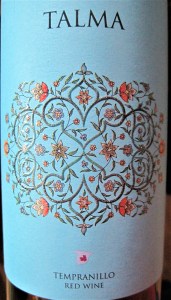
I tried this Talma Tempranillo at a Total Wine free tasting one Friday afternoon, and even

I love this label! Talma Tempranillo from Spain.

in the tiny plastic sample cup, it was aromatic and awesome and begged me to take it home. 🙂

Here is the scoop on this fun find that overdelivers for the price:

  • $8.99 at Total Wine
  • 100% Tempranillo from Spain
  • Medium ruby color, semi-opaque
  • 13% ABV, medium body
  • Moderate acidity, mostly dry
  • Medium tannins
  • Aromas/Flavors: upon first opening, I got cranberry, currant, bay leaf, pepper. Upon further swirling/decanting: black cherry, raspberry, blackberry, herbs, Bandaid (this aroma is attributable to Brettanomyces yeast), orange, earth, leather, almost a floral aroma, cedar
  • A fresher, juicier style of Tempranillo, this is a fairly young wine that hasn’t seen a long time aging or excessive amounts of oak.
  • Finish/Conclusion: intriguing cola flavors on the finish. The finish is rather short-lived but that doesn’t detract from the otherwise positive traits of the wine, like the nose, good balance of acid/alcohol/sweetness, and overall great flavor and smoothness.

I hope you enjoy this Tempranillo as much as I did, and that you’re able to find a free wine tasting near you soon!

Has inflation changed how much alcohol you consume or the price point of the alcohol you buy? Comment if you like.

Charcuterie with my Cuties and Wine for Valentine’s Night

Happy Valentine’s Day! I hope however you are celebrating today that you are feeling the love. ❤

If you are thinking “I’d like to make this day a little extra Valentine-y” but don’t want to go down the usual routes; if you need inspiration for a dinner that is delicious, interesting, fun, and relatively inexpensive (it’s utterly flexible), and is also something slightly fancy for the love holiday, look no further. It also does not require a reservation, parking, dressing up, and the like. It’s great for one person, for a couple, or for as large or small a group as you desire. So if that’s you this Valentine’s Day, I’ve got you covered.

One of the great things about wine is the special company it keeps with food. And the illustrious charcuterie board (a.k.a. Lunchables for Grown-Ups) has become the golden standard for enjoying with wine. In case you need enlightening, a charcuterie board is simply several types of prepared meats served with various cheeses, crackers, breads, nuts, olives, fruit, assorted condiments like mustard, jam, etc. all presented together on a large serving platter.

During the pandemic, when we were not eating out because restaurants were only offering to-go, I decided to throw together an epic smorgasbord with anything and everything charcuterie-related: several types of cheese and crackers, a couple salamis or other meats, sliced pears, berries, grapes, nuts, etc. I also bought several bottles of wine to pair specifically with the cheeses I had selected. We dined al fresco.

The kids LOVED it, because they got to eat cheese, crackers, and salami for dinner, and put what they wanted on their plates. I loved it for obvious reasons and also for the rare praises instead of moans and complaints from the picky eater cohort.

We did this a couple times and since it’s been a while, I decided it would be fun to do it again for Valentine’s night.

I slaved so hard in the kitchen… opening up packaged stuff and putting it on a platter, I’m exhausted… 😉

I’ve got a cheese collection from Costco (the Kirkland Signature Cheese Flight they sell around the winter holidays) which features the following cheeses: cow’s milk cheese from Belgium, aged cow’s milk cheddar from England, goat’s milk cheese with honey from Spain, sheep’s milk pecorino cheese with truffles from Italy, and cow’s milk cheese with tomatoes, onions, and spices from the USA.

When you make a charcuterie board, you can use whatever cheeses you like, but to keep it interesting, aim for:

– three to four (or more!) different cheeses
– a mix of soft, semi-soft, and hard cheeses
– a mix of different types of milk (e.g. sheep, cow, goat)

For wine, I went with a black pinot and a white pinot (literally Pinot Noir and Pinot Blanc) from different AVAs (American Viticultural Areas – unique designated wine grape growing areas) in Washington and Oregon. According to Erin Doman, all Pinots (Noir, Gris, Blanc, Meunier, etc.) are mutations of the same variety.

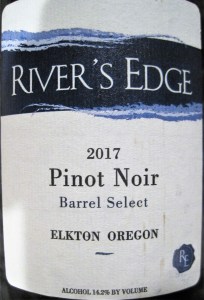
We’re drinking Skagit Crest Vineyard & Winery Pinot Blanc from Washington (specifically the Puget Sound AVA) and River’s Edge Winery Barrel Select Pinot Noir from Oregon (specifically the Elkton AVA, one of Oregon’s newer AVAs). You can pair almost any wine with various cheeses (more on that later), but for this article’s sake I am just focusing on these two elegant beauties.

Pinot Noir and Pinot Blanc grapes both make lighter bodied wines with moderately strong acidity (makes your mouth pucker) so they work especially well when paired with creamy cheeses. Some wines are great on their own and some are meant to be drunk with food. These wines are delightful each on their own and they shine bright with the cheeses.

The River’s Edge Pinot is bursting with juicy, plush aromas of dark cherry, blueberry, spices, and something woody. My favorite cheese match with the Pinot Noir is the Italian pecorino with truffles. The truffle notes in the cheese really complement the mushroom notes in the Pinot Noir. So earthy and complex, I love it! This is a great Pinot Noir for wine drinkers who like full flavors and good substance (like me, ha ha). 🙂

Skagit Crest’s Pinot Blanc is an exceptional companion to cheese! It is like smelling a springtime wedding: flowers hugged by some robust honeycomb, lime, grapefruit, and a little gravel. On the palate there is excellent acidity with no astringency or harshness, moderate alcohol and flavors of stone and citrus fruits. It’s very similar to Pinot Gris/Grigio (same grape, just French and Italian names), but I love this subtly different and refreshing change from typical Pinot Gris. For cheese partners, the Belgian cheese and the Spanish honey goat cheese were both great with this wine.

I am hoping to do more food and wine pairing recommendations in the future, but for now would highly encourage you to seek out these particular wines and enjoy them with some cheese. Bon appétit!

Strike It Rich with Dynamite Red

A dynamite wine for an explosively delicious Fourth 

Whiz! Bang! Boom! This Dynamite Red lives up to its name.

Whiz! Bang! Boom! This Dynamite Red lives up to its name.

Happy Independence Day, readers! It feels good to get my lazy self back on the blog — not that I haven’t been busy; I most definitely have been, what with wrangling my 9-month old monkey, taming the beasts Dishes and Laundry, and now starting a job hunt. I think I do better with writing when I have more on my plate, but not too much that it’s overwhelming. When there isn’t as much pressing business to do, it’s easier to just do other things instead. A habit I would love to ditch someday!

So, today is the one day of the entire season that epitomizes summer. Hopefully your day is full of warm sunshine, a pool/river/lake, ice cream, great fireworks, fun friends and family, delicious BBQ, and, to go with that BBQ… some red wine, perhaps? But it is summer, after all, and it’s nice to go with beverages that are lighter, sweeter, and even served chilled.

If that is at all up your alley, I’ve got the perfect wine for you! (And even if it’s not, you still need to try this wine).

Have any of you ever had wine from Arizona? I used to winter in Tucson the last couple years for management training for my old job. My husband would accompany me and while I was in class during the day he would drive around and explore. He found Silver Strike Winery in Tombstone, and picked up their Dynamite Red one year. The next year we bought some again, and now we miss it and are thinking we need to order some soon.

This wine is produced and bottled in Elgin, AZ. It’s a fairly sweet red, very tasty and refreshing, especially for Arizona heat or any summer clime. We found we liked drinking it slightly chilled. There is something really nice about finding a great, delicious, straightforward, easy-drinking red that practically anyone will enjoy. Trophies in your wine arsenal.

Another benefit to drinking this (or any) wine from Silver Strike Winery is the winemakers’ philosophy of minimal chemical tampering with the grapes, and using organic and biodynamic growing methods to coax out their best flavors… a practice I will always stand behind!

While I’m aware I’ve given you pretty short notice on securing this red, as today is the Fourth, you can always order through their website. We still have plenty of summer left, and the Internet is always open for business, so no excuses! I believe the cost was somewhere in the ballpark of $15-$30. Ask about some of their other wines, too, while you’re at it. (And let them know you heard about them on The Rambling Vine). They have another one called “Village of Elgin”, I believe, that I also really enjoyed.

Until next time, I wish you all a wonderful Fourth, and hope you strike it rich with some Dynamite Red this summer!

Strange But True: Bacon Wine

Wine can be made from so many things. While grapes are the number one choice, and for good reason, that hasn’t stopped adventuresome spirits from using wild ingredients or attempting creative and strange flavor combinations over the centuries. But until now, no one has dared try what could be the next big thing, based on two current popular foodie faves… bacon and red wine. But someone has. And all I have to say is… wow.

I was lucky to meet the owners of Swine Cellars this past weekend, Wilbur and Petunia, whose production facility is located out in Woodinville Farm Country, which is right next to Woodinville Wine Country. They are so cheerful and rosy cheeked, squealing all the time, you know they are having a good time and enjoying their fair share of the product (although they do snort constantly when they laugh… which gets old). Anyway….

I got to sip on the unctuous concoction while interviewing them this past weekend. “So, how were you inspired to make bacon wine? And how exactly is it made?”

“Well, we thought one day, how can we offer a totally unique product in the world of wine?” said Wilbur. “Something revolutionary, daring, that no one else has done before? And then, it hit us… bacon wine! Bacon has skyrocketed to ultimate food status in the gastronomic universe, and we all know that this is the day and age of great wine, craft beer, and small batch spirits. We know bacon vodka has already been done, and to great acclaim, but we though, why not try bacon wine?”

“And so we did!” chimed in Petunia. “We found an exceptional Zinfandel grape that is grown by a small lot producer out in eastern Washington. We were looking for a dark rich smoky red wine with berry notes. It pairs perfectly with bacon flavors.”

“Which brings us to how we incorporate the bacon flavor into the wine,” said Wilbur. “The secret’s out… we add bacon grease (and no, we won’t tell you the percentage) to the wine. It brings out the flavors of the wine unlike anything else on earth. Plus, the acidity of the wine naturally helps break down the fat of the bacon.”

“Where do you source your bacon grease?” I ask, eating some complimentary oyster crackers, as I’m starting to feel the effects of the wine on an empty stomach.

They both blush. “Well, guess we can’t keep it a secret for very long,” said Petunia. “We actually get it from ourselves. We’ve shed a ton of weight during this project… even our kids have been willing to help out. We’ve never been this in shape our whole lives!”

“Wow, how resourceful and sustainable are you guys!” I exclaimed. “This could be the wave of the future, using what you have on hand to enhance already great wine!

“Exactly!” squealed Wilbur and Petunia. “Thank you so much for helping spread the word about our bacon wine. The marketing has been a challenge, so we need all the help and exposure we can get.”

“My pleasure,” I said, wiping my mouth with a napkin. “I’m always looking for innovative new wines to feature on my blog, and this is perfect.”

So, dear readers, if you’re looking for a unique flavor adventure, go visit Swine Cellars out in Woodinville. Make sure you tell them the Rambling Vine sent you.

Five Star Cellars Creates Five-Star Wine

Merlot has suffered a plunge in popularity over the last decade or so, though not for good reason. It’s been crowded out by favorite luminaries Washington Syrah, Oregon Pinot Noir, and California Cabernet Sauvignon (at times, perhaps justifiably so). But my heart aches for the underdog, especially when that underdog is just as bright as any other star in the firmament.

Image courtesy Five Star Cellars.

Image courtesy Five Star Cellars.

Five Star Cellars, one of my absolute favorite wineries, uses only the top fruit from the top vineyards in Washington state, and their wine confirms this. I’ve been lucky enough to drink their acclaimed wines on numerous occasions now, and I have to say that if I were to ever join a wine club, Five Star Cellars would be one of them! Every bottle is exceptionally tasty and mind-blowing, so no regrets when it comes to regular purchases. While I enjoy all of their wines, my sweetheart wine is their Merlot. Oh yeah, Merlot! 🙂

This is one of the best Merlots I’ve ever had; perfect balance, perfect texture, lovely lovely bouquet and taste. I can’t say enough good things about it. Their 2009 blend is 92% Merlot, 5% Cabernet Sauvignon, and 3% Malbec. Fruit is all from the Walla Walla Valley; hailing from the stellar Seven Hills, Pepperbridge, and Blue Mountain vineyards.

According to the winemaker’s notes: “Fleshy fruits dominate the nose followed with hints of oak. Bright cherry notes combine with blackberry and currant flavors. Well integrated tannins with great acidity carry the long finish.”

See? I’ve made your Valentine wine selection a cinch! This wine is perfect on its own, accompanied by some nice olives, cheese, and crackers, or with a moderately rich beef or pasta dish.

When it comes to Merlot, don’t be too quick to judge. Let this wine change your mind and set the bar for enjoying all other Merlots. It does, after all, shine in a class of its own.

“Be mine!”
XOXO, Merlot