National Wine and Cheese Day: Four Great Pairings to Get You Started

Disclosure Statement: This post contains affiliate links. When you click on an affiliate link and make a purchase, I receive a commission at no additional cost to you. All opinions are my own.

Greetings, readers! Whew, it’s been a minute, hasn’t it? I survived my first spring as a sports mom… hence the unintentional crickets for several months. But I’m missing our wine chats. Now that it’s summer and I’m enjoying life at a slower pace for a while (please God, no tragedies or health issues this summer), I can refocus and get back on here. Because grape gossip is irresistible! 🙂

Today is National Wine and Cheese Day! Special salutations to my fellow enophiles and turophiles (cheeseheads)! It is our day to celebrate two of nature’s most magnificent contributions to the human diet, and to stand in awe of their joint power and beauty. Coincidentally, an especially Happy Birthday to my dear sister today! xoxo

I like to have fun with the many wine holidays out there. There’s even an International Xinomavro Day, if you can believe it (it’s a Greek red wine). Calendar holidays give me some structure to follow when creating blog posts and picking what to post on when. So when I looked at my list of blog drafts and saw National Wine and Cheese Day approaching, I knew this would be a good time to share with you several tried-and-true wine and cheese pairings (and, mainly, to get my butt in gear and do a post already).

Several years back, during the pandemic, our lives depended not only on our ability to stay safe but on the need to keep ourselves entertained during intense boredom and isolation. I did my best to keep things lighthearted (see my post on blind tasting). 🙂 When ordering takeout from restaurants lost its luster (ah, memories of soggy and saggy fries and lettuce in cardboard), I decided to try something festive, fun, and different.

I love sitting outside on our deck on a beautiful day, taking in the sky and the trees. So I decided the only thing that could possibly improve on an already idyllic situation would be to have an evening of culinary matchmaking, in which I set several cheeses up on first dates with several bottles of wine. It’s one of the easiest dinners in the universe and one of my kids’ favorite ways to eat dinner (minus the wine, of course — see also crackers, fruit, charcuterie). 🙂

So here is the wine and cheese menu I put together.

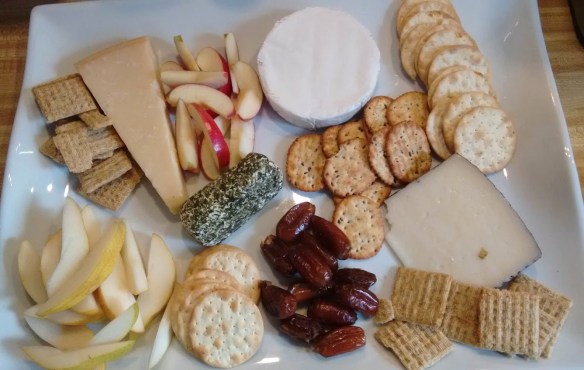
Cheese Board

The stars of the show. On the left are Parmigiano and Herbed Goat Cheese. On the right are Brie and Manchego. No autographs, please.

Wine and cheese are both ancient fermented foods that through fungal finessing and microbial magic become so much more than merely grape juice and curdled milk. When they join forces, it’s a gustatory revelation of sheer delight.

But with so darn many wines and cheeses, how to pick what to go with what? I did some research, compiled some promising looking suggestions, and based on what I found put together this particular wine and cheese menu. I can vouch wholeheartedly that these wines and cheeses make for lovely pairings! And don’t sweat the brands too much – just buy what you can find in that wine or cheese category!

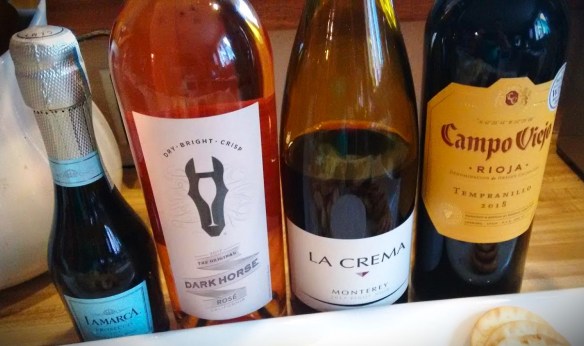
1) Prosecco and Parmigiano-Reggiano
La Marca Proseccoicon
This was one of my favorite pairings on the whole menu. Salty, nutty, umami Parm and sweet, fruity, fizzy Prosecco need to make much more regular appearances at my house! I hadn’t really cut into a wedge of Parm and eaten it – I’d only ever grated it onto food, mainly pasta and soup dishes. The full-on texture of the Parm was something I’d never really experienced before. The crunchy nugget “crystals” in the cheese actually form when the cheese ages: the proteins break down and the individual amino acid tyrosine becomes concentrated and forms crystals. When matched with Prosecco’s bubbles, it’s molto delizioso!

2) Rosé and Goat Cheese
Acidic rosé wine both complements the tang of and contrasts with the fatty creaminess of goat cheese. It puts you in a very, je ne sais quoi, French state of mind. The light berry, stone fruit, and mild vegetal flavors of rosé with the goat cheese are reminiscent of a summery salad. I used Dark Horse Rosé which is surprisingly good for under $10/bottle, as all Dark Horse wines are priced in that arena. And the herby goat cheese I used was very tasty with the wine. Très délicieux!

3) Pinot Noir and Brie
La Crema Monterey Pinot Noiricon
Speaking of a French state of mind, it truly does not get more French than Pinot Noir and Brie. For this pairing, I did use a California Pinot Noir but it still went very well with the Brie. It could be because I’m more familiar with Pinot Noir than other wines, but I think Pinot Noir makes for an especially interesting wine to pair with cheese, because there are so many very different styles and types of Pinot out there and you can play on the specific flavors in your specific wine with the cheese (for example, you can emphasize an Oregon Pinot Noir’s mushroom/truffle notes by pairing it with pecorino tartufo cheese). This is a classic pairing that takes a lighter, more acidic and aromatic red wine and puts it with a rich, creamy, singularly flavored cheese. It is scrumptious.

4) Rioja and Manchego
This was my other favorite pairing of the night! Oh. Yum. Leathery cherry and spiced Rioja (Tempranillo) went perfectly with Manchego, a Spanish sheep’s milk cheese. ¡Muy delicioso!

Wine and Cheese Pairing Party

Take a bow: Prosecco, Rose, Pinot Noir, Rioja.

So there you have it. It sounds more like International Wine and Cheese Day, with the Italian, Spanish, and French contributions.

At this point in my life, I’ve put together at least one other wine and cheese pairing feast at home. The menu above, however, was delicious and doable, and is ideal for celebrating your first National Wine and Cheese Day. The featured wines and cheeses, I feel, are pretty widely available and interchangeable (you don’t have to worry too much about getting a certain brand, etc.), so my advice would be to start with the above menu and then go from there.

I don’t want to promise I’ll post on other wine and cheese pairings soon, because you know my track record of posting regularly can be very intermittent, but I think that wine & cheese is a topic all of us on here can appreciate, so I do plan to do more in the future.

How about you? Do you have any must-try wine and cheese pairings we should know about? Please share and comment below!

Gourmet Essentials for Wine Lovers, Elevate your summer pairings with these products.

A Rocks District Gem to Rock Your World

Ah, Syrah… one of the world’s great noble varieties. It can sneak across the stage in the background: dark, cloaked, brooding, and mysterious, but it can also slide out onto front and center stage screaming its head off, shredding an electric guitar at a dizzyingly fast pace. And then, everything in between. It can be so many different styles, depending on where it is grown, and how it is vinified.

Que sera sera, or rather, Que Syrah, sera. What Syrah is, it will be.

I need “Que Syrah, sera” on a t-shirt or bumper sticker. 🙂

You think you know Syrah? Think again. Have you ever been fortunate enough to taste a Syrah borne out of the Milton-Freewater Rocks District in Oregon? Well, my friend, let’s chat….

Wines from the Rocks District AVA (American Viticultural Area) have gained acclaim for their distinctly savory and mineral characteristics, which make them taste especially unique.

Let me give you a quick geography lesson….

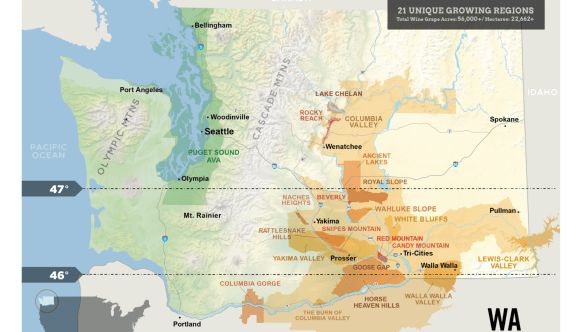
Take a glance at this map of Washington state wine AVAs and below it the Oregon state wine AVAs:

As you can see on the Washington map, the Walla Walla Valley AVA includes land in both Washington and Oregon states. The Rocks District of Milton-Freewater (#22 on the Oregon map) is situated WITHIN the borders of the larger Walla Walla Valley AVA, but is completely on the Oregon side of the Walla Walla Valley AVA.

The only wineries that can put Rocks District AVA on the label have to produce AND bottle their wine in the state of Oregon, which is where the Rocks District AVA is. However, many Washington producers, even though they may source grapes from the very nearby Rocks District, are producing and bottling wine in Washington STATE, so they can only label their wines with the Walla Walla Valley AVA.

So, chances are high I’ve very likely had a Syrah from Walla Walla that contained Rocks District grapes. But with a Washington winery, it wouldn’t necessarily indicate so on the label. On the Washington side, digging deeper is required (sorry for all the rock puns, they’re gonna come flying). 😉

There. Clear as alluvial silt? Hopefully that didn’t hurt your brain too much. If so, take a sip of wine.

So, what makes the Rocks District soil unique? Why all the fuss? In a nutshell, tons of basalt cobbles spewed from a volcanic eruption and deposited by flood waters.

There is literally no topsoil which forces the vines to go DEEP into the earth, to struggle, and this causes the grapes to be lower in number of clusters and smaller in berry size (leading to more powerful, concentrated wine).

These topographical and climatic conditions result in some jaw-droppingly incredible wine, not just with powerful body and tannins, but with aromas and flavors of meat and brine.

Incidentally, if you’d like to read a bit more about minerality in wine from a winemaker (it’s very interesting and not too long), check out winemaker Matt Brain’s  (no, not a typo for Brian – I triple checked) 🙂 article on minerality in wine. Basically, according to Brain,

“… minerality in the soil does not seem to be the major contributor to minerality in the glass. Soils that are thin or deprived of organic matter, however, may contribute to a less fruity and floral grape, allowing mineral characters to be more easily identified.”

Hence why Rocks District wine aromas and flavors come across more pronounced on the mineral spectrum than the fruit/flowers/herbs/spices/etc. spectrums.

This particular Syrah is one I fell in love with at the McMinnville Wine + Food Classic in Oregon. It has rocked me to my molten core every time I’ve tried it and I’ve held on to my one bottle for long enough now. Time to pop the cork and relive the magic!

Rue Cler Rocks District Syrah

Rue Cler Rocks District Syrah

  • $48/bottle
  • 14.4% ABV
  • Sourced from Noble Rock Vineyard in Milton-Freewater, Oregon, Rocks District AVA
  • Winemaker’s notes: “2019 Rocks District Syrah is soft and subtle but lookin’ sharp. Black fruit takes a backseat to savory meats, crushed violets and brine. A charcuterie for the senses! Huckleberries and wet stone give great acid that lingers on the finish. Decant to discover layers of earth and umami in your glass.”
  • Medium ruby color
  • Black plum, soft violet floral component, boysenberry, minerals
  • Very full and soft, not as much punch as I recall it having
  • Aromatic complexity that blew me away initially was not as strong at home
  • Tannins are there but not overpowering
  • Some acidity but very discreet
  • The complex fruit seems to vanish quickly
  • Still, a delicious wine I would buy again

While I was a little surprised this wine didn’t have quite as much acidity as I remember it having when I had it at SIP, it nevertheless delivered much pleasure. Wine is constantly evolving, and it’s highly susceptible to the different environments we drink them in (hello, dinner cooking in the kitchen with poor ventilation) and the various physical states WE consume them in (time of day, hormone levels, and so many other things ALL influence how a wine tastes to us).

This wine is a wonderful introduction to the Rocks District Syrah genre. It is a wine to savor and explore, and I would absolutely buy this wine again.

I hope to unearth some more red wines (especially Syrahs) from The Rocks District of Milton-Freewater. These are something phenomenal and extraordinary. I’m hooked!

Here is a cheat sheet of other wineries using Rocks District fruit if you’d like to go on the hunt for some fine bottles o’ wine: Rocks District Wineries.

Have you ever tried a Rocks District Syrah? Comment!

A Historic Cabernet Tasting: 2025 Taste Washington Seminar Review

In which I taste through some of the all-time heavy-hitters of Washington State Cabernet Sauvignon, and why you should attend a wine seminar….

Happy St. Patrick’s Day, readers! Up here in the Pacific Northwest, we are on the cusp of spring and the weather is acting accordingly: dreary, drizzly, rainy, windy, but with pink and white cherry blossoms and yellow daffodils fighting against the gloomy grey, like eager students waving their hands in the air to be called on. I am feeling hopeful for the new season that shall soon be upon us.

I don’t know why “they” picked both March and August, but March is officially Washington Wine Month: a chance to focus on and celebrate the great and special wine of the Evergreen State. Maybe they picked March because March is still basically winter and everyone is getting really sick and tired of the winter drudgery at this point (and needs some good wine to pull them to the spring finish line). Anyway, it’s when the Washington State Wine Commission puts on a week’s worth of special events in Seattle called Taste Washington, which encompasses everything from winemaker dinners to educational seminars.

In 2023 (I missed 2024), I attended Taste Washington’s Seminar, “Washington Vs. The World: The Ultimate Blind Tasting.” This was a fantastic event and I’m still baffled as to how it took me so long to figure out this happens annually in my city. We wine lovers gotta scratch our itch to learn about wine, and I can’t think of a better opportunity that delivers on that without costing you substantial time and money, like earning a certificate or diploma in wine. I am glad I found an activity worth doing every year for the enjoyment, the opportunity to try rare/expensive/unusual wines, and the chance to further my wine education.

I couldn’t resist attending this year, especially with one of the seminars titled, “King Cabernet: A Historic Tasting of Washington’s Finest.” I mean, really, would you pass up a chance to taste 10 of Washington’s finest/most premium/highest-scored Cabernets for way less than the cost of many of the bottles themselves? I think not! So, thanks to some birthday money from my in-laws, I went ahead and signed up. 🙂

Since the dress code called for business casual, I rounded up an outfit from the “distant work past” section of my wardrobe, put on makeup, and moved my personal items from a fanny pack to a leather handbag. My outfit was probably more business and less casual, when I think about it, but better to err on the side of formal than informal. After all, drinking wine is always a special occasion and sometimes we should approach it with some reverence. 🙂 I no longer need this kind of fancy wardrobe except for maybe once a year – thank God, because my legs hurt from traipsing around in my heeled leather boots – but from time to time it’s fun to dress up and feel a little more put together than my usual, painfully casual mom attire. 😉

My husband drove me to the seminar, which took place at the Embassy Suites Hotel right next to Lumen Field Event Center, where the Grand Tasting events (large scale event featuring tastings from over 200 wineries and over 75 restaurants) were happening immediately after the seminars. While I did my wine thing, he took the kids to explore the fabled Seattle waterfront in an effort to give the city a chance to prove we should not talk smack be entirely negative about it. I will not mention the sights and aromas of our last trip to the waterfront several years ago for an aquarium visit. But I digress….

Here is the official description of the seminar:

“Amazingly, Cabernet Sauvignon only became Washington’s most-produced grape variety just over a decade ago. Today, not only does it dominate production and plantings, but also defines many of our most critically acclaimed wines: wines that stand out for their balance, elegance, depth, and sense of place. Here, in the best flight of Cabernet Sauvignon ever poured at Taste Washington, we’ll present a show-stopping array of some of the state’s finest and most celebrated masterpieces. Discover what makes Washington Cabernet so distinctive, explore the regions where it shines brightest, and learn about the exciting future of this esteemed variety. Join us to experience why Cabernet Sauvignon has earned its title as Washington’s unrivaled king of grapes.”

The seminar was moderated by Bob Betz, MW (Master of Wine), a well-known Washington winemaker and figure in the state wine scene. Bob explained that he did select the lineup of wines based on critics’ scores – he wasn’t just pulling his personal favorites (his winery’s wines just happen to score in the top). 🙂 We were instructed to sip on the wines in whatever order we desired as the panel members talked. The panel consisted of the following individuals – all winemakers whose wines we were drinking except for one wine critic whose specialty was Cabernet Sauvignon:

  • Virginie Boone, JebDunnuck.com
  • Will Camarda, Andrew Will
  • Stephanie Cohen, Col Solare
  • Ray McKee, Trothe
  • Gilles Nicault, Long Shadows
  • Louis Skinner, Betz Family
Taste Washington Seminar 2025

Bob and the panel laughing about something. 🙂

There was a lot of talk about Cabernet Sauvignon: about why it’s a noble variety and one of the top quality wine grapes in the world, why it shines in Washington state, but the purpose of this post isn’t to lose you in the mire of technical details; in fact, I really didn’t even take notes, as I wanted to drink in the information but mainly just relax and drink up the wine. 🙂 Suffice it to say, it does really well with the climate and soils of Eastern Washington and makes a fine, long-lasting wine, thanks in part to its dark skins (anthocyanins) and skin to seed ratio. Essentially, it has the tannins, acid, and alcohol to make rich, bold, long-lasting wine.

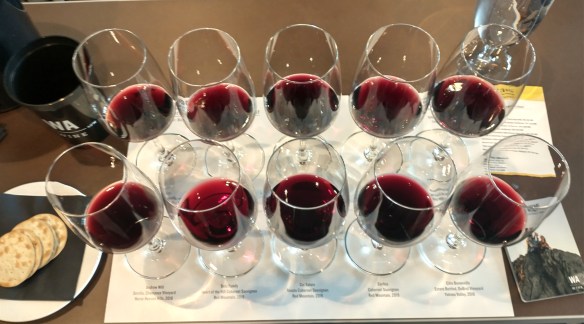
Here is the illustrious lineup of Cabernet Sauvignons that I got to imbibe:

  • Andrew Will, Sorella, Champoux Vineyard, Horse Heaven Hills, 2018 ($97)
  • Betz Family, Heart of the Hill Cabernet Sauvignon, Red Mountain, 2019 ($135)
  • Col Solare, Tenuta Cabernet Sauvignon, Red Mountain, 2019 ($200)
  • Corliss, Cabernet Sauvignon, Red Mountain, 2019 ($125)
  • Côte Bonneville, Estate Bottled, DuBrul Vineyard, Yakima Valley, 2018 ($125)
  • L’Ecole No. 41, Estate Grown, Ferguson Vineyard, Walla Walla Valley, 2017 ($105)
  • Long Shadows, Feather Cabernet Sauvignon, Columbia Valley, 2021 ($85)
  • Quilceda Creek, Cabernet Sauvignon, Columbia Valley, 2021 ($250)
  • Trothe, Cabernet Sauvignon, Horse Heaven Hills, 2021 ($240)
  • Woodward Canyon, Old Vines Cabernet Sauvignon, Washington, 2021 ($110)

Before attending this seminar, I had already tried several of the wines, a couple of which I had won at charity auctions back in the day, including a Quilceda Creek red blend and Col Solare red blend. I’ve had L’Ecole No. 41 wines in Walla Walla at the winery, Côte Bonneville’s ultra-premium 2013 Cabernet Sauvignon at a special winemaker dinner in Woodinville, and Betz Family Syrah that I purchased from Total Wine for a blind tasting. For five of these it had been a minute since I’d tried them, so it was good to have a refresher course. And for the other five, it was a privilege to get to try producers that were new to me.

I appreciated trying the wines side by side with others from similar and different regions, vineyards, vintages, etc. to compare and contrast. For example, I would sniff all three of the 2019 Red Mountains from Col Solare, Corliss, and Betz side by side, comparing, or the Horse Heaven Hills wines (Trothe and Andrew Will). Some of the Cabs were very strong in fruit and floral aromatics, while others were more subdued, with less pronounced fruit and more herbal and mineral aromas. All were excellent; at this point it was just a matter of personal preference, sort of like comparing apples to apples. And when you factor in drinking one of these wines with a fine meal, who knows how that might change your perceptions.

Cabernet SauvignonsIn Washington state, winemakers are legally allowed to add small amounts of other wines (up to 25%) to get a single-varietal wine the way they want it to be (think other Bordeaux varietals, which are Merlot, Cabernet Franc, Petit Verdot, Malbec, Carménère). So it can still be called Cabernet Sauvignon on the label as long as it is at least 75% Cabernet Sauvignon. I’ve had 100% Cabernet Sauvignon wines before in lower price ranges. Do all the truly fine, upper echelon Cabs depend on dabs and dollops of Merlot and Cab Franc to put them at the top? Perhaps, but I don’t know.

My favorite of the day, if I had to pick, was Quilceda Creek. Sure, it was the most expensive wine, but I’m pretty good about not letting price bias me. It tasted magnificent in my mouth, no faults whatsoever. Pure bliss. I polished off the glass because it would have violated my conscience to leave it. It was a crime to leave the other wines on the table but that my friends is the nature of a wine tasting, and you just have to make peace with it. Otherwise your liver will revolt! 🙂

I noticed that the two gentlemen I sat between both polished off their Quilceda Creek with no problems as well, and they both admitted to loving it.

My other stand-out favorites were Woodward Canyon, Betz, and Col Solare.

But all the wines were memorable, wonderful, and superbly delicious. What a treat. ❤

As far as the question of price – is it really worth spending anywhere from $85 – $250 on a bottle of fine wine – my answer would be a) yes, if you can get someone else to buy it for you 😉 and b) if you’re buying it, and funds are finite, then just once in a great while. You could also go in with friends and decide to share one of these bottles with a fine meal or just some epic charcuterie.

Drinking fine wine is like enjoying a Wagyu steak: it’s still steak, but it’s so unique and almost different from steak it’s in its own category, and you don’t eat it every day. In fact, when I’ve gone out for fancy steak dinners, I sometimes prefer the lower-priced, corn-fed cuts because I like them. Fine red wine vis-à-vis less expensive red wine is the same. But here’s the really great news: you don’t have to spend an arm and a leg to get FANTASTIC Cabernet Sauvignon (and so many other wines) in Washington State. You really don’t.

While there are numerous Taste Washington events – including The Grand Tasting, the two-day wine and food extravaganza at Lumen Field Event Center with hundreds of restaurants and wineries – if you have to choose just one event, I vote for attending one of the seminars. Why? For much less money (I spent $108, even after all the lovely added charges and fees), you get:

  • To sit and relax for an hour and a half, not having to spend hours on your feet jostling around in a crowd
  • To hear from the winemakers firsthand and learn a lot about your selected topic
  • To ask questions directly of the panel, should you so desire
  • 10-12 pours of outstanding wines (in this case, ultra-premium Cabernet Sauvignon)
  • Last I checked, general admission on Sunday (the cheaper of the two days, I believe) was hovering at around a $150 price tag. Sure, you get to try TONS of wineries and restaurants, but if you’re interested in a calmer, more focused sit-down experience, a seminar is the way to go. They offered three seminars this year, and since all happen concurrently, you have to pick just one.

I’ve been to wine festivals and those are definitely fun and have their place. I love wandering up to the tables and having excited people pour me sips of delicious wine, and rubbing elbows with fellow wine enthusiasts. But if you have limited time and resources, and have to be selective of where you spend your dollars, the seminars have my wholehearted recommendation.

What about you? Have you attended any Taste Washington events, in particular the seminars? Do you have any similar events in your town? Comment!

On a Lighter Note: A White Chocolate and Wine Pairing for Valentine’s Day

Happy Valentine’s Day, readers! I hope you’ve got some indulgent treats awaiting you today, perhaps a special bottle of wine or your favorite dessert? If not, I have a pairing I hope you will really like.

Valentine’s Day typically calls to mind images of dark chocolates nestled romantically together in a box and sleek, alluring bottles of red wine. But since I’ve already covered what to pair with milk chocolate, dark chocolate, and what to pair with sparkling wine, I wanted to explore uncharted territory: I became curious about what to pair with white chocolate. I’m sure there are some people out there who prefer white over milk and dark chocolate. Sure, white chocolate isn’t *true* chocolate because it lacks cocoa solids and only contains cocoa butter, but that doesn’t mean it isn’t a delicious treat. To me, there is a time and an occasion for every type of chocolate! 🙂

But is there a wine for every type of chocolate, especially white?

White chocolate is very rich, sweet, and creamy, and calls for something that can handle its weight and richness.

Last year, for fun, I paired some white chocolate with Pinot Noir and then with Sauvignon Blanc. In both instances the pairings were flops and tasted less than desirable. Of course there may be certain versions of those wines out there that randomly would work well with white chocolate, but if I don’t like something when I try it, I am certainly not going to recommend it to you. Bad wine and food pairings can be truly awful!

But there has to be something, right?

I am probably not the first one to invent this pairing, so I won’t take credit for it; in fact, I most likely encountered it while reading about wine (what else is there to read about?). It occurred to me that pairing white chocolate with orange Muscat, a white wine that can be made in a sweet dessert style, would create that amazing flavor combination of orange and vanilla, like an orange creamsicle. Anyone remember the Dixie® cups with the swirl of orange sherbet and vanilla ice cream? The ones that came with the little flat wooden spoons?

I love that flavor combination, so I sent my husband to pick up a bottle of orange Muscat and some white chocolate bars so we could conduct some scientific research (that is what I call drinking wine and pairing it with food in my house. Best science class you’ll ever have.). 😉

Here is what our research yielded:

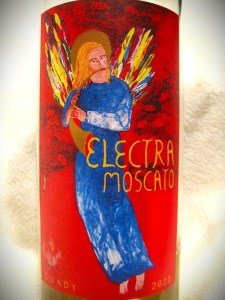
Quady Electra Moscato 2022

Quady Electra MoscatoWhite Chocolate

  • ABV 4.5% (super low!)
  • $11.49/bottle (whoa, also super low, very helpful right now)
  • Pale gold color
  • Light bodied, nice refreshing acidity, sweet
  • Aromas/Flavors: “millions of peaches, peaches for me” | honey, grape, Muscat aromas
  • Serve chilled
  • Admittedly, this is quite sweet wine, and rather simple, but it works beautifully with the white chocolate.
  • It really is reminiscent of tangy orange sherbet and smooth, creamy vanilla ice cream.
  • Pairing it with white chocolate was delightful and seamless.
  • But word to the wise – only use plain white chocolate! We tried a hazelnut white chocolate bar with this wine and it was gross. Try the brands Private Selection or Lindt, for example.

I like this pairing because it’s a little different, a little more unique than chocolate truffles and red wine (or heaven forbid, sparkling wine – great to drink just separately from chocolate).

It’s rich yet light, sweet, floral, creamy, delicious. It’s like Valentine’s Day in its purely innocent form: cute, flirtatious, fun and easygoing. There are no clashing flavors, making it an entirely pleasant experience. Phew!

I can get serious and sullen sometimes, turning inward and becoming preoccupied with gloomy thoughts. Forget the outside world, which is serious and sullen enough on its own; my own inner world can brew more than its fair share of despair.

At those times I have to remind myself to reject negative thoughts and lighten up. I’ve even started re-watching the TV series The Office because it still makes me laugh out loud, every episode, after all these years. How it is a 25-year old show now is beyond me.

I think this white chocolate and orange Muscat pairing works that kind of magic.

Here’s to lightening up.

Cheers, and Happy Valentine’s Day! 🙂

Hula²: Pork Sliders and Sparkling Maui Pineapple Wine

Aloha, readers! I don’t know what the weather is like where you are, but for the last several weeks we have had nothing but blue skies and full sunshine, albeit with freezing temperatures. If you didn’t have to feel the cold, and ignored the bare trees, you would think you were somewhere warm and humid. Somewhere tropical, even.

Let’s take a break from our usual Cab and Chardonnay and venture into other realms and regions for wine. Let’s entertain some novel possibilities. As you know, wine can be made from more than just grapes; see my past posts on blackberry wine and mead, for example.

Today I’m going to take you on a whirlwind tour to Maui, introduce you to a delightful sparkling pineapple wine, and rock your world with to-die-for Hula Pork Sliders. This is a food and wine equation that yields exponential bliss – read on!

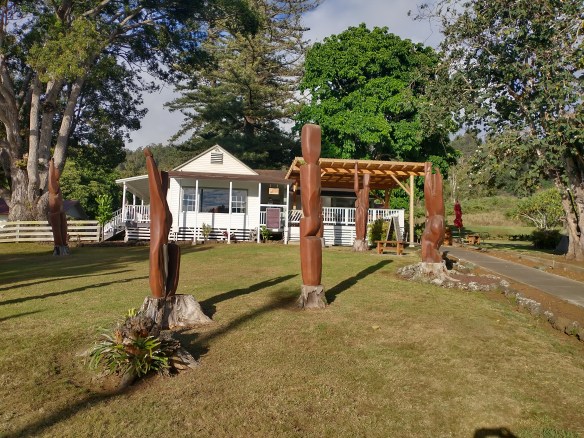
Maui Wine signLast April I was fortunate to travel to Maui and enjoy an afternoon wine tasting at Maui Wine, in the Ulupalakua upcountry. If you are a wine lover who happens to be vacationing on Maui, this is definitely worth the drive up the mountain. Behold the beauty! You can learn more about the Maui Wine experience here.

Maui Wine Tasting RoomAt this idyllic winery, with a rich and varied history (the King of Hawaii used to party here), you can do tastings that feature pineapple based wines, whites, or reds. They gladly poured us tastes of other wines even if those wines were not on our flight. Lovely aloha spirit. 🌺

My favorite red wine that day was the 2022 GSM, from grapes grown in the Ulupalakua Vineyards AVA. It’s a blend of 69% Syrah, 18% Grenache, and 13% Malbec. I believe I enjoyed it more than the single varietal wines. Sometimes at a winery it’s the opposite; I prefer the single varietals over the blends. Maui Wine Tasting RoomOther favorites were the Lokelani Sparkling Rosé and Lehua Raspberry Dessert Wine (made from raspberries from Walla Walla, Washington – on Maui!). Tart, light, just the right amount of sweet. Scrumptious! And I’m in love with this label (Valentine’s is coming soon, ahem). Maui Wine Lehua Raspberry Dessert Wine

But the wine I want you to really pay attention to is the Hula O Maui Pineapple Sparkling Wine. This was given to me as a gift by my sister and brother-in-law who live there, and I didn’t open it up until after I got home since I was waiting to pair the wine with this special recipe. I think I need to order some more of this wine, it was truly special. Sparkling wine is admittedly not my jam, but this won me over and I will happily imbibe this any time.

Maui Wine uses fine Maui Gold pineapples that are not quite ripe to contribute fresh aromatic qualities to the wine. It is a wine made in the traditional method, the same as French Champagne and certain other sparkling wines. I actually really liked this wine and honestly prefer it to traditional sparkling wine made from grapes, even though some of those are excellent. This wine was pure refreshment and made the perfect accompaniment to the pork sliders.

Hula O Maui Sparkling Pineapple WineHula O Maui Sparkling Pineapple Wine

  • $26/bottle
  • Super pale straw/lightest lemon yellow
  • Light, delicate body with fine perlage (bubbles/carbonation)
  • Semi-dry
  • Aromas of pineapple, macadamia nut, green papaya, toast
  • An elegant sparkling wine that stays true to the character of the pineapples it’s made from

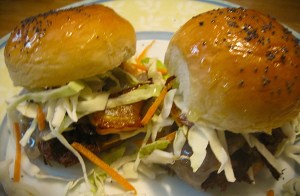
And for the ultimate food pairing with this wine, here is my take on Half Baked Harvest’s decadent Hawaiian-style pork sliders from the cookbook, Half Baked Harvest. Pulled pork is one of the darn tastiest things I have ever eaten, and this recipe just may be my ultimate favorite. Do not let my quick, mediocre photo dissuade you. Enjoy! 😋

Hula Pork Sliders from Half Baked Harvest Cookbook

These are absolutely worth the effort, and pure bliss with the sparkling pineapple wine. Paradise!

Hula Pork Sliders
Recipe courtesy of Tieghan Gerard
Half Baked Harvest Cookbook: Recipes from My Barn in the Mountains
Makes 12 sliders

INGREDIENTS

  • 2 1/4 cups pineapple juice
  • 1 – 1-inch knob fresh ginger, peeled and grated (or use refrigerated ginger paste like I do)
  • 2 garlic cloves, minced or grated
  • 1/3 cup packed light brown sugar
  • 2/3 cup low-sodium soy sauce
  • 2/3 cup ketchup
  • 2-3 tablespoons sriracha sauce
  • 2 1/2 pounds pork shoulder or butt, cut into two pieces
  • 2 tablespoons coconut oil
  • 6 large pineapple rings, halved
  • 12 Hawaiian slider buns
  • 12 slices Swiss cheese
  • 1 1/2 cups shredded green lettuce or cabbage (bagged coleslaw mix works great)
  • Melted butter (optional)
  • Poppy seeds (optional)

INSTRUCTIONS

  • Preheat the oven to 325°F.
  • In a large bowl, whisk together the pineapple juice, ginger, garlic, brown sugar, soy sauce, ketchup, and sriracha.
  • Place the pork in a Dutch oven and pour over half the sauce. Cover and transfer to the oven. Roast for 3 to 4 hours, or until the pork is falling off the bone and shreds easily – check the pork once or twice throughout cooking to be sure the sauce is not reducing too much. If it is, add the remaining sauce as needed to keep the pork moist. The pork should be submerged in liquid at least halfway. Shred the pork and add some of the remaining pineapple sauce to the pot, if desired.
  • Heat the broiler to high with a rack in the top third.
  • In a large skillet, melt the coconut oil over medium heat. Add the pineapple slices and cook for 3 to 4 minutes per side, or until caramelized.
  • Arrange the bottom halves of the slider buns on a baking sheet and add a scoop of pork to each. Top each with a slice of Swiss cheese. Place under the broiler for 1 to 2 minutes, or until the cheese has melted.
  • Top each slider with a slice of caramelized pineapple and shredded lettuce or cabbage. If desired, brush the top of each bun with melted butter and sprinkle with poppy seeds.

Casamara: A Dry Choice That Is Anything But “Dry”

Dry. That word just sounds so sad. Makes me think of the perpetual state of my hands right now as a mom in the winter, or a tumbleweed bumbling across the desert, or a boring book or movie. Dry, dry, dry.

Obviously when it comes to wine, “dry” simply refers to a lack of sweetness, but here we are talking about the alcohol-free kind of dry.

Let’s talk for a minute about Dry January. For those of you who are unaware, Dry January is a concept of abstaining completely from all alcohol from January 1st – 31st, in the interest of starting a clean slate of health and possibly allowing one’s liver to recover from the overindulgence of November – December.

I think awareness around one’s health and personal threshold for alcohol is very important. But I do not think people should use Dry January as a virtue-signaling cheat to immediately stop binge drinking/overindulging and then hit the bottle again hard come February 1st. Extreme yo-yo-ing habits always bite you in the butt and are no way to live. Perhaps this is why there is a lot of annoyed hubbub over Dry January from winemakers and producers, which is understandable.

My tenet: enjoy wine as you wish, as you can, in moderation, year-round. It’s also important to remember alcohol serving sizes and numbers (different for men and women), and that individual factors like tolerance for different amounts/types of alcohol, whether it’s consumed with food, hydration levels, and temperament/stress level whilst enjoying play significant roles in alcohol metabolism for each person.

Anyway, enough philosophizing. I’ve been meaning to write a post on this particular beverage for a very long time, and I just haven’t gotten around to it until now. Dry January is the perfect opportunity to tell you about this product.

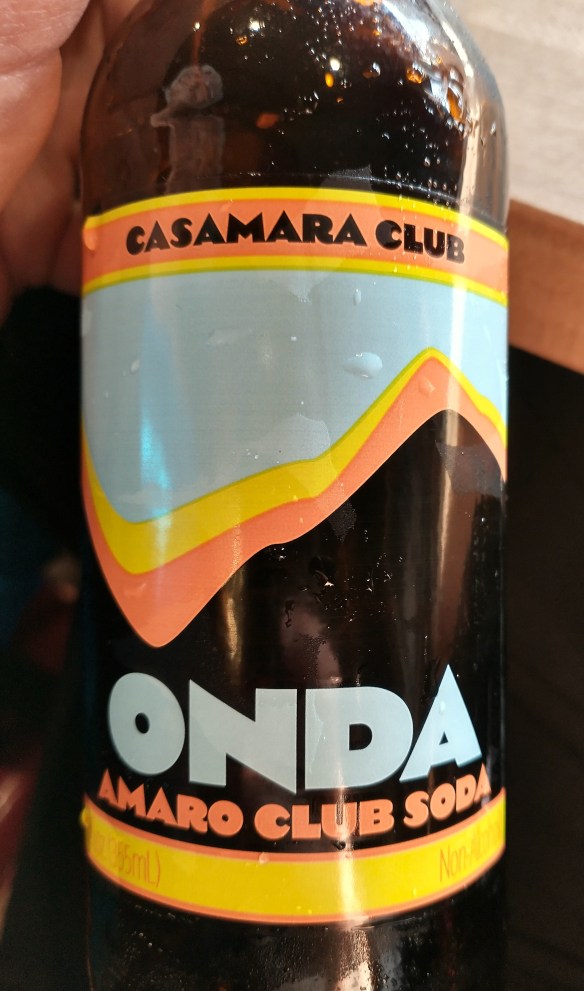
As a wine lover, it’s not often I try a non-alcoholic beverage and enjoy it more than the wine I’m consuming. Shocker. But it did happen! One afternoon out with my mom and kids at a wine bar, I ordered a glass of an obscure Italian varietal and my son ordered something off the non-alcoholic drinks menu that was effectively a soda pop. I sampled his pop and immediately was wowed. It tasted way better than my esoteric Italian varietal and compelled me with its elaborate layers and dimensions of flavors. It was called Casamara Club Onda. It reminded me of the Italian aperitif amaro, the florid combination of botanical herbs and citrus that I love. This drink did not feel AT ALL like drinking a coke or ginger ale or what have you. It felt sophisticated and very complex. So much to enjoy and explore in each sip.

So what is Casamara Club? It’s a business that crafts leisure sodas: “delicious, refreshing drinks… from unique botanical extracts, minimally processed in small batches. Each is thoughtfully blended into delicate, aromatic recipes inspired by far off places.” They have perfected the taste and impression of several cocktails from international vacation spots and reimagined them as dry incarnations. Lo adoro!

Casamara Club Onda Amaro Club Soda

Onda is their “Sicilian style botanical soda with coastal amaro aromatics and an extra dry finish.” The ingredients listed on the back of the bottle include: sparkling water, lemon juice, demerara cane sugar, extracts of Italian lemon, sage leaf, rhubarb root, Italian chinotto, juniper berry, anise, Mediterranean sea salt. So even though it contains sugar, the sugar is standing in the background quietly bringing balance, not stealing the spotlight. Simple, pure, refreshment for grown-ups (or kids with sophisticated palates, like mine). 😉

I think it’s great that there has been so much innovation in the non-alcoholic beverage department. Why not? I’m all for humans being creative. Not unlike advances in vegetarian/vegan cuisine, there are so many wonderful and amazing flavors and textures to explore but without the use of alcohol or animal products. I don’t agree with completely replacing meat or alcohol but certainly to have options that mimic the best parts of those foods is admirable. I know all too many folks who cannot imbibe alcohol for various health reasons, and to let them have the option of something that is a change of pace from pop or sparkling water I’m sure is long overdue and more than welcome. In fact, it’s welcome even for those of us who maybe reach our quota for the time being but still want to enjoy something beside plain old water, or who want to forgo the enamel-scraping sweetness of pop.

Give this a try. I think you will be just as surprised as I was. ❤

Are you practicing Dry January, or are you unfazed by such silly trends? 😉 Do you have other tasty non-alcoholic beverages you would recommend? Comment below!

A Tale of Two Valleys: Comparing Old World & New World for Cabernet Franc Day

Disclosure Statement: This post contains affiliate links. When you click on an affiliate link and make a purchase, I receive a commission at no additional cost to you. All opinions are my own.

Hip hip hooray, it’s Cabernet Franc Day! If you haven’t climbed aboard the Cab Francophile train yet, it’s time to do so. Especially YOU, you Cabernet Sauvignon drinkers who want a red wine that pairs with more than just steak! Prepare to have your mind blown, world rocked, and palate converted. 🙂

Not too long ago, my kids and I listened to an abridged version of one of my favorite novels, A Tale of Two Cities. I understand they were trying to make it shorter to introduce it to kids, but oh, the misery of listening to a butchered-up book. It takes away SO MUCH. I couldn’t take it, and my kids didn’t really take to it, either.

In my imagination, when comparing an Old World and a New World wine, I get into this two-part, back and forth, sing-song contrasting that reminds me of the beginning of the book: “It was the best of times, it was the worst of times….”

Except in this case, the wines under scrutiny are more like vastly different and yet subtly similar siblings. It was the Loire Valley, it was the Yakima Valley….

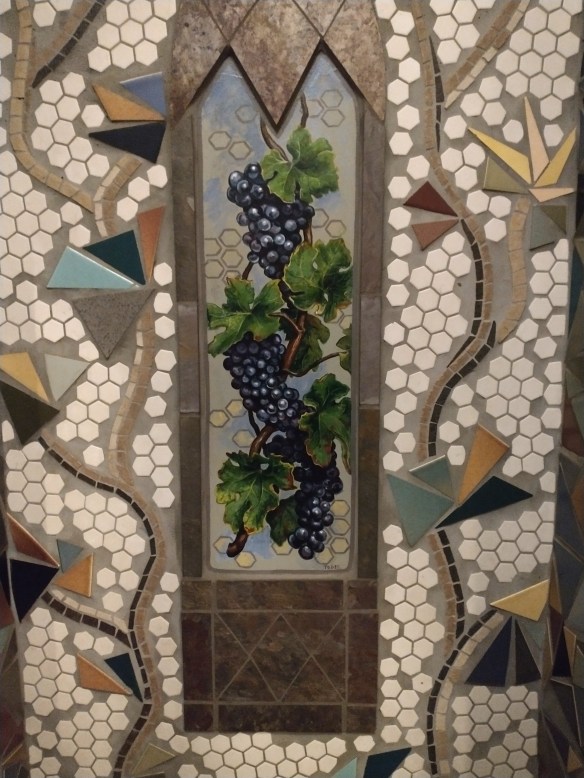
Grapevine at Elks Temple

I couldn’t find pics of the wine labels on my computer (getting over a cold), so here is a pic I took of a grapevine painting adorning the walls of McMenamin’s Elks Temple Hotel in Forest Grove, OR. 🙂

I’ve got two very different and distinct Cabernet Francs I’d love for you to try – open and taste side by side, if you can. The first is Old World and hails from France’s Loire Valley. It’s essentially the signature red wine grape of the region, standing out amidst the whitewashed sea of Sauvignon Blanc and Chenin Blanc. It is not to be missed!

The second is New World from Washington State’s Yakima Valley, which was the state’s very first AVA. While still being a Cabernet Franc, it’s like the wild party animal sister compared to its stately and brooding elder sibling. Either way, neither of these wines is a slacker and delivers a full Cabernet Franc experience.

The first one to try is Le Pre Vaujour Chinon. Chinon is the region of the Loire Valley known for growing Cabernet Franc. The color is paler than Cabernet Sauvignon, and in case you didn’t already know, Cabernet Franc and Sauvignon Blanc are the parent grapes of Cabernet Sauvignon. Voilà ici.

Le Pre Vaujour Chinon Cabernet Franc

  • Black currant, licorice, raspberry, smoke, tea leaves, leafiness, earthy, mushroomy
  • Slightly grippy tannins
  • Medium to full body, dry
  • Moderate length/finish
  • 13% ABV
  • $22.99/bottle
  • Make sure you give this wine plenty of time to open up. I remember especially enjoying it on the second or third day of it being open. It kept revealing multiple rich flavors. The licorice notes make it very compelling and unique.

Next, please set your sights on this dazzling New World Cabernet Franc. Mazzacano Cellars is a secondary label produced by the same winemakers behind WIT Cellars (tastings rooms in Prosser and Woodinville, Washington). I was poured this wine whilst living out my fantasy (wine tasting by myself in Woodinville for the day) and even though it was not on the tasting flight, it was the wine I went home with that day. The 2019 vintage won GOLD at the Bellingham Northwest Wine Festival.

Mazzacano Cellars 2018 Cabernet Franc Olsen Vineyards Yakima Valley

  • 14.5% ABV
  • $49/bottle
  • Cabernet Franc sourced from one of my top favorite vineyards EVER in Washington State (see also Dineen Vineyards) ❤
  • Color is deep garnet/ruby
  • On the nose: cherry, tobacco, currant, and that bell pepper note to let you know it’s Cab Franc
  • Full body, luxurious mouthfeel, it’s like opening up a gift basket in your mouth: chock full of cherry, chocolate, and spice
  • Velvety tannins
  • Reverberating finish that just keeps going and going
  • Acidity is just the right amount I like in a wine
  • This is a voluptuous “Jessica Rabbit” Cabernet Franc that oozes richness and fullness.
  • From start to finish, this wine is pure love. I could drink this all day. But I won’t. 😊 Oh, so good! Must try some of their other Mazzacano wines.

So there you have it. Pick your poison – rustic, glamorous Old World or fervent, passionate New World. Each is wonderful.

What are you opening up this Cabernet Franc Day? Any favorites? Comment!

Cheers!

Christmas shopping to do?
Stun your loved ones with these
Wine Gift Collections – Gifting made easy with these curated wine sets!

Crazy for Counoise: Holiday Dinner Wines Part I

A merry Monday to you, readers! We just got back from an epic family adventure in Disneyland. I had hoped to get my Thanksgiving wine recommendation out to you a little earlier but thinking I would have time to write while on vacation was foolish optimism. The Disney experience is not for the faint of heart; you literally go all day and then all night. Fun, but hard. Us adults all required moderate doses of Advil most days. And since the Happiest Place on Earth is also the Germiest Place on Earth, we are now all dealing with various levels of a cold (because who really is going to stay away from Disney after sinking thousands of dollars into a vacation?). Thankfully, mine is barely a whisper of a cold. Viruses encounter my immune system, see I’m carrying, and run for it. Heh heh heh. 🙂

Anyway, thus begins Part I of my Holiday Dinner Wines Series.

a festival of gourdsI was flipping through a Costco magazine recently, and came across a typical “wine pairings for your Thanksgiving meal” article. I skimmed over the list. The wine and food pairing recommendations were great (doesn’t Moscato d’Asti with apple pie sound yummy?), but, unless you’re a wine geek/snob/swimming in money, do you really pair a DIFFERENT wine with SEVERAL COURSES at your gatherings??? Not only is that a ton of wine to buy, that is a ton of alcohol to drink.

At our extended family holiday meals, at least, here is the wine sitch: everybody brings wine, plops it on a designated drinks counter, and then everybody just drinks the wine they brought, unless someone (like me) insists others try what they brought (which I am always doing, so pushy). We don’t care too much about how well it matches the food – we just enjoy the wine we enjoy alongside the food we are eating. And let’s face it, the star of the Thanksgiving show is the turkey dinner, with the multiple traditional side dishes. So it seems to me what we MOST need is a wine that will play well with the major stars of the meal and be a fabulous team player. It will be delightful and welcome, but its welcome it shall not overstay.

While there are many wines clamoring for your attention, I picked this wine especially with Thanksgiving turkey dinner in mind: it partners exceptionally well with other foods, and is beautifully unique. It’s utterly delicious and I can’t think of any reason why anyone would not like it.

The wine you need, ladies and gentlemen, is Bacovino Winery’sCounoise.

First of all, Counoise is not a weird French clown (although he could be? Hmm). Counoise (pronounced “COON – NWAHS”) is one of the red grape varieties allowed in the famous Châteauneuf-du-Pape blends of the Rhône Valley in France. Bacovino sources its Counoise from Washington state’s highly venerated Red Mountain AVA and lets it stand solo.

Here are my tasting notes for Bacovino’s 2021 Signature Counoise:

  • 100% Counoise from Red Mountain AVA
  • $30/bottle
  • A younger, lighter drinking wine
  • Kind of a cross between a dessert wine and a light-bodied red like a Pinot Noir or Frappato
  • Medium garnet/dusty crimson color with clear edge/rim
  • Highly aromatic! Bright and full of cherry, strawberry, raspberry, spice, hazelnut
  • 14.9% ABV
  • Off-dry, so a touch of sweetness
  • Rich, sweet mouth-filling fruit like black cherry, plum, strawberry preserves
  • Very background tannins (wallflowers?) to give a little structure
  • Tart acidity to keep you coming back for more
  • Amazing, warm, lingering finish
  • Serve slightly chilled, but not so chilled you can’t appreciate the aromatics

For those of you in the greater Seattle area, you can probably snag this wine in time for Thanksgiving. And if you’re not, go ahead and order some in time for Christmas; the same sorts of traditional holiday foods will work well with this wine. And even if you don’t celebrate any holidays or pair wines with foods, you still need to get this wine. No excuses (hint hint, it’s wonderful in the summer, too!).

No need to buy half a dozen or more different wines to try and pair with every last item on the menu (although if you are going to do that, please tell me what you did and how you liked the pairings!). Keep it simple, and surprise your loved ones with a delicious and delightful red like Bacovino Counoise.

Just be sure to buy more than you think you’ll need… it’s that good, and Christmas is coming up soon, too, after all. 😉

P.S. Bacovino is opening up a second location on the Seattle Waterfront very soon! Go check it out or see them in the mean time at their Tukwila winery and tasting room.

Sangiovese grapes fermenting at Bacovino Winery

Sangiovese grapes fermenting at Bacovino Winery in Tukwila, Washington. Owner and winemaker Randy Brooks let us help with punch down on one occasion. Talk about a workout!

Related Posts on Bacovino:
Sangiovese
Dessert Wine
Viognier

A White Wine for Fall and Winter (Yes, You Read That Correctly)

Disclosure Statement: This post contains affiliate links. When you click on an affiliate link and make a purchase, I receive a commission at no additional cost to you. All opinions are my own.

Greetings, readers! It’s good to be back on the blog. The last time we spoke I was lauding the juicy scrumptiousness of blackberry wine. Then summer happened, brimming with fun in the sun, kid activities, a sickness or two, and a surgery for me. Sadly, my wine blogging ambitions had to take a backseat. Life gets busy and in those down moments it was often my desire for a nap or Netflix that won out.

But it’s time to get back to business. There are just too darn many amazing wines to write about and to try. I love the French saying, “Life’s too short to drink bad wine” but honestly the motto that resonates most with me is “So many wines, so little time.” (Anyone know where I can get that as a T-shirt of baseball cap?) 😉

Harvested grapes at David Hill Vineyards

Harvested grapes waiting to be turned into wine.

ANYWAY…. It’s November. Fall is well underway, the harvest has happened, the elections are over, and Thanksgiving is staring us in the face, just over the river and through the woods (not to fear, my Thanksgiving wine recommendation will be coming up next!). Everyone take a Deep. Calming. Breath. I’m enjoying the fact that there are still some vividly colored leaves hanging on to the trees, illuminating otherwise often-gloomy grey skies.

November to me is when we settle in collectively for a season of coziness. I’m making lots of soups for dinner, snuggling in ultra-soft blankets, and filling my coffee with pumpkin spice creamer. Cozy and homey. My wineglass lately has been full of excellent Pinot Noirs, whose lightness and complexity beg for the kind of contemplative savoring unique to fall.

But we’ll save Pinot Noir for another day… what I most want to talk to you about today is an unusual Pinot Blanc. I tried this particular wine in Oregon a month ago. It truly embodies the spirit of fall in a white wine. This Pinot Blanc is from David Hill Winery in Forest Grove, Oregon. David Hill Vineyards and Winery is LIVE certified and uses low impact, organic farming methods to pamper these special grapes and bring out their maximum potential, and the efforts pay off handsomely in delicious wines.

David Hill Vineyards & Winery, Forest Grove, OR

The day we tasted at David Hill Winery. Heaven on earth.

As I may have mentioned before, Oregon white wines have seriously captured my fancy and have been commanding plenty of attention as of late. This winery is a wonderful place to discover some phenomenal old-growth varieties and taste a spectacular array of wines.

The oldest vines in the vineyard were planted from rootstock, brought back from Alsace, France, by UC Davis graduate Charles Coury in 1965. Wines made from Coury’s plantings are part of the winery’s Discovery Series label. Some of the other intriguing varieties include Riesling, Sylvaner, Chasselas, Melon de Bourgogne, Gewürztraminer, and Pinot Noir. The Sylvaner may very well be getting its own blog post here in the future, and my husband and I are huge fans of their noble rot-affected Riesling. 😋

Wine grapes at David Hill Vineyards

White wine grapes just about ready for harvest at David Hill Vineyards. Soaking up that golden sunshine.

Come get to know this Pinot Blanc that is unlike any other Pinot Blanc I’ve had to date:
David Hill Vineyards & Winery Tualatin Hills Block 22 Pinot Blanc 2023

  • David Hill Vineyards & Winery Discovery Series 2023 Block 22 Pinot Blanc
  • 100% Estate-Grown Pinot Blanc
  • Get this: this wine is aged in 100% chestnut barrels. Chestnut barrel aged wines are something you don’t taste everyday. Chestnut wood barrels were used in many European wineries before a global blight wiped out a large portion of chestnut trees. So it’s a real treat to taste a wine fermented and aged in something besides oak, stainless steel, or concrete.
  • $32/bottle
  • ABV 11.28%
  • From the tasting notes: “Aromas of golden apple and brown pear with a hint of nectarine and river rock meet the freshness of dill and fennel to round out the nose of our 2023 Pinot Blanc.” These notes carry over to the palate “along with subtle Marcona almond” giving “a warming, comforting… textural component through the finish. This wine is reminiscent of… fall spices and late summer notes.”

Isn’t that just gorgeous? 🍂

You need this wine for light refreshment when you are outside enjoying a still-warm autumn afternoon, just as much as you need this wine when you are indoors, at night, curled up on the couch next to a fireplace, ready to relax and soak in all this wine’s autumnal glory. And it’s begging to play with fancy cheeses. 🙂 It’s got it all!

So don’t EVER put away your whites, just because it’s after Labor Day. 😉 This rich and complex Pinot Blanc is perfect for fall, winter, and beyond.

Cheers! 🙂 🥂

25 Most Wanted Wines

Food & Wine Gift Baskets

Great Bottles to Give

Divine Blackberry Wine for the Summer Solstice

Good morning, and an official hello to summer! ‘Tis the summer solstice and as we embrace this magical, mythical time of year, it only makes sense to sidle up to a glass of wine that uses summer’s quintessential fruit: blackberries. So allow me to introduce you to Pasek Cellars Blackberry Wine. I’ve been sitting on this particular wine recommendation for probably over a decade, and I still find this wine to be utterly delicious, delightful, and a pure embodiment of the spirit of summer, which I am welcoming with outstretched arms (if you could see me now!)! 🙂

This is sweet enough to be considered a dessert wine but complex enough to enjoy with savory food. Pasek Cellars recommends drinking it with salmon, wild game, or barbecued chicken. I have tried it alongside salmon and I find it’s a better pairing than commonly prescribed Pinot Noir. Nothing screams “Pacific Northwest summer” more than salmon and blackberries. It’s one of, or perhaps even the best, blackberry wine I have ever had. I truly don’t think you will be disappointed.

Pasek Cellars Blackberry Wine
100% Oregon Blackberry Wine
11% ABV
$12.99/bottle on Pasek Cellars website
(I have also found it for slightly less at Cost Plus World Market)

Pasek Cellars Blackberry Wine

Good on its own, good as dessert, good with savory food. Yes, I’m for real!

  • Crafted from Oregon blackberries, the wine is semi-opaque and medium ruby in color
  • Aromas of blackberry, cream, and bramble waft from the glass
  • While the wine is quite sweet, it also has a nice, subtle tartness to balance the sweetness
  • Full body with a medium finish
  • Fun fact: it takes 1.3 lbs. of blackberries to yield one whole bottle!

It isn’t often you find a wine that can be a dessert wine, a savory food partner, and a scrumptious “drinks well on its own” wine. Pasek Cellars Blackberry Wine is a rare “triple threat” that you need to add to your cellar stat!

Have you tried this wine? Or is there another blackberry wine you adore? Comment!

Cheers to summer! ☀️

PS: Word to the wise… Pasek Cellars Cranberry Wine is the magical winter equivalent to the summery blackberry wine. Stay tuned in the coming months, but it’s never too early to stock up on a good wine like this to go with holiday fare like turkey and ham. 😉