Hula²: Pork Sliders and Sparkling Maui Pineapple Wine

Aloha, readers! I don’t know what the weather is like where you are, but for the last several weeks we have had nothing but blue skies and full sunshine, albeit with freezing temperatures. If you didn’t have to feel the cold, and ignored the bare trees, you would think you were somewhere warm and humid. Somewhere tropical, even.

Let’s take a break from our usual Cab and Chardonnay and venture into other realms and regions for wine. Let’s entertain some novel possibilities. As you know, wine can be made from more than just grapes; see my past posts on blackberry wine and mead, for example.

Today I’m going to take you on a whirlwind tour to Maui, introduce you to a delightful sparkling pineapple wine, and rock your world with to-die-for Hula Pork Sliders. This is a food and wine equation that yields exponential bliss – read on!

Maui Wine signLast April I was fortunate to travel to Maui and enjoy an afternoon wine tasting at Maui Wine, in the Ulupalakua upcountry. If you are a wine lover who happens to be vacationing on Maui, this is definitely worth the drive up the mountain. Behold the beauty! You can learn more about the Maui Wine experience here.

Maui Wine Tasting RoomAt this idyllic winery, with a rich and varied history (the King of Hawaii used to party here), you can do tastings that feature pineapple based wines, whites, or reds. They gladly poured us tastes of other wines even if those wines were not on our flight. Lovely aloha spirit. 🌺

My favorite red wine that day was the 2022 GSM, from grapes grown in the Ulupalakua Vineyards AVA. It’s a blend of 69% Syrah, 18% Grenache, and 13% Malbec. I believe I enjoyed it more than the single varietal wines. Sometimes at a winery it’s the opposite; I prefer the single varietals over the blends. Maui Wine Tasting RoomOther favorites were the Lokelani Sparkling Rosé and Lehua Raspberry Dessert Wine (made from raspberries from Walla Walla, Washington – on Maui!). Tart, light, just the right amount of sweet. Scrumptious! And I’m in love with this label (Valentine’s is coming soon, ahem). Maui Wine Lehua Raspberry Dessert Wine

But the wine I want you to really pay attention to is the Hula O Maui Pineapple Sparkling Wine. This was given to me as a gift by my sister and brother-in-law who live there, and I didn’t open it up until after I got home since I was waiting to pair the wine with this special recipe. I think I need to order some more of this wine, it was truly special. Sparkling wine is admittedly not my jam, but this won me over and I will happily imbibe this any time.

Maui Wine uses fine Maui Gold pineapples that are not quite ripe to contribute fresh aromatic qualities to the wine. It is a wine made in the traditional method, the same as French Champagne and certain other sparkling wines. I actually really liked this wine and honestly prefer it to traditional sparkling wine made from grapes, even though some of those are excellent. This wine was pure refreshment and made the perfect accompaniment to the pork sliders.

Hula O Maui Sparkling Pineapple WineHula O Maui Sparkling Pineapple Wine

  • $26/bottle
  • Super pale straw/lightest lemon yellow
  • Light, delicate body with fine perlage (bubbles/carbonation)
  • Semi-dry
  • Aromas of pineapple, macadamia nut, green papaya, toast
  • An elegant sparkling wine that stays true to the character of the pineapples it’s made from

And for the ultimate food pairing with this wine, here is my take on Half Baked Harvest’s decadent Hawaiian-style pork sliders from the cookbook, Half Baked Harvest. Pulled pork is one of the darn tastiest things I have ever eaten, and this recipe just may be my ultimate favorite. Do not let my quick, mediocre photo dissuade you. Enjoy! 😋

Hula Pork Sliders from Half Baked Harvest Cookbook

These are absolutely worth the effort, and pure bliss with the sparkling pineapple wine. Paradise!

Hula Pork Sliders
Recipe courtesy of Tieghan Gerard
Half Baked Harvest Cookbook: Recipes from My Barn in the Mountains
Makes 12 sliders

INGREDIENTS

  • 2 1/4 cups pineapple juice
  • 1 – 1-inch knob fresh ginger, peeled and grated (or use refrigerated ginger paste like I do)
  • 2 garlic cloves, minced or grated
  • 1/3 cup packed light brown sugar
  • 2/3 cup low-sodium soy sauce
  • 2/3 cup ketchup
  • 2-3 tablespoons sriracha sauce
  • 2 1/2 pounds pork shoulder or butt, cut into two pieces
  • 2 tablespoons coconut oil
  • 6 large pineapple rings, halved
  • 12 Hawaiian slider buns
  • 12 slices Swiss cheese
  • 1 1/2 cups shredded green lettuce or cabbage (bagged coleslaw mix works great)
  • Melted butter (optional)
  • Poppy seeds (optional)

INSTRUCTIONS

  • Preheat the oven to 325°F.
  • In a large bowl, whisk together the pineapple juice, ginger, garlic, brown sugar, soy sauce, ketchup, and sriracha.
  • Place the pork in a Dutch oven and pour over half the sauce. Cover and transfer to the oven. Roast for 3 to 4 hours, or until the pork is falling off the bone and shreds easily – check the pork once or twice throughout cooking to be sure the sauce is not reducing too much. If it is, add the remaining sauce as needed to keep the pork moist. The pork should be submerged in liquid at least halfway. Shred the pork and add some of the remaining pineapple sauce to the pot, if desired.
  • Heat the broiler to high with a rack in the top third.
  • In a large skillet, melt the coconut oil over medium heat. Add the pineapple slices and cook for 3 to 4 minutes per side, or until caramelized.
  • Arrange the bottom halves of the slider buns on a baking sheet and add a scoop of pork to each. Top each with a slice of Swiss cheese. Place under the broiler for 1 to 2 minutes, or until the cheese has melted.
  • Top each slider with a slice of caramelized pineapple and shredded lettuce or cabbage. If desired, brush the top of each bun with melted butter and sprinkle with poppy seeds.

Pinot Noir & Tempranillo Dance the Mitote in Alumbra Cellars’ Red Blend

I love it when I get to tell you about wines that “grab” me.

These wines are different. Compelling. Unique. Doin’ their own thang. And, they’re really, really good.

These are the wines that stop me in my tracks and I take note of.

After just one sip of this wine at the McMinnville Food + Wine Festival this past March, I committed to a bottle immediately. That bottle was Alumbra Cellars’ 2021 Mitote Red Blend, a surprising blend of Pinot Noir and Tempranillo.

I love blends because they become greater than the sum of their parts. Some of the greatest wines in the world are blends (most notably Bordeaux and Rhône GSMs).

But what I love about this wine is that the blend of grape varieties – in this case, Pinot Noir and Tempranillo – is unexpected and exciting, much like another favorite wine of mine which blends Pinot Noir, Cabernet Sauvignon, and Syrah. It’s not simply another traditional recipe for combining certain grape varieties together; it’s a winemaker’s choice to exercise her vision and realize the potential of two different grape varieties in creating a new style. And in this, winemaker Elena Rodriguez succeeds magnificently! ❤

In Spanish, mitote refers to an indigenous Mexican dance, but it can also mean a party or a scandalous uproar/hubbub. In this case I feel the wine represents less of an  uproar/hubbub and more of a beautiful pas de deux (in Spanish I believe it is “no dos”) between Tempranillo and Pinot Noir; more of a celebration than a brawl, ha ha.

Alumbra Cellars 2021 Mitote Red Blend
14% ABV
60% Tempranillo, 40% Pinot Noir
$32/bottle

Alumbra Cellars 2021 Mitote Red BlendHere are my rambling, effusive tasting notes to give you an idea of the fun carnival of scents and flavors I delighted in. Promise me you will sip some for yourself!

  • Mesmerizing, mysterious nose hinting strongly at cinnamon, cayenne, cumin, pepper
  • Black cherry, bark/wood, blackberry pie à la mode, a sweet minty herbal note (sassafrass?)
  • A bouquet of heady, savory spices but also light, sweet spices
  • Toffee, gingersnap, vanilla, candied rose floral aroma, whiff of leather saddle to tip me off to the presence of Tempranillo
  • Medium ruby with purple core – color actually very close to the purple of the bottle label
  • Medium body, silky smooth texture
  • Minerality showing up
  • No harshness, tartness, bitterness
  • Silky, gentle tannins
  • Warm, prolonged finish
  • More medium body feel even though alcohol level higher

I have no negative criticisms of this wine. Zero.

I foresee this wine going very well with a number of foods, particularly Mexican food.

For a delicious accompaniment to a glass of this wine, grab a bag of your favorite and freshest tortilla chips and whip up this Mushroom Pico de Gallo. I first had a version of this unbelievable dip at a Mexican restaurant in Belfair, Washington. Forget the salsa and bean dips; we couldn’t get enough of this pico and polished off a couple bowls (after that, what’s the point of dinner?). This recipe is the closest thing I could find to what we had in Belfair.

With a little more effort (or another helper), pile some cooked meat on the side and call this dinner!

Some of the best meals to go with wine (I think) are where you just throw a few, simple foods together and then let them all work their collective magic. A mitote.

¡Buen apetito! 🙂

Mushroom Pico de Gallo

Your new favorite dip.

Mushroom Pico de Gallo
Liberally adapted from a recipe by Nina Lee | Food.com

INGREDIENTS

  • 16 oz. crimini mushrooms
  • 1 small red onion
  • 1 jalapeño
  • A giant handful fresh cilantro
  • 4-6 T avocado oil (or olive if that’s what you have)
  • 6-8 T cooking sherry
  • salt and pepper to taste
  • 4 limes, juiced (or to taste – I felt this needed way more acid than the original)

INSTRUCTIONS

  • Finely chop all of the ingredients and mix well in a bowl.
  • Add your avocado oil, lime juice, and cooking sherry to the bowl, mix well, add more if needed.
  • Add salt and pepper to taste.
  • Let sit to allow flavors to meld for about half an hour, if you can even wait that long. Dip in freshest tortilla chips you can find.

Albariño: A Spanish White to Sip this Spring + Recipe

Happy Spring, readers! We are now fully plunged into the midst of this glorious season (at least for those of us who don’t have allergies). Hopefully you are being met with plenty of sunshine, gentle breezes, beautiful flowers that don’t make you reach for the antihistamines, and wine aplenty! 🙂 🍷

While any type of wine is perfectly fine any time of year, there are certain types of weather and seasonal cuisine that spur us to open up specific bottles for specific times. Ain’t nothing wrong with that.

One white wine that I haven’t gotten to know and appreciate until now is Albariño. I’d heard it praised among “folks who know” but the scant times I’d tried it my world did not turn upside down and it left me feeling “meh” in much the same way most Pinot Grigio does (unless they’re these). Those disappointing recommendations can cause you to question the “experts” and wonder why you’re not picking up on the same qualities they are. It can lead to self-doubt. Exploring wine should be fun and lead to self-confidence, even if you disagree with another’s assessment of a wine.

It wasn’t until I took a Spanish wine class that I tried a delicious one and understood a little better what makes this wine special. It made me say, “Whoa!” which in wine tasting is usually a good thing (depending on vocal inflections, of course). This white immediately captured my attention and is well worth seeking out for its great taste, price, and versatility. Your spring wine arsenal is incomplete until you get this!

But first, a brief bit of background on this fun-to-say grape from its fun-to-say place: Albariño (Al-ba-ree-nyoh) is a thick-skinned white grape grown in the region of Rías Baixas (REE-ahs BYE-zhas), in northwest Spain, or Galicia. Galicia, also known as Green Spain, is situated near the Atlantic coast, where abundant rainfall yields abundant greenery. Here, Albariño is made into a lively white wine that is drunk with seafood, and this hallowed pairing has become famous the world over. As someone who lives in the Pacific Northwest, another seafood destination with a climate similar to Rías Baixas, it puzzles me that I haven’t heard Albariño touted more often in restaurants and other wine settings? Well, time to upset the wine press and show this grape the amor it deserves!

Albariño Val Do Sosego Rías Baixas
Denominación de Origen
Albariño Val Do Sosego Rías Baixas

  • $18.99 at Total Wine & More
  • ABV 12.5%
  • Great citrus, peach, and mineral aromas
  • Pale straw yellow
  • Medium body
  • Great acidity in the mouth but not so much that that’s all you get
  • This has a little more fullness/roundness/body/elegance like you get from a Chardonnay, but still with the zippy, highly aromatic fresh fruit you get from a Sauvignon Blanc.
  • This Albariño is beautiful, delicious, spring worthy, and a very agreeable change of pace from your regular white wine (unless that happens to be Albariño, ha! But even so, hunt down this particular wine!). 🙂

I may have mentioned this before, and I believe it still holds true, but Spanish wines have some of the best price to quality ratios in the world (quality is about double the value, at least in the US). So if you buy a bottle of Spanish Tempranillo in the US for $30, the quality of the wine will be on par with more of a $60 bottle of wine. And another one of my favorite things about Spanish wines: because of aging requirements, they are ready to drink upon purchase. No scratching your head, googling how long to age a particular bottle, etc. Open and chug (after decanting, if needed)! Best. News. Ever.

While I did not whip up any fancy seafood dishes like octopus or halibut to pair with this wine (if you do let me know what you made), I did find a tasty and easy recipe that I think you will dig, especially for the spring season, when lighter foods are more de riguer. Here is a lovely light lunch to accompany a glass of this Albariño. I personally found the ratio of bread to filling to be lopsided, so I would recommend more of a tartine/open-faced sandwich concept: a griddled piece of herbed foccacia, topped with the cheese mix, and then with a lightly dressed (O & V) spring mix side salad to balance the dish. You can also use it as a cracker dip. Keep it as a sandwich if you like; it was just way too much bread for me in one sitting (but if you’re drinking a lot maybe you need those extra carbs). 😉

Whatever you do, drink this Albariño outdoors on a beautiful spring day with a friend. It will taste even better. ¡Salud! 🌷

Cherry Ricotta Tartine
Recipe adapted from Jackie Freeman’s book, A Hearty Book of Veggie Sandwiches
Yields 4 servings

INGREDIENTS

  • 1/2 cup dried tart cherries
  • 1 cup ricotta cheese
  • 1/2 cup grated Parmesan cheese
  • 1/2 cup sliced almonds, toasted
  • 2 tsp. fresh orange zest
  • 1 tsp. chopped fresh thyme
  • Kosher salt and freshly ground black pepper
  • 4 pieces herbed foccacia bread, sliced in half
  • Extra-virgin olive oil, for grilling

INSTRUCTIONS

  • Soak the cherries in hot water for 15-20 minutes. Drain well and chop.
  • In a bowl, combine the cherries, ricotta, parmesan, almonds, orange zest, and thyme. Season to taste with salt and pepper.
  • Preheat a panini press or skillet over medium-low heat. Spread each slice of foccacia bread with olive oil. Griddle bread until deep golden brown. Remove, and top with cheese mixture, and serve along side salad.

Think Pink: International Rosé Day + Delish Salmon Recipe

Summer greetings, and Happy International Rosé Day! Take time to stop and smell the roses and rosés. 😉

RoseEarlier this month, I was very confused, but then some quick Googling cleared everything up (Googling usually has the opposite effect): in June, there is not only a National Rosé Day but also an International Rosé Day, which is today. I briefly panicked because I’d been planning to share this particular rosé with you for some time, and was afraid I had missed my window of opportunity. Oh, the agony!

As a Washingtonian, I suppose picking a Columbia Valley Rosé isn’t very international of me, but for those of you not in the USA it qualifies. I’ll admit, I’m starting to enjoy rosé more and more, but I even had to create a blog post category for rosé 11 years after starting The Rambling Vine! So while I haven’t covered it much in the past, this one is worth mentioning, because it’s delicious AND the first type of rosé I’ve had using this particular grape. I’m all for distinct and uncommon wines.

I’m also sharing a favorite recipe that is the ultimate easy, yummy, and gorgeous summer meal. It is charming with the wine.

For those not in the know, rosé is a style of wine, not a wine made from pink grapes. 😉 Sorry to break the news. Red wine grapes are harvested, crushed, and the grape skins are allowed to soak with the grape juice for varying periods of time before being separated in order to impart anywhere from the lightest hint of pink to deep fucschia colors. Rosés generally taste more like white wines but I’ve had some that really straddle the line between both red and white wine in terms of their body, tannin, acid, sweetness, and fruit profile. They truly run the gamut of styles.

Common grapes used to make rosé wines include Sangiovese, Barbera, Pinot Noir, Grenache, Merlot, Syrah, and Cabernet Franc (this is just a few examples).

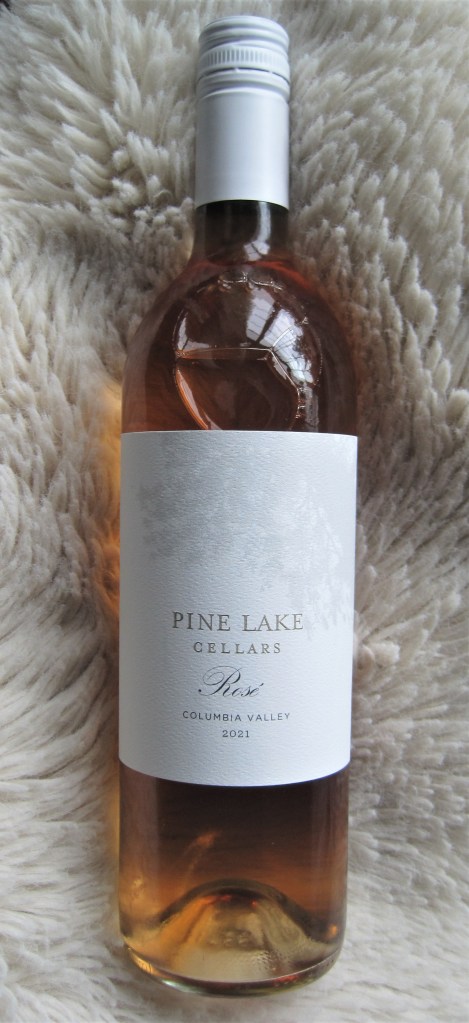
This rosé, however, from the lovely Pine Lake Cellars of West Seattle, is made from Cabernet Sauvignon grapes from the Columbia Valley AVA, and is the only rosé I’ve ever had made from this grape. Cabernet Sauvignon is the “king” of the red wines, and the ultimate steak dinner pairing. It was so interesting to taste this grape as a rosé wine!

Glass of Pine Lake Cellars Rosé

I had to let it outside, it was begging

You can purchase this wine at the Pine Lake Cellars tasting room in West Seattle or through their website, which I’ve linked below. If you’re in the area, check out their cute, stylish tasting room that has food for purchase and is kid and dog friendly. They also feature outdoor covered and heated seating areas. My sweet friend treated me to a tasting here a few months ago and we had a stellar time.

Fair warning: they are running low on this rosé, so if you’d like to try it, get on it. A different rosé of Syrah will be showing up soon. I sincerely hope Pine Lake Cellars revisits this particular Cab rosé in the future. In the mean time, I look forward to trying the Syrah rosé.

Pine Lake Cellars Rosé of Cabernet Sauvignon 2021 Columbia Valley
Pine Lake Cellars Rosé

  • $25/bottle
  • ABV 13.8%
  • Serve slightly chilled
  • In the glass: color is pale copper pink, like traditional ballet tights (you dancers know what I’m talking about)
  • More medium-bodied, unctuous, mouth-filling, hint of sweetness, yet still with crisp, refreshing character
  • Nose: light cherry, honeydew, watermelon, rhubarb, tarragon (?)
  • Mouth: tangerine, plum, black currant cream, celery/fennel, gummy peach candy on finish
  • This is a lower acid rosé

And here is one of my favorite easy summer recipes that goes “swimmingly” with the wine. 🙂

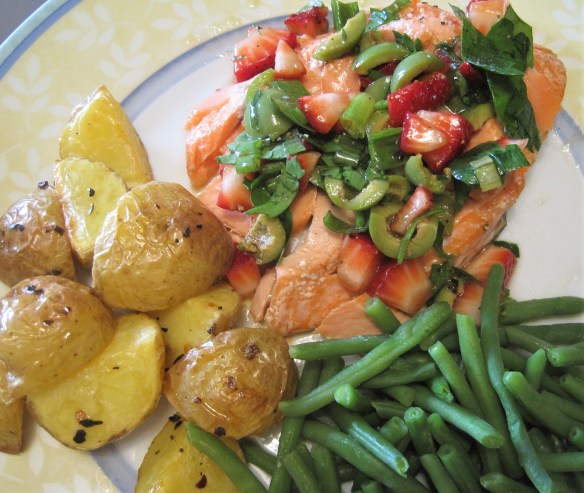
Salmon with Strawberry Scallion Tapenade

Copper River, baby!

Salmon with Strawberry-Scallion Tapenade
Recipe courtesy of Jamie Vespa, RD of Dishing Out Health
With my adaptations | Yields 4 servings
*Get that Copper River Salmon right now if you can!

INGREDIENTS

  • ¾ cup diced strawberries
  •  cup pitted and chopped green olives (I recommend Castelvetrano olives)
  • ¼ cup thinly sliced scallions
  • ¼ cup fresh chopped cilantro or parsley (or a mix of both)
  • 2 Tbsp. red wine vinegar
  • 2 tsp. lower-sodium soy sauce or tamari
  • 4 Tbsp. extra-virgin olive oil, divided
  • 4 (6-oz.) skin-on salmon fillets or one salmon side to feed 4
  • ¾ tsp. kosher salt, divided
  • ½ tsp. freshly ground black pepper, divided

INSTRUCTIONS

  • In a medium bowl, combine strawberries, olives, scallions, herbs, vinegar, soy sauce, 2 Tbsp. of the oil, and ¼ tsp. each salt and black pepper; toss to combine. Set aside.
  • Heat oven to 400 degrees Fahrenheit. Blot salmon fillets or side dry with a paper towel, place on baking sheet, and coat flesh evenly with remaining 2 T olive oil, ½ teaspoon salt, and ¼ teaspoon black pepper.
  • Place salmon in oven once preheated. Cooking time will vary depending on cuts of fish, but for a side of salmon I find 16-18 minutes is just right. Smaller pieces will take way less time. I prefer cooking fish in the oven to save time and especially to avoid oil splatter on the stove. Salmon should be cooked to a safe internal temperature of 145 degrees Fahrenheit.
  • Transfer salmon to a serving platter and spoon tapenade over top.
  • Perfect with fresh bread, arugula salad, and Pine Lake Cellars Rosé! 🙂

Let me know if you try this wine and/or make this recipe.

Cheers to pink food and drink (and even a kitchen sink)! 😉

Eat Your Sweetheart Out: Snickers Cheesecake

Eeeeeeeee! It’s the season of sugar! (You really can’t make weight loss resolutions until after Easter, seriously). Valentine’s Day is today, and I sure hope your pancreas is ready for what I’m about to dish up. 🙂

It started with the urge to make a decadent cheesecake for my mom’s birthday.

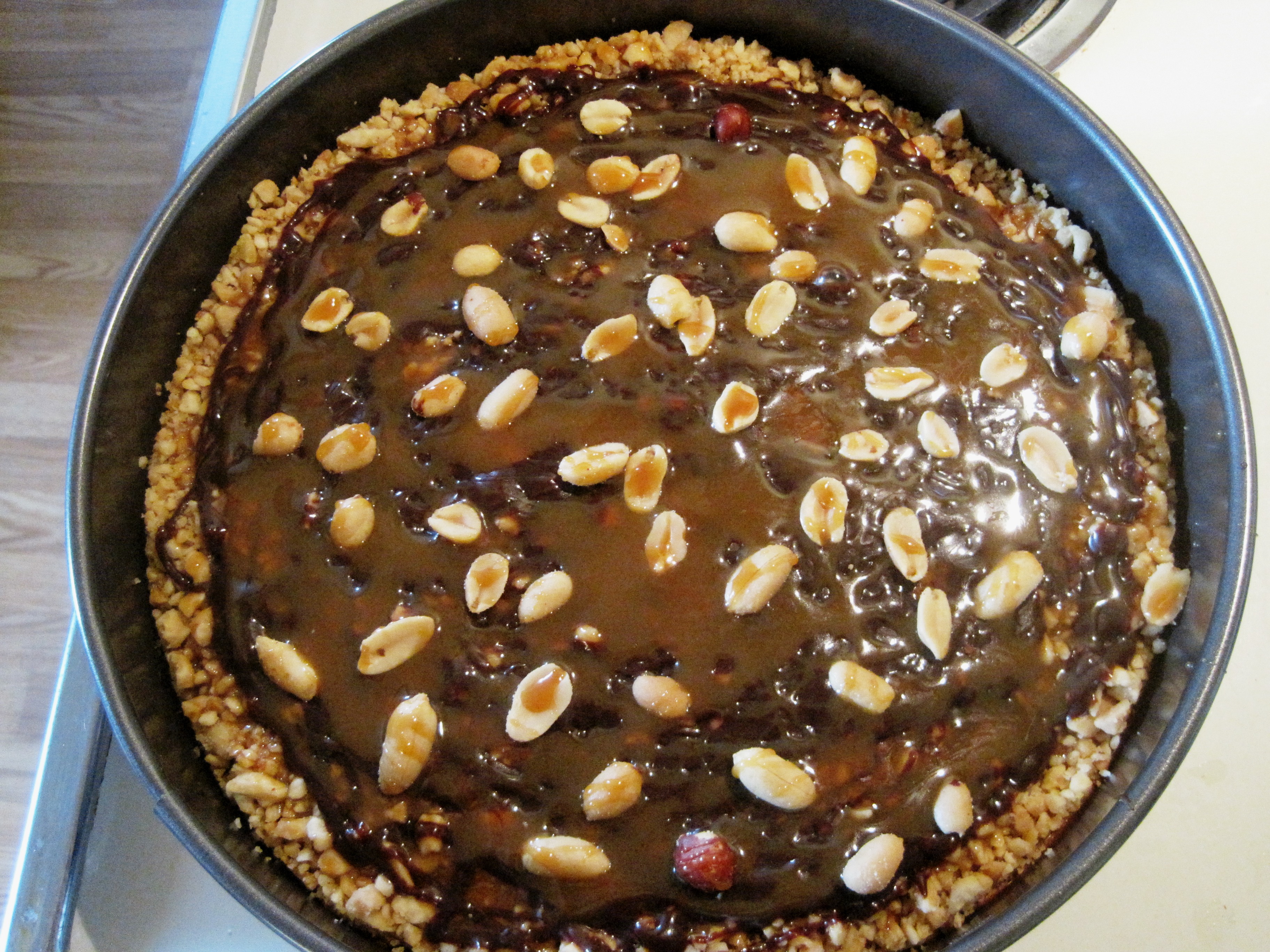
When I googled snickers cheesecake, I came up with results that showed cheesecakes with swamps of Snickers bar chunks on top. This seemed like a good idea (and it’s not bad, I’ve had it at the Cheesecake Factory before), but not quite what I was hoping for, as far as great flavor and texture are concerned. Instead, I decided to pay tribute to the spirit of a Snickers bar, with roasted, salted peanuts, hot fudge, caramel, and whipped cream on top. I think I’ve created a winner! Snickers Cheesecake

If you’re looking to make dessert this Valentine’s Day (or any celebration, for that matter), you’ll appreciate this cheesecake recipe. It’s not too hard (considering) and it tastes way better than shoving mutilated candy bars in your cheesecake batter. 🙂

Ditch the box of chocolates, Forrest Gump… you and your Valentine will die and go to candy heaven with this recipe.

Ode to Snickers Cheesecake
(Heavily adapted from a recipe for Irish cream cheesecake from Favorite Old-Fashioned Desserts by Pat Dailey)
(As an Amazon Associate, I earn from qualifying purchases)
By Brenna Arnesen

CRUST
1 – 9 oz. box Nabisco Famous Chocolate Wafers
4 T unsalted butter, melted

FILLING
1 c. plus 2 T granulated sugar
3 large eggs
2 lbs. (4 – 8 oz. packages) cream cheese, softened
1 T cornstarch
1 tsp. vanilla extract

TOPPING
Hot fudge sauce
Caramel sauce (I used jarred for both, quick & easy)
Roasted salted peanuts, coarsely crushed
Whipped cream (from a can)

Preheat the oven to 350°.

Crush the cookies into fine crumbs in a food processor or blender. Add the butter and mix well. Transfer crumbs to a 10-inch springform pan and press them into an even layer on the bottom of the pan. Bake until the crumbs are set, about 10 minutes. Set aside to cool.

For the filling, mix the sugar and eggs in a food processor or with an electric mixer for 1 to 2 minutes. Add the cream cheese in batches and mix until thoroughly smooth. Add the cornstarch and vanilla and mix well.

Pour the filling into the crust. Bake until the cake is just set in the center, about 35 – 40 minutes. Remove the cake from the oven and cool for 5 minutes, but leave the oven on.

Take your crushed peanuts, approximately 1 – 1.5 cups worth, and sprinkle on top of cheesecake. Return cheesecake to oven and bake for 6 minutes or so, until peanuts set and get slightly toasted. Cool to room temperature. Drizzle with room temp hot fudge sauce and caramel sauce to your liking. Cover and refrigerate 4 hours before serving, and then serve with whipped cream.

And snicker at how easy this dessert was to make! 🙂

Have a sweet Valentine’s Day! What are you eating and drinking tonight?

Love,
The Rambling Vine

What to Drink When You’re Expecting Part II

As I mentioned in my last post, it’s challenging being a pregnant wine-lover. While very light drinking – especially after the first trimester – is probably not going to harm the baby, science still cannot tell us how little alcohol it takes to cause damage, and that’s just not something I’m willing to risk. My guilt wouldn’t let me anyway: I sneak thimble-sized sips of wine or beer from my husband every now and then, and I still panic a tiny bit. It’s just not worth it to me, although once I’m in my 8th or 9th month I may be so uncomfortable I’ll be willing to risk a glass of wine once a month. 🙂

However, there’s still “in the mean time.” It’s now June, and I am in my 21st week, or about  month 5. Still 4 more months of good behavior in store.

More than enjoying a glass of wine on its own, I have missed wine the most when I’ve had a very rich meaty or cheesy dinner and I don’t have those precious few sips of wine to wash it down and ease the digestion of fat. It makes a huge difference now in my ability to digest and enjoy a meal. Certain dishes like rich, buttery, cheesy pastas or marbled cuts of beef with velvety sauces are unbearable now without a glass of wine!

One night not too long ago, I went out to eat with my girl friend and in the spirit of yea-I’m-celebrating-with-my-out-of-town-friend-I-should-live-it-up I ordered macaroni with three cheeses and kielbasa sausage (makes me sick just to read that now!). What the heck, I thought. I never order this sort of thing, it will be a treat. The dish came, and it was wonderful and addicting, but then I began to fear the power of all that oily cheese and butter and the havoc it would soon wreak on my GI tract. There is a reason I never order this sort of thing without wine! What have I done, I thought to myself with the same disgust and self-loathing of someone who’d just signed up to run a marathon through Death Valley on a July noon. We were about to go see a movie after dinner… would I miss most of it because my body insisted I stare at bathroom wall art work instead?

But then I remembered what I could do! Although I didn’t have a tasty glass of wine with which to complement my mac and cheese, I recalled hearing about Italians from Modena, the region famed for prized aged balsamic vinegars. I had bought a fine bottle for my dad as a birthday present, and remember reading the tag on the bottle that listed how the people of Modena enjoyed their vinegar: over strawberries, over parmesan cheese, or – gasp! – even by the spoonful after a meal. Huh, that’s nifty, and makes sense, I had thought to myself. Vinegar is highly acidic and breaks down fat molecules, thus helping you digest. Taking a spoonful of rich balsamic vinegar after a meal is like a tonic or digestive aid, more medicinal in purpose, but if you select a sweet, dessert-y balsamic, it’s more pleasant than a harsh, cheap, low quality vinegar. The Latin and Greek roots of the word balsamic even mean “balsam-like” or “restorative” or “curative.”

With this snap revelation from Bacchus the Italian wine god, I asked our server if he could bring me some balsamic vinegar. After his first failed attempt of bringing me malt vinegar (the kind Brits put on their fish & chips – not something to slurp on its own!), he did manage to find some better balsamic and brought it to the table (someone got an education in vinegar that night). My friend had an empty condiment cup from her nacho toppings, so we emptied it and I filled it like a shot glass and slammed that baby down without too much puckering.

Praise the Lord, I had no issues! That shot of vinegar did the trick in helping me digest some mighty rich food. I think it probably worked better than a glass of wine because of how much concentrated acidity is in balsamic vinegar as opposed to a single glass of wine. Who knew, huh?

The restaurant balsamic was OK, but definitely not the finer, aged, gourmet kind you can savor on its own, with its dark, rich, syrupy smooth sweetness. Sometimes those bottles will run you $30, $40, $50 even, depending on how long it has been aged, and also the name brand.

If you want a fabulous, authenic, aged balsamico from Modena, with great texture and smooth, complex aromatics, have I got a sweet little secret! It’s even less than $20. You must think I’m crazy, right? Ha, check this out….

The sweet little secret is Barrel Aged Balsamic Vinegar from Tsillan Cellars in Lake

Nectar of the gods, aged balsamic vinegar. Photo by Brenna Arnesen.

Nectar of the gods, aged balsamic vinegar. Photo by Brenna Arnesen.

Chelan, WA. You know it must be good if we’ve downed most of the bottle, right? We bought this 8.45 oz. bottle for only $12 when we were wine tasting at Tsillan (pronounced Shuh-lan) Cellars last summer. This balsamic vinegar is from Modena, Italy and “is aged up to 18 years in wood casks. Its sweet yet subtle character makes it the most famous vinegar in the culinary world.”

Tsillan Cellars is a gorgeous Tuscan-style villa overlooking the lake. I could totally die happy there. I’ll definitely blog about some of their other wines down the road. For now, trust me when I say that they make fantastic wines and an astonishingly awesome balsamic. I don’t see this vinegar for sale on their website, so you may just have to plan a trip out to Lake Chelan soon for some wine tasting. Darn! 🙂

This vinegar is scrumptious on its own (I’ve enjoyed a couple spoonfuls since being preggo) or mixed with a fine olive oil to drizzle onto roasted veggies or in which to dip big hunks of rustic rosemary bread. For a special treat, drizzle over strawberries, vanilla ice cream, and mint with a sprinkle of turbinado sugar. Or, for an even more ridiculously special treat, stuff some medjool dates with bleu cheese, wrap with bacon, and roast in the oven until cooked through, dark and crispy, then drizzle balsamic over the top. Freaking. Unbelievable.

There’s something mysterious yet appealing about balsamic vinegar’s whole “sweet and sour” routine. It’s complex and satisfying, which is apparently something preggos crave a lot, like pickles and ice cream. Don’t worry, I haven’t gotten to that stage yet, at least not eating them together. Balsamic vinegar is a whole new paradigm, like parenthood.

So, if you’re like me, an abstaining preggo who may get herself in trouble from time to time with rich dinners, make it your Mary Poppins mantra that “Just a spoonful of balsamic vinegar helps the indigestion subside… in the most delightful way!” 🙂

Decadent Toasts: Dessert for Breakfast

Goodbye boring breakfast toast, hello fancy indulgence! Photo by Brenna Arnesen.

And now, a movie scene, concerning the luxury of toast….

Kate: You know something? Nobody gives a rat’s ass that you have to push the toast down twice. You know why? Because everybody pushes their toast down twice!
Leopold: Not where I come from.
Kate: Oh, right. Where you come from, toast is the result of reflection and study!
Leopold: Ah yes, you mock me. But perhaps one day when you’ve awoken from a pleasant slumber to the scent of a warm brioche smothered in marmalade and fresh creamery butter, you’ll understand that life is not solely composed of tasks, but tastes.
Kate: [mesmerized] Say that again.
Kate and Leopold, Miramax Pictures, 2001.

Kate & Leopold may not have been my favorite Meg Ryan chick flick (trust me, it wasn’t!), but you do have to agree with Hugh Jackman’s sentiment here… that our lives should not be measured by how efficiently we completed tasks; rather, its quality and richness is derived from the slowing down and enjoyment of color, depth, texture, flavor. I like this thought, and this is why I purposely make cooking a hobby and priority in my life: it’s important. Until we slow down and show our food a little more reverance in its preparation and savoring, we will forsake our health, quality of life, and enjoyment of life.

It was this thought of warm, oozing, pleasurable toast that led me to trying a couple of fun different toast combinations. I actually don’t eat much sandwich bread anymore… when we buy bread we get the kind without preservatives, but since we can never finish a loaf that fast, it always starts spoiling and we can’t finish it. Probably best for a couple of daily desk-dwellers to not be so heavily reliant on bread, but we do have it a little bit. These toast recipes are for when you’ve got a fresh loaf on hand and want to enjoy some toast at breakfast or brunch. Could even work for an afternoon tea!

Whole Grain Toast with Strawberries and Nutella

9 grain and seed bread, toasted medium
Butter, or healthy spread
Nutella
Fresh, super ripe strawberries

The strawberries I used were so ripe they were heavily fragrant and practically jam. Decadent! Enjoy with a pot of French press coffee and fresh-squeezed orange juice. Like eating a chocolate covered strawberry for breakfast!

Topping Option #2:

Whole Grain Toast with Blueberries and “Mascarlade”

9 grain and seed bread, toasted medium
Butter, or healthy spread
Mascarpone cheese
Orange Marmalade
Fresh Blueberries
Cinnamon

Marmalade is highly underrated. It is, however, very very sweet, and a little goes a long way, especially when you have sweeter blueberries, too. Mascarpone is a fancy Italian version of cream cheese.

A toast to noble, yummy toast, and it’s unlimited versatility! What are some other deliciously unusual ideas for toast?

Orzo-Mint Salad with Prosciutto, Figs, Pecans, and Goat Cheese

Fig: the name doesn’t quite befit this beautiful fruit, does it? Use black California Mission figs in a refreshing summer salad. ©iStockphoto.com/Ivan Mateev

Figs! When fig season is upon us, I freak out and buy as many as possible (short of troubling my digestive system), because we don’t really know how long it will last and how long they will be in the store (kind of like life, so seize the day and enjoy!).

Figs are so good for you! Did you know that figs are a great source of fiber and are highly alkaline? Alkaline means they reduce the acidity in your body, making it a hostile environment for cancer.

Here are some fun fig facts, for my fellow figophiles.

This pasta salad is yummy-licious! A friend of mine told me she made an orzo pasta with pecans, figs and mint a few years ago. I loved her idea but I upped the ante by rounding it out with some ham and cheese.

This pasta would be great with a white wine, maybe a Riesling, Gewurtztraminer, or Pinot Grigio. See? There’s my wine reference!

Trader Joe’s and Whole Foods Market are the grocery stores I know of that carry the fresh California Black Mission figs regularly.

In fact, during the summer, you should be able to buy this meal completely at Trader Joe’s.

You will need:
Extra virgin olive oil
Aged balsamic vinegar (I used lavender)
Salt and pepper
One 16 oz. package Orzo pasta (a full package is a lot, use half if you like)
One box fresh black California Mission figs, sliced into bite sizes (dry is not acceptable)
One package prosciutto, chopped (optional)
One 5 oz. log goat cheese, crumbled
One package unsalted dry roasted pecan pieces
Fresh mint leaves (to taste)

Prepare the orzo according to package instructions. Drain, run some cold water over the pasta to cool it off. Once the pot is cooled off, put the cooled pasta back in the pot and drizzle and toss with oil & vinegar. Add the figs, goat cheese, pecans, prosciutto (if any) and mint leaves. Mix well. Season to taste with salt & pepper.

If orzo pasta ain’t yo thang, substitute with cooked rice, couscous, or quinoa.

Butternut Squash Quesadillas

Ooey, gooey, melty, yummy, they’re calling your name! Photo by Brenna Arnesen.

It’s time, ladies and germs, for another respite from vino… off on a culinary excursion! Whet your appetites, it’s gonna be really good! 🙂

I love to cook, and I love the final, tasty fruits of my efforts even more. Apart from learning basics like spaghetti and scrambled eggs from my mom, I learned how to cook real meals using recipes. Rachael Ray and her pink cookbook get huge props for helping me beef up my skills to master chef status, especially when I lived on my own before getting married (As an Amazon Associate, I earn from qualifying purchases). I still tend to prefer using recipes when making meals, but as I gain more confidence, and the realization that not all recipes make perfect sense, I bravely make my own modifications and start trusting my own burgeoning culinary instincts… which is super important for every cook.

I’m maturing as a cook because lately, more than in previous years, I am now making up my own recipes. This is a huge step for a girl who is a cookbook maven (they are piled by my couch all the time for leisurely perusing and inspiration) and who has stuck to recipes much like a religious dedication to algebraic equations. I didn’t veer far from cookbooks, partly because I wanted to train myself by learning to follow a recipe verbatim and educating myself on process and terminology. But now I’m taking creative risks in the kitchen, and this is helping not only my cooking, but my whole outlook on life. Every time I cook, even though I’m using the same ingredients, it’s a new experience and new result every time. That’s the art of cooking.

One of the best ways to let your creative juices flow and have fun in the kitchen is to invent your own recipe. Not out of thin air, mind you, out of the inspiration you’ve gleaned from any fantastic eateries you have frequented. It only makes sense to borrow from the best and riff on them in your home kitchen. Most restaurants have their menus posted on their websites in PDF format, so you can refer back to the ingredients, or you can jot them down/take a picture with your phone when you’re dining there.

One such recipe I vowed to recreate at home and did — successfully, and even upped the nutrient quotient! — is butternut squash quesadillas from The Matador. Just uttering the phrase “butternut squash” puts me in a very happy place, so much so that I will order whatever item that is on the menu that has been blessedly paired with the saintly squash. It’s one of my favorite foods, obviously.

And this has become a new favorite recipe — made in a cinch, loaded with fiber and nutrients, and heartily filling. I just added the black beans and kale. You can find precut butternut squash at Trader Joe’s and if you would rather save time than money, this is well worth it. Of course, it’s not hard to prep an actual squash, but again, this requires planning ahead.

Purchase the quantities you need… this recipe paints in broad brushstrokes.

Butternut Squash Quesadillas
Tortillas
Sweet Onions
Kale
Can of black beans (try to make your own if you can, or scope out low sodium beans)
Cooked butternut squash chunks, perhaps a 12 oz. bag from Trader Joe’s
Goat cheese
Shredded pepperjack cheese

Slice or dice the onions (your call) and caramelize in olive oil (high heat first, then lower heat to saute). Add pieces of kale and saute. Add the cooked squash chunks and the rinsed black beans and warm through with the other ingredients. Move your filling to a separate dish. Take two flour tortillas; on one spread some of the filling and then crumble over some goat cheese and pepperjack cheese to your taste. Top with the second tortilla to make a frickin’ rad quesadilla, plop in a medium warm skillet to melt the cheese and heat through the middle, then flip to finish off the cooking.

¡Buen provecho, mis amigos!

Chai This Out: Oatmeal Cookie Makeover

Give humdrum oatmeal cookies a hint of the exotic with pure milk chocolate and chai spices.

Give Your Oatmeal Cookies a Theo Chocolate Makeover

OK, yes, this blog is primarily about wine, but I am one who hates to be defined or labeled, so from time to time I might branch out (I am the rambling vine, after all) and go down a different path for fun. Gourmet cookie mavens, lean in, I’ve invented a diabolically delicious cookie!

While some may consider it a cardinal sin to corrupt as perfect a classic as the oatmeal raisin cookie, I appreciate a good, creative “remix”: it pays homage to the original in a way that enhances it, not completely changes it.

If you love Quaker oatmeal raisin cookies as much as I do, but prefer chocolate to raisins, and enjoy high quality fair trade organic chocolate and piquant spices, this cookie has your name written all over it. 🙂

Here is Quaker Oats’ (As an Amazon Associate, I earn from qualifying purchases) immortal “Vanishing Oatmeal Raisin Cookie” recipe, but with my substitution. Leave out the raisins and instead include small pieces of a broken up Chai Tea Milk Chocolate Bar.

In order to make this recipe, you must secure four Theo Chocolate Chai Tea bars (be sure to get at least one to eat straight).

The Rambling Vine’s Oatmeal Chocolate Chai Tea Cookies

2 sticks butter, softened (1 cup)
3/4 c. firmly packed brown sugar
1/2 c. granulated sugar
2 eggs
1 tsp. vanilla (preferably the gourmet kind from Mexico)
1.5 c. all-purpose flour
1 tsp. baking soda
1 tsp. ground cinnamon
Dash of salt
3 c. Quaker oats (quick or old fashioned, uncooked)
1 c. Theo Chocolate Chai Tea bars, cut into small pieces

Heat oven to 350 degrees. In large bowl, beat butter and sugars on medium speed of electric mixer until creamy. Add eggs and vanilla; beat well. Add combined flour, baking soda, cinnamon and salt; mix well. Add oats and chocolate; mix well.

Drop dough by rounded tablespoonfuls onto ungreased cookie sheets.

Bake 8-10 minutes or until light golden brown. My cookies are usually larger than a literal tablespoonful, so 12-15 minutes might be more accurate.

Cool 1 minute on cookie sheets; remove to wire rack. Cool completely. Store tightly covered. Yields 4 dozen cookies.

How’d you like them?